

Friday, November 28, 2008
Neurology has a paper looking at predictors of poor prognosis in patients who receive 'induced mild hypothermia' after cardiac arrests. Called 'the hypothermia protocol' at my institution - this is a procedure which involves cooling patients' core temperature (to ~34 degrees C) after a cardiac arrest to minimize anoxic brain damage. It's been shown to lead to modest improvements in mortality and neurologic recovery. While there are some pretty good criteria to predict very poor neurologic recovery after an anoxic brain injury, this study (a retrospective case series of 37 consecutive patients from a single institution) tries to answer the question of if this has changed after the advent of hypothermia therapy. The patients all were comatose after arrests, survived at least 3 days, and were examined on days 3-6 post arrest (hypothermia is continued only for 12-24 hours so its effects had worn off by the time these patients were examined). Their main outcome was documentation of 'awareness' before hospital discharge (following simple commands).
They found that no patients with unreactive pupils, absent corneal reflexes, or who had myoclonic status epilepticus on days 3-6 regained interactivity. Two of 14 patients who had no motor responses better than extensor posturing on day 3 recovered interactivity before discharge - none of the rest did.
Some cautions about what was not measured: long-term recovery or even how long these people stayed in the hospital (ie were most of the patients with fixed pupils discharged to hospice/palliative units in just a few days, etc.?). That said, this is preliminary (one institution, small N, vague follow-up, no standardized assessment although most of these things are done routinely anyway) but suggestive data that many of the 'standard' predictors of dismal neurologic outcomes after ABIs are still relevent for people who receive hypothermia treatment: absent pupillary and corneal reflexes on day 3, myoclonus status epilepticus. No-better-than-extensor posturing on day 3 is still dismal but perhaps not so much.
Friday, November 28, 2008
Archives of General Psychiatry has a paper suggesting PTSD is a strong marker of mortality in patients with internal cardioverter-defibrillators. The data come from a prospective German cohort study of ~150 patients with ICDs in which patients were screened for PTSD at baseline. The authors imply, but don't actually confirm in their study, that many/most of the patients with PTSD had it secondary to an acute cardiac event (such as a cardiac arrest or myocardial infarcation - part of the inclusion criteria for this study is that all patients had to have a rapid onset of their cardiac condition, ie a traumatic event, to qualify). 38 patients had severe PTSD symptoms at baseline, and had much worse outcomes (survival) even after controlling for multiple confounders including ejection fraction, age, number of ICD shocks, prior arrest, depression, anxiety, etc.: mortality was 55/1000 patient years for patients without PTSD and 88/1000 py for those with PTSD. (Overall mortality was 30% over an average of 5 years of follow-up.) It's a small study, and more hypothesis-generating than conclusive, but it's further suggestive evidence of just how significant psychiatric symptoms and morbidity can be for survival, particularly, perhaps, in cardiac diseases.
Thanks to Dr. Bob Arnold, again, for alerting me to this.
Wednesday, November 26, 2008
In consideration of the many family dinners that will occur over the next few days of the Thanksgiving holiday, Pallimed is hosting (along with several other medical bloggers) a guest post from Engage with Grace and the One Slide Project.
Have a safe and meaningful Thanksgiving!
We make choices throughout our lives - where we want to live, what types of activities will fill our days, with whom we spend our time. These choices are often a balance between our desires and our means, but at the end of the day, they are decisions made with intent. But when it comes to how we want to be treated at the end our lives, often we don't express our intent or tell our loved ones about it. This has real consequences. 73% of Americans would prefer to die at home, but up to 50% die in hospital. More than 80% of Californians say their loved ones “know exactly” or have a “good idea” of what their wishes would be if they were in a persistent coma, but only 50% say they've talked to them about their preferences.But our end of life experiences are about a lot more than statistics. They’re about all of us. So the first thing we need to do is start talking. Engage With Grace: The One Slide Project was designed with one simple goal: to help get the conversation about end of life experience started. The idea is simple: Create a tool to help get people talking. One Slide, with just five questions on it. Five questions designed to help get us talking with each other, with our loved ones, about our preferences. And we’re asking people to share this One Slide – wherever and whenever they can…at a presentation, at dinner, at their book club. Just One Slide, just five questions. Lets start a global discussion that, until now, most of us haven’t had.Here is what we are asking you: Download The One Slide and share it at any opportunity – with colleagues, family, friends. Think of the slide as currency and donate just two minutes whenever you can. Commit to being able to answer these five questions about end of life experience for yourself, and for your loved ones. Then commit to helping others do the same. Get this conversation started. Let's start a viral movement driven by the change we as individuals can effect...and the incredibly positive impact we could have collectively. Help ensure that all of us - and the people we care for - can end our lives in the same purposeful way we live them. Just One Slide, just one goal. Think of the enormous difference we can make together.
(To learn more please go to www.engagewithgrace.org. This post was
written by Alexandra Drane and the Engage With Grace team)
Wednesday, November 26, 2008
Tuesday, November 25, 2008
This post is the follow-up to Part1 posted on Sunday. The first four healing skills for medical practice were reviewed previously. In that post, the skills were discussed in respect to their innate practice of good hospice & palliative medicine. Here are all eight for a quick review:
- Do The Little Things
- Take Time and Listen
- Be Open
- Find Something to Like, to Love
- Remove Barriers
- Let the Patient Explain
- Share Authority
- Be Committed and Trustworthy
I completely agree with the physical barriers that communicate power and authority, such as standing over a patient to examine them. I feel most comfortable and the least invasive in my physical exam when I am able to sit down next to a patient (not on their bed, next to it). In this way I can ask questions at the same eye level, and reach across the patient instead of reaching down to them when performing the physical exam.
Try this experiential test on yourself. Sit in a chair in a somewhat reclining position. Ask a staff member, family member or friend to lean over you as if they were to examine you. You will quickly see it does not feel very safe nor comfortable to be in the 'patient' position. What other barriers do you see removed as part of everyday palliative care?
Let the Patient Explain
This expounds upon the earlier take time and listen, and in the article the authors do not really explain well the difference between the two. Maybe eight was a better number for a list, instead of seven? See previous post.
Share Authority
This goes for both the patient-physician relationship and the physician-staff relationship. The article focuses on the patient-physician aspect which palliative care reinforces with goal-directed discussions and treating the whole patient, and the concept of total pain.
In sharing authority with staff, the palliative care physician hold a unique spot in medicine. Palliative care is built on the foundation of a mutual respect for the expertise of all disciplines which is reinforced by a horizontal leadership structure, rather than the classic vertical medical hierarchy with the physician on the top. It feels natural for most palliative care docs to call upon the various disciplines for their input, expertise and direction when implementing a plan for a patient-family unit.
Be Committed and Trustworthy
Initiating end of life discussions within five minutes of meeting a patient demands a rapid building of trust. This isn't something palliative docs or nurses do every day, but it happens often enough and you never know if that is where you may be going when you first meet a patient or family, so one needs to do all of the above things to demonstrate trustworthiness.
This is a great quick teaching article full of quotes from the interviews that should prompt discussions with learners and staff. Please add any of your own healing skills in the comments.
Tuesday, November 25, 2008
Sunday, November 23, 2008
Churchill and Schenck from the Vanderbilt Center for Biomedical Ethics and Society published a paper in Annals of Internal Medicine that defines 8 themes for potential healing skills for medical practioners. As I read the list I immediately recognized some of these as basic tenets of good palliative medicine practice, which makes sense since a fair proportion of teaching in our field deals with self-care and avoiding burnout. But then I read the paper and realized it wasn't only about healing the practioner but rather healing the patient. The funny thing is it really works both ways. I guess my take on it tells you where my head was at when I read it. So here is the list:
- Do The Little Things
- Take Time and Listen
- Be Open
- Find Something to Like, to Love
- Remove Barriers
- Let the Patient Explain
- Share Authority
- Be Committed and Trustworthy
Do the Little Things
For me this has a lot to do with respect, trying a little harder to say a complicated name correctly, giving mouth care if you see a dry mouth instead of only considering it a finding on physical exam, finding a magazine on historical aircraft and giving it to the aviation buff, sitting down to talk to the patient. What are your 'little things' to do for patients?
Take Time and Listen
Do I need to tell you why this is second nature for palliative medicine? Being able to spend time with patients and families and not feeling that you have to drive the conversation is healing in both ways because it feels much more like a normal human relationship instead of just business. And sometimes that means a 90 minute family meeting.
Be Open
This one might be a little more difficult for our field since being too open may be a recipe for burnout as we have talked about before on Pallimed. I think compared to other specialties, palliativists has more openness and vulnerability. So I don't necessarily advise trying to be more open; best to ask your colleagues who know you where your balance needs to lie.
Find Something to Like, to Love
Should you learn interviewing techniques to appear compassionate or should you just be interested in your patient. Finding things to like or to love about our patients and families comes naturally from the 2nd and 3rd topics fairly naturally. If you take time and listen, and are a little open to understanding a patient or family experience it is pretty easy to like something about them. Some may be harder or easier of course, but I think this is a result from the above.
Please add your own views on how these skills play into your practice. The second 4 are posted here.
HT: Joshua Schwimmer, MD - The Efficient MD
 Larry R. Churchill, David Schenck (2008). Healing Skills for Medical Practice Annals of Internal Medicine, 149 (10), 720-724
Sunday, November 23, 2008
The Journal of Palliative Medicine is open access for the month of November and December 2008 in celebration of National Hospice and Palliative Care Month. Hooray! All 11 volumes in their full text pdf glory.
It would be great if some of our readers want to comb through some of the early journal articles and see if they can find any gems from the peri-2000 era. In 1998, the Journal of Palliative Medicine was a quarterly publication. I did not know that!
Other facts about JPM I learned from looking at the first issue:
- Paul Rousseau has been reviewing 'Recent Literature' since the journal began. (Drew did his column inspire Pallimed at all?)
- Starting a new journal can be tough, but it doesn't hurt to have some of the following people writing the first articles: Tulsky, Billings, Arnold, Christakis, Fine, Ferrell, Von Gunten and of course the editor Weissman. I have always wondered what they were up to now...has anyone heard from these characters?
- Defining Palliative Care has been an issue for our field from the very beginning.
The reviewing for the AAHPM case conferences (3rd call) is well under way. We had over 60 submissions this year for 9 slots. Pallimed readers who are planning on attending the AAHPM/HPNA Annual Assembly in Austin, TX in March 2009, are encouraged to sign up for the case conferences. They are a great chance to see focused short presentations from some of our field's newer professionals. I have really enjoyed the presentations and some cases I thought rivaled any other presentation at the conference.
The cases will be announced on Monday December 1st. The person who submitted the case will be notified regarding selection or rejection by email. After a few days we will post the names and titles of the cases here and on the PIT-SIG blog.
Thanks to all who submitted and those who keep asking me.
FYI the cases are blinded to any identifying info re: the submitter, so no favoritism allowed.
Wednesday, November 19, 2008

(Is there anyone out there claiming to be a neonatal palliative care specialist? If so please let me know in the comments. You should be talking at every national palliative care meeting and pediatric meeting.)
An article in the November 2008 Pediatrics compares different NICU admission strategies for extremely preterm births (25 weeks and lower). This study is first of all important because it highlights the poor survival outcomes for this population and therefore the potential need for improved palliative care support in the NICU. Approximately 16% of births at or before 25 weeks survive hospitalization. Stratified survival rates were approximately 2% at 23 weeks, 14% at 24 weeks, and 29% at 25 weeks. There was no clarification about deaths that may have occurred immediately after discharge, as may happen in peri-natal hospice situations.
Mortality rates for extreme preterm births are not the key finding here and the researchers were looking at the differences in delivery room strategies in France versus the United Kingdom. In the introduction they propose three observed strategies:
"Wait until certain" (United States) - Admit to NICU until death is certain
"Statistical prognostic" (Sweden/France) - Withhold NICU care for preterm infants with probable poor outcomes
"Individual" (United Kingdom) - Admit to NICU and reassess treatment goals based on prognostic information
The percentage of stillbirths and deaths while in the delivery room was higher in France (72% - EPIPAGE study) compared tho the UK (56% - EPICure). And conversely, deaths in the NICU were statistically higher in the UK (45%) versus France (29%). The point of this is not that delivery rooms are awful in France but their NICU's are much better, or vice versa for the UK. It may have to do more with medical management approach and decision making since when looking at all survivors the studies were not statistically different, 16.5% for the UK, 15.8% for France.
And the difference of the mortality rate in the NICU is not wholly explained by change of goals from curative to palliative and the resulting withholding and/or withdrawing of life-sustaining treatments. In the UK NICU study 55% of infants died after discontinuation of intensive care compared to a non-statistically significant 47% in the French study.
It would be nice to see a similar study in adult ICU's or even oncology practices looking at various strategies and regional variations (similar to the Dartmouth Atlas?) but with the breadth of data these NICU studies have. The basic conclusions drawn from this comparison is:
"Wait until certain" - lower mortality rate, higher rate of impairment, high resource utilzation
"Statistical prognostic" - higher mortality rate, lower rate of impairment, low resource utilization
"Individual" - higher mortality rate, lower rate of impairment, medium resource utilization
The implication for policy makers and society is to determine which of these variables need to change to which degree to make one strategy more desired over another.
One side note:
The discussion refers to an article demonstrating wide regional variations in end-of-life practices by neonatologists in Europe. This study found 73% of French neonatologists had administered medicines to deliberately hasten death at least once compared to 4% of British neonatologists. And British docs were more likely to have conversations about withholding or withdrawing curative/life-support therapies compared to French docs (91% to 73%)
Second side note: Does this table look like there are some miscalculations here? It seems to be all those numbers on overall cognition should not be the same. Click for higher res pic.

Wednesday, November 19, 2008
Here are a few more blogs (four, five , six, seven!)that I have found recently that may be of interest to our growing community. Go visit them, read a little. Leave a comment if you have a few seconds, since it is kind of like a tip to the blogger. A little appreciation can go a long way to inspiring bloggers to keep writing. At this rate we might have enough Palliative Medicine blogs to start a monthly grand rounds? Anyone else up for that?
The Center for Practical Bioethics has a weekly blog similar to Maurice Bernstein's blog that covers a wide range of topics, but often circles back around to end-of-life issues, like this recent one on the definition of brain death in reference to the recent pediatric case in Washington D.C.
Frequent commenter here at Pallimed, Dr. Alex DeLuca has a policy/law blog titled War on Doctors/Pain Crisis focused on the struggle for good pain management and the support of doctors facing prosecution because of aggressive symptom control. It is also the official blog of the Pain Relief Network (PRN get it?). The prosecution regarding opioid prescriptions for hospice & palliative care doctors has thankfully not been in the spotlight, but isn't this something that our field may want to pay more attention to? Changes in law and policy and court decisions with opioids at the center can greatly impact our field, so best to keep an ear to the ground.
3
Here is a sample of articles from Goodbyes:
A Cabbie and a Doc
Fulfilling a Baseball Dream
4
Washington State Politics: Choices at the End of Life~by Jay
Healing~by Jay
5
Angela Morrow, RN writes for About Palliative Care (on the About.com website). Her blog is aimed more to the general public and so it serves as a good educational resource about our field. She also occasionally gets the scoop on me about palliative medicine news issues. The blog is also a gateway to a forum for people with questions about death, dying, hospice, palliative care, funerals, etc. The forum seems pretty well updated and is aimed at the general public.
6
The Checkout Line is a website centered around an advice column style blog written by journalist/editor Judy Bachrach. The questions readers ask her are quite detailed and the I find much of the advice she gives to be practical, thoughtful and similar to what many people might here from a hospice or palliative care professional. The contributions by some of the commenters is also helpful. She deserves at least some recognition for a clever title for her blog!
7
The Journey Learned is a physician blog written by Dr. M. He has only been writing since September 2008 and his focus is on teaching palliative medicine and what he learns from his interactions from his patients. He posts about once a week right now and writes in a much more narrative approach compared to here at Pallimed. I hope he continues writing about his experiences on the blog. Blogs are easy to start but it is sometimes tough to keep up the work!
Here are some of Dr. M's hospice related posts:
A Sailor's Salute
Two Students
**just added**
- Hospice Blog by Hospice Guy (July 2004) (Administrator)
- Bioethics Discussion Blog by Maurice Bernstein (July 2004) (Doctor)
- Pallimed by Rosielle, Sinclair, and Quinn (June 2005) (Doc, Doc,
gooseNP) - War on Doctors/Pain Crisis by Alex DeLuca (February 2006) (Doctor)**
- Hospice and Nursing Homes Blog by Frances Shani Parker (January 2007) (Writer)
- Reflections by Dr. Bruce Campbell (April 2007) (Doctor)
- Two Women Blogging by Jay and MPJ (April 2007) (Doctor)**
- Medical Futility by Thaddeus Pope (July 2007) (Law Professor)
- Hospice Foundation of America Blog edited by Krista Renenger (August 2007) (Organization)
- Goodbyes by Debra Bradley Ruder (February 2008) (Writer)**
- Palliative Care Success by Tim Cousounis (March 2008) (Executive)**
- DNR/DNI by Leo Levi (April 2008) (ICU Nurse)
- The Checkout Line by Judy Bachrach (May 2008) (Writer)**
- Pallimed: Arts & Humanities by Amber Wollesen and Amy Clarkson (May 2008) (Docs)**
- Pallimed: Case Conferences by Institute to Enhance Palliative Care (May 2008) (Org)**
- Center for Practical Bioethics Blog by various writers (June 2008) (Organization)**
- Dethmama Chronicles by Dethmama & Insurance Guru (June 2008) (Nurse and Admin)
- The Journey Learned by Dr. M (September 2008) (Doctor)**
- About Palliative Care by Angela Morrow (Start date?) (Nurse)**

Monday, November 17, 2008
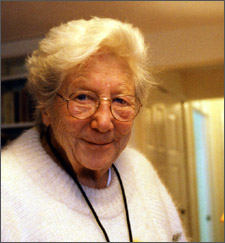
The Yale School of Nursing had two profound quotes from her (italics mine):
"Hospice care for the terminally ill is the end piece of how to care for patients from birth on." Dean Wald wrote. "As more and more people - families of hospice patients and hospice volunteers - are exposed to this new model of how to approach end-of-life care, we are taking what was essentially a hidden scene - death, an unknown, and making it a reality. We are showing people that there are meaningful ways to cope with this very difficult situation."Her ability to imagine care for the patient to encompass all points of life including dying seems so obvious in the field today it is easy to forget what a breakthrough this was. The second quote demonstrates the need for increased awareness not just for the health care professionals but for the public as well. For her death and dying should not be an afterthought of good medical care.
Her first inspiration for end of life care was during a lecture from Dame Cicely Saunders, founder of St. Christopher's Hospice. The LA Times quotes her saying:
"She blew me away," Wald later said. "Until then, I had thought nurses were the only people troubled by how a terminal illness was treated."The LA Times also notes that she was in favor of assisted suicide as an option for the terminally ill, although the NHPCO website and the Yale School of Nursing website do not mention that so I am not clear on the primary source. Her latest work was dedicated to improving hospice access and care in correctional facilities. There is a scholarship at Yale in her name for nursing students helping underserved populations.
Another good quote this time from the NY Times article:
“In those days, terminally ill patients went through hell, and the family was never involved,” she said. “No one accepted that life cannot go on ad infinitum.”When she was once introduced as the 'mother of the American hospice movement' she quickly replied (NYT):
“That’s a completely incorrect description,” she said. “There were many, many people in those days who were just as inspired and motivated as I was.”Mrs. Wald was also supported directly by her husband in the founding of hospice as the NY Times notes:
In 1971, Mr. Wald left his engineering firm and returned to Columbia University to earn a degree in hospital planning. His master’s thesis became the proposal for the Connecticut Hospice.Thank you Florence Wald for your foresight, inspiration, and dedication to changing a medical paradigm so that many people could benefit from hospice and palliative care.
References:
LA Times Article
Yale School of Nursing Article
NHPCO Article
NY Times Article

Monday, November 17, 2008
