

Sunday, March 14, 2010
If you want a better story about the potential for social media to be another tool for connecting people to each other, you won't have to look much further than Daniela Lamas' essay in the New York Times this past week.

The essay is short, but packs several difficult questions that Daniela elucidates very well in the essay. Read it and bring it to your team to see if they have had a similar experience. You may be surprised.
(Photo by Flickr user: brykmantra)
(By the way, I have started a new NYT label. If anyone wants to help find all the NYT posts and help us label them, that would be great!)
Sunday, March 14, 2010
Tuesday, March 9, 2010

The survey, conducted by Dr. Nathan Goldstein and colleagues, was directed at hospice administrators with instructions for that person to speak with the clinical staff. Of the 414 hospices that responded (a little less than half of those surveyed), 97% reported having patient(s) with ICDs, 58% reported having at least one patient who was shocked in the last year, and 42% of patients had the device deactivated.
Having a policy on ICD deactivation correlated with patients actually having the devices deactivated (73% of patients enrolled in hospices which had a policy vs. 38% in those without a policy; P < 0.001). The investigators include a sample hospice ICD deactivation policy in the web appendix. They rightly point out that it's impossible to know from this study whether the above correlation indicates a cause-effect relationship. Hopefully, further research is forthcoming. Policy/procedure + education seems to be the key. Without the former, you probably risk having a nurse not having the proper tools/avenues to do what she knows. Without the latter, you risk having inappropriate delays in identifying patients for deactivation and unused or improperly used magnet.
Envision a theoretical scenario: A person with hours to days to live is sent home from the hospital with an active ICD. The ICD has not discharged previously. A hospice nurse frantically calls the medical director during her enrollment visit at the patient's home (on the same day of hospital discharge) because the patient is comatose and has been shocked several times. Perhaps if a hospice policy dictates that nurses seeing patients with ICDs should always have a magnet, this type of scenario could be averted or easily managed. Maybe the magnets are inexpensive enough that every nurse should have one in their car (even though it's not an every day occurence?)
The main point of this case is that someone should have thought about deactivation before the patient was sent home. I hypothesize that most hospice patients with ICDs were hospitalized shortly before hospice enrollment. Regardless of whether this is true, I'll surmise that there is usually plenty of time for the cardiologist/internist/palliative care clinician to come up with a plan for ICD deactivation with the patient or family. Consideration of a hospice referral should trigger any of the above providers to readdress the goals of ICD and consider deactivation, but in many patients, it's appropriate to have this conversation well before hospice referral. So in an ideal world (we're working on it), it should be a non-issue for most patients once they are enrolled in hospice. Goldstein has previously identified barriers that may prevent physicians from bringing up this topic. Maybe hospice nurses don't share these barriers.
Does your hospital, cardiology service, or palliative care team have a policy or procedure for these discussions?
Even if every physician could manage this conversation, some patients would elect to keep the device programmed for discharge at the time of hospice referral. Because of this and the fact that the ideal world won't arrive soon enough, hospices should definitely get to work on their ICD policies and procedures.
Here's more information on deactivating an ICD. (Disclaimer: I have not independently verified the veracity of this information although I do have direct experience with deactivating the Boston Scientific ICD and the instructions listed seem correct- when this device emits a faint beeping sound after a magnet is placed over it, you know it is deactivated. A large household magnet can work but it's probably most effective to have an ICD magnet on hand.)
P.S. The Population-based Palliative Care Research Network (PoPCRN) assisted with the development of this survey. Check them out if you haven't heard of them. PoPCRN's director, Dr. Jean Kutner, just won an AAHPM Distinguished Service Award at the Annual Assembly. Congrats!
Tuesday, March 9, 2010
Anesthesiologist Dr. Scott Reuben, a prominent pain researcher, has been convicted of falsifying medical research studies.
From BMJ article:
Dr Reuben’s published studies concerned use of multimodal analgesia (a combination of non-steroidal anti-inflammatory drugs and cyclo-oxygenase-2 inhibitors) to manage pain after surgery. The USSadly, he's authored 21 papers in the last 15 years per the BMJ article. Per a Google Scholar search, his name appears to be on many papers.Department of Justice , which prosecuted him, said that his papers suggested that "multimodal analgesia would be as effective for pain, promote long-term healing, and avoid some of the side effects associated with opioid therapy."
Here's an AP link in case you can't access the BMJ article.

The 4 Questions:"During your child's end-of-life care period, did you or a family member ever consider asking someone on the care team to give him/her or give you or the family member medications to intentionally end his/her life?”"When your child was receiving end-of-life care, did you or a family member ever discuss intentionally ending his/her life?""Did you or a family member ask someone on your child's care team to give him/her medications or to give you or the family member medications to intentionally end his/her life?""Did a member of your child's care team give your child medications or did you or a family member give him/her medications to intentionally end his/her life?"~~~~~~~~~~~~~~~~~~~~~~~~~~~~~~~~~~~~~~~~~~
19 (13%, about 1 in every 8) said they had thought about asking a doctor to hasten their child's death13 (9%, almost 1 in every 10) actually discussed it with caregivers5 (4%) explicitly asked a clinician for medications to end the child’s life3 (2%) reported that their child’s life was intentionally ended with medication. In all three cases the medication used was morphine.
36% (49 of 136, about 1 in every 3) in retrospect, would have considered discussing HD under certain circumstances with a breakdown of scenarios given.Uncontrollable pain was the most common circumstance to elicit a hypothetical consideration of HD. 15% would have considered HD for non-physical suffering.Only 2 parents would have considered HD in circumstances not directly related to the child’s experience, (family witnessing suffering or medical costs).
94% endorsed proportionately intensive symptom management for a terminally ill child with uncontrolled excruciating pain, while only 54% did so in the case of coma; these results did not change when adjusting for race and religiousness.50% (1 in every 2) endorsed HD in at least one vignette. 59% would agree with a physician discussing HD in the case of a child with terminal cancer in pain or coma.Of the 19 who considered HD during their child’s EOL course 16 (84%) endorsed HD in vignettes.In general, being white (not Hispanic) and being not very religious were associated with endorsing HD in vignettes.

Dussel V, Joffe S, Hilden JM, Watterson-Schaeffer J, Weeks JC, & Wolfe J (2010). Considerations about hastening death among parents of children who die of cancer. Archives of pediatrics & adolescent medicine, 164 (3), 231-7 PMID: 20194255
Larry Beresford has posted a wonderful Palliative Care Grand Rounds on his blog hosted at Growth House. Thanks Larry for finding some great links! I especially like all the new blogs and posts about grieving and widowhood.
Go over to Larry's blog to see the best of what the blogosphere has to offer in all matters hospice and palliative care.
If you are interested to follow Palliative Care Grand Rounds you can also check out the PC Grand Rounds blog.
The host for April is Tim Cousounis at Palliative Care Success. Send him any blog posts you deem worthy for PC Grand Rounds.
Sunday, March 7, 2010
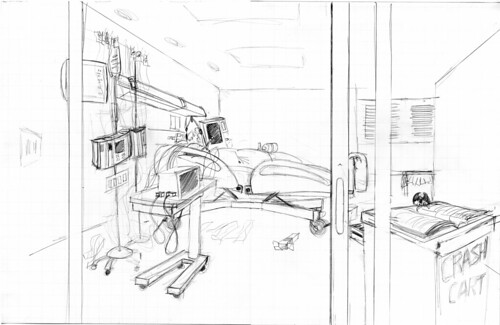
JAMA published a matched retrospective cohort study which examines the outcomes of Medicare beneficiaries after an ICU stay. The study also reports some notable data related to mortality in patients sent to a skilled nursing facility.
The investigators started with a 5% random sample of all Medicare beneficiaries over the age of 65 and divided that sample into two. The first sample comprised the study cohort of ~35,000 patients who survived a hospitalization that included an ICU stay in 2003. The second sample comprised two control cohorts: an "I survived the hospitalization and didn't have to go to the ICU" cohort and a general population cohort. The latter two cohorts were matched with the study cohort based on age, race, sex, and whether the hospitalization had a surgical or medical DRG.
The cohorts on the whole were similar with respect to gender, race, and age. Not surprisingly, those patients admitted to the ICU had a greater burden of comorbid chronic illnesses, and the mechanically ventilated ICU patients were the sickest, with 57% having three or more comorbid conditions.
Some of the results:
- 6 month mortality: ICU survivor mortality was 14.1% (30.1% for those receiving mechanical ventilation) compared with 10.9% for hospital controls and 2.7% for the general controls
- 3 year mortality: ICU survivor mortality was 39.5% (57.6% for those receiving mechanical ventilation) compared with 34.5% for hospital controls and 14.9% for general controls
- Discharge to a skilled care facility was an independent predictor of mortality at both 6 months and 3 years, regardless of ICU status during hospitalization (6 month and 3 year mortalities, respectively: 24.1%/54.6% for ICU/Hospitalized controls who went to SNF vs. 7.5%/29.4% discharged home in both cohorts.)
- Readmission to the hospital was a common event in all hospitalization cohorts, but most common in those requiring ICU care (45% in first year for MV patients and 43% for non-MV ICU patients).
The results are difficult to apply to an individual patient. A previously healthy 70 year old patient who survives mechanical ventilation for pneumonia obviously has a different prognosis than a 70 year old who has end stage renal disease, CHF, and diabetes who survives mechanical ventilation for line sepsis.
But the results should be heeded by hospitals, ICUs, and palliative care teams. Wide variation exists in the volume and type of utilization of palliative care in ICUs. Palliative care is typically consulted when it's clear that the patient is not getting better. As I've said recently, that's not the only type of patient we should be seeing. A poor prognosis need not be certain. The higher mortality/comorbid burdened patients described in this study (especially the mechanically ventilated cohort) could be perfect for palliative care, even though they all survived hospitalization. The challenge to our field would be providing the capacity to meet the demands of this population. Questions that we need to ask of ourselves include:
- Do we offer a time-limited consultation for advance care planning/goals of care delineation/complicated discharge planning with a plan to "remain on the sidelines" after we've helped answer those initial questions?
- Or do we provide chronic care for patients like this (really would need increased provider capacity)?
- Related to 2, what about palliative care at SNFs?
- How many of the palliative care interventions should be "organic" within the ICU (without PC consultation)? How do we best ensure PC issues remain a focus after the patient is discharged?
Here's the last paragraph in the discussion:
The magnitude of the postdischarge use of skilled care facilities for both ICU survivors and hospital controls and the high long-term mortality for all of these patients call into question whether discharge to skilled care facilities is merely a marker for higher severity of illness with appropriate delivery of care. These patients could have been discharged prematurely from acute care hospitals, and needed a higher level of care than they received. It also is possible that these patients could have had better outcomes if discharged home, but were not able to be sent there due to lack of sufficient support from family or friends to act as caregivers. These findings highlight the need for a much more detailed understanding of the long-term care needs of these patients.In the age of throughput, there's no doubt in my mind that some of these patients were discharged from the hospital too early. However, I'm bemused in trying to sort out how these very sick patients might have better outcomes at home if they only had better caregiver support, assuming that by "outcome," the authors refer to mortality. The only outcome that might have been better for some of these patients at home would be a palliative care outcome: receiving care in the setting of choice. To that end, I do agree that we need many more details regarding the long-term care needs of this population.
See other related posts on prognosis in the ICU here and here.
(Illustration courtesy of Niels Olson on Flickr. See here for the original, which has scroll over notes.)
Sunday, March 7, 2010
It is so wonderful to be able to drink in from the fountain of knowledge and networking that is the 2010 AAHPM / HPNA Annual Assembly, but it is also important to share that knowledge with your co-workers. Since 2006 when the University of Kansas Palliative Care Fellowship (in conjunction with Kansas City Hospice and Palliative Care) started we have had two hours of review scheduled in place of the usual lectures. This serves a purpose for further discussion about important points from the meeting amongst the attendees but even more critical the passing of knowledge to those who could not attend. Why should the knowledge dead-end with you if you went?
At these meetings we encourage attendees to make a one-page handout to distribute highlighting key facts learned.
So this year to pass on the knowledge, I invite all Pallimed readers who attended the Annual Assembly to make a one-page handout for your organization, but to also send it to me so we can share those pearls on Pallimed.
When you send me your handout please use the following basic format:
- Name
- Discipline
- Organization
- It is OK to have a section for General Tips
- For tips from specific talks, please list the Title of the talk (and speaker if you have it)
When you send it to me please specify if you would like to have your tips aggregated anonymously with the whole or published as a whole under your name. A disclaimer on the tips will be made to specify that none of it constitutes specific medical advice and should be verified with other sources.
Even if a few of you send me your handout, we can really crowdsource this (a la Wikipedia) and find out what the major tips were.
Thanks in advance.
I had a wonderful time at the 2010 AAHPM / HPNA Annual Assembly in Boston this past week. Meeting new people, seeing good friends, and learning a few new tricks along the way.
834 tweets (224)
92 contributors (30)
119.1 tweets per day (41)
75.2% come from "The Top 10 Contributors" (NA)
24.3% are retweets (NA)
46.6% are mentions (NA)
29.7% have multiple hashtags (NA)
- @ctsinclair - 304
- @suzanakm - 124
- @brimcmike - 52
- @doclake - 30
- @equijada - 27
- @HynesBeacon - 22
- @marachne - 22
- @erinrbreedlove - 17
- @mchwistek - 16
- @gcooneymd - 13
- The volume of posts on the new AAHPM blog (fixed link 3/8). It is great to see such activity. Now we have to go and comment and keep the passion going because it is a place where you can really contribute to information that would not necessairly fit in any other AAHPM publication
- Teaching Diane Meier (@DianeEMeier), David McGrew (@dmmcgrew) and Dennis Pacl (@dspacl) about Twitter. Last year I was lucky enough to have Diane Meier interested enough in social media to have her inquire about a quick beginner Twitter lesson. And incoming AAHPM president Gail Cooney saw what we were doing and joined us. This year, Diane and I planned to have an intermediate Twitter lesson, and Dennis Pacl and David McGrew happened to see what we were doing and stopped by as well. None of them left befuddled and it seemed each had 'a-ha' moments and a sense of enthusiasm about the potential to make an impact for our field. You can too.
- The attendance at the Pallimed/GeriPal gathering at Lir. It was wonderful to meet so many of the (long-time and new) readers. This party keeps growing every year because of this informal network. Now if we can put that same network to task for selected projects that could be really amazing!
- The Social Media in Palliative Care Communities talk. I already mentioned the attendance, but a lot of people came up to the panel and talked as if they were moving from the pre-contemplative to contemplative stage.
Tuesday, March 2, 2010
You can expect a few more emails this week as we blog frequently from the AAHPM/HPNA Annual Assembly giving you updates on all the interesting things going on in Boston. Don't forget to follow #HPMAssembly and #AAHPM on Twitter for the latest updates from the meeting!
I'll get to the board meeting review in a second.
Tuesday, March 2, 2010
Monday, March 1, 2010
Hooray the AAHPM/HPNA Annual Assembly week is finally here. Before you stop checking the internet so much because you are at the Annual Assembly, here are a few Pallimed related events this week to check out while you are in Boston.
1) Twitter: Follow the action whether you are at the conference or not. Two good websites to keep open in your browser are TweetChat (better for those with Twitter Accounts) or What the Hashtag (better for those without a Twitter account...what are you waiting for?)
For those at the conference the official Twitter Hashtag is #HPMAssembly but many may also be using #AAHPM so if you don't see much action on one check the other.
For more on how to best use Twitter check out this previous post.
2) Social Media in Palliative Care Communities: Developing and maintaining your online presence
Friday 7-8:15am
Presentation by: Christian Sinclair, Alexander Smith, Eric Widera
Guest Panel:
- Amy Clarkson, MD, Kansas City Hospice and Palliative Care, Kansas City, MO (Pallimed)
- Suzana Makowski, MD, MMM, FACP, UMass Memorial Medical Center
- Drew Rosielle, MD, Medical College of Wisconsin, Milwaukee, WI (Pallimed)
- Christian Sinclair, MD, FAAHPM, Kansas City Hospice and Palliative Care, Kansas City, MO (Pallimed)
- Alexander Smith, UC San Francisco (GeriPal)
- Eric Widera, UC San Francisco (GeriPal)
- Amber Wollesen, MD, Saint Luke's Hospital, Kansas City, MO (Pallimed)
3) Party!: Friday night March 5th at 8pm will be the 4th annual Pallimed meet and greet. This year we are joining with friends at GeriPal for a combined networking experience. It will be hosted at Lir Irish Restaurant and Pub with appetizers on us. Please RSVP if you can on Facebook or email me: ctsinclair@gmail.com

4) Palliative Themes in Music: An Educational and Self-Care Exercise: Co-Editors Amy Clarkson, Amber Wollesen, and I will be presenting this interactive 1 hour session on using music as a tool in our daily work. Be watching for a post on the day of our talk, Thursday March 4th with the highlights and songs we discussed. For those in Boston, the talk is from 2:45-3:45.
5) This Republic of Suffering: Death and the American Civil War by Drew Gilpin Faust. As mentioned in Amber's post here; Charlie Sasser blogged about it on the AAHPM blog too. Amy, Amber and I will also be at the Book Club discussion on this amazing book looking at death during the Civil War. It's on Saturday March 6th from 12:15-1:15pm
6) Live Blogging: I will be Live blogging each day from the Annual Assembly. Basically I will put up one post and continually update it through the day, or maybe just an AM and PM one. That way your email inbox will not be flooded. I believe the AAHPM blog will also have a lot of people blogging from the conference too.
Hope to see you there! Especially if you have a Pallimed 'P' sticker on!
![Reblog this post [with Zemanta]](https://lh3.googleusercontent.com/blogger_img_proxy/AEn0k_tHb8sCyEGaBWUV7eyl-DxDxVFEr-VZ4NVhVkJorBbBVDb6AUKM5mKHjr8mjjvnAAqgwe6DVZ82h-hL5W62gf5qbtO6ihWV2ykihWO2DD-ZL3TFjxUDRxzqsRJszS0wqQ74LUsWrn067HRXHrmGrHyb=s0-d)
Monday, March 1, 2010
