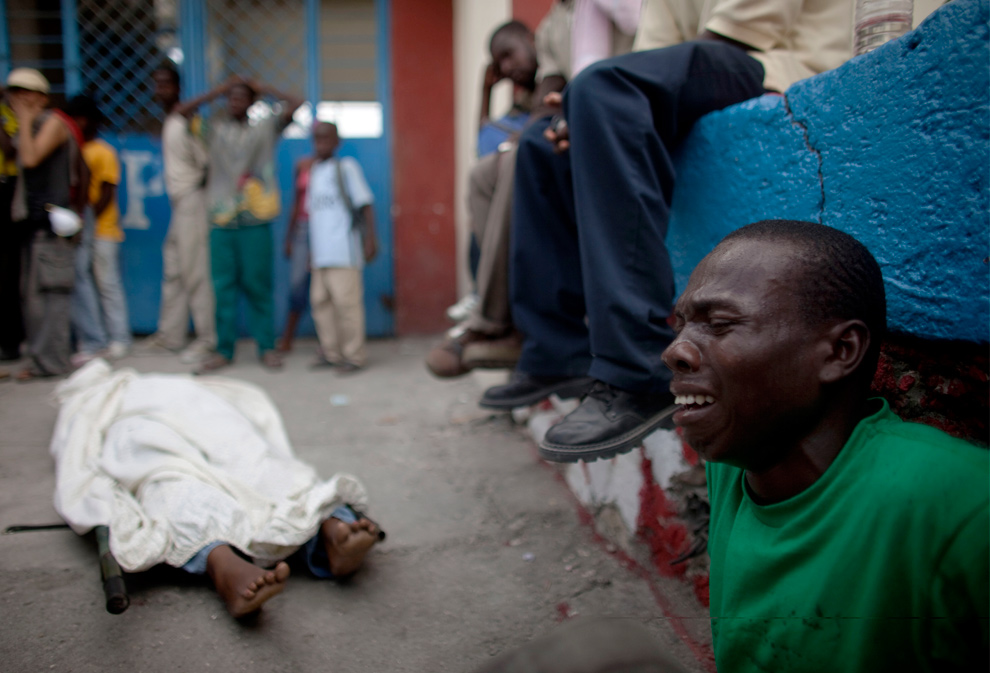
I have also considered how my skill set might be best applied if I myself had decided to go to Haiti with the relief efforts. Would I fall back to my Internal Medicine training or would the specialized palliative care training be helpful? NPR's health blog 'Shots' recently covered some of the triage dilemmas being dealt with by health care staff on the ground. An excerpt:
A pediatric surgeon raised a tough question about when people should be taken off equipment to help them breathe. "Today the issue was ventilators. We ran out," he said. "What do you do then? We need a reality check. Some people might have to get off the ventilator before you would take them off elsewhere. That ventilator could save the life of someone who is much more salvageable."
But other doctors appeared incensed at the idea of stopping short of using every tool available on even the chance to save a life.
Palliative care staff help families and other medical staff sort through these tough decisions all the time in hospitals across the country, so maybe we as a field should make a concerted effort to be included in the 'essential' staff that might be needed in the next major disaster. Imagine an administrator making a list of the 'expertise' she would like to have in the field. As I think/write more, it does not appear to be such a stretch to consider having medical staff with a hospice or palliative care background on the ground in a major trauma/disaster zone.
- Pain and symptom control
- Skillful communication to traumatized/grieving families and patients
- Whole patient/family approach to care, support to other staff
- Prognostication awareness/skill
- Grief and bereavement counseling (like Alive Hospice and Hope Hospice (Florida) are already doing)
- Ability to engage with one's spiritual support
- Willingness to think outside the box and work in conditions that are not considered ideal medically (i.e. like hospice staff do daily in patient's homes).
Sounds like a good skill set in a disaster zone to me.
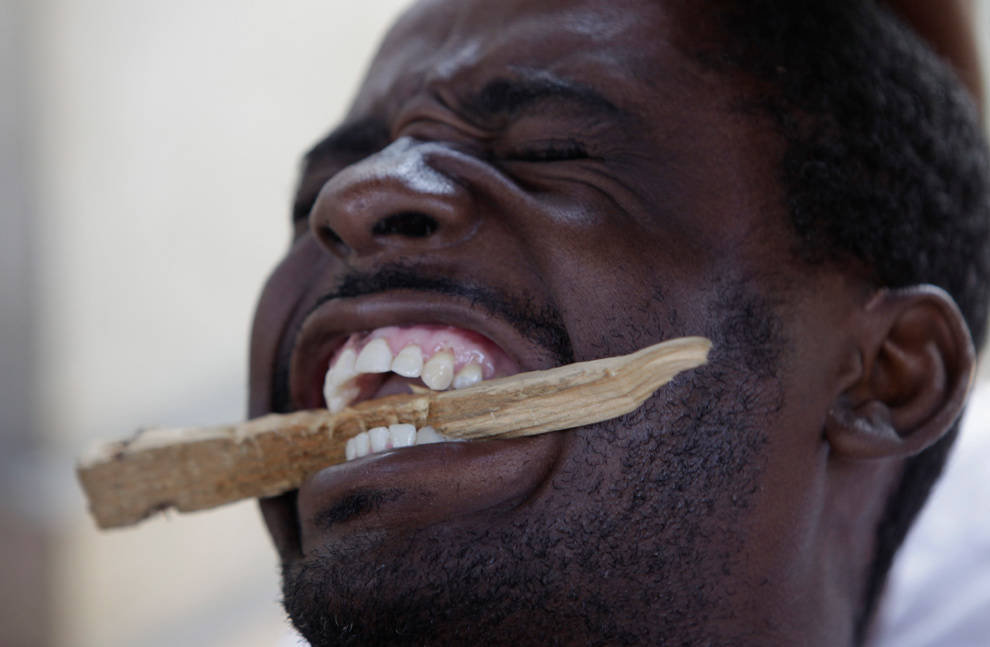
In the NPR story, they even mentioned palliative care but it was quickly shot down. (Guess which specialty shot it down?)
Referring to the patients likely to die, one medical planner offered a solution, "What about having palliative care facilities at the intake sites on shore?" A surgeon responded, "And have five hundred tents of dying people in a field right next to a medevac site? We can't do that."But surely something is better than nothing. "Even if we just give them some painkillers and a comfortable bed, it'll be better than them dying in the street under the sun like a dog," a nurse offered.But a surgeon argued that easing the death of a doomed person would take a bed that could be used for someone with a real chance of being saved.
Shouldn't we make a more concerted effort to be included in the list of specialists available to help in a disaster? Would we be welcomed or instead shunned given our comfort in discussing issues around death and dying when everyone else is in rescue mode? And what about the patients who were already on hospice. They still need specialized care as well.
(Pictures via Boston.com Big Picture)


![Reblog this post [with Zemanta]](http://img.zemanta.com/reblog_e.png?x-id=363ae1d4-31b6-47c4-aa87-bb63ff6fe350)
11 comments:
This is reminiscent of the larger debate about the role of palliative care in resource-poor areas for patients dying of potentially treatable diseases (e.g. HIV/AIDS). As much as I think PC is a great thing, and everyone deserving of it when they need it, I think realistically this is a zero sum game. Use of resources for one thing diverts them away from another.
A hypothetical situation: you have 10000 people with advanced AIDS, who will die in a year without treatment. You have the resources to either 1) to provide effective antiretrovirals for 1000 people only, prolonging their lives, and improving their quality of life, for years/decades, although 9000 would die, and suffer tremendously, or 2) staff and train a palliative care program to provide timely, effective, EOL care for all 10000 of those patients as they die.
This is the zero sum game, and the focus of the discussion should be on fixing those details of the situation. This nice insistence of mine to keep the fundamentals in mind doesn't help any of the people who need help today of course, which is why I think those who outright reject palliative care for patients dying of treatable diseases in resource-poor environments are misguided, but, frankly, I'm sympathetic to their position.
I have to say my gut reaction to reading your post was that if I could take a month off work to volunteer my time there, I'd rather just donate that money such that MSF or whomever could have more antibiotics, ventilators, surgical suites, and nurses.
More practically speaking, it raises the importance of emergency relief workers having adequate palliative competencies to feel comfortable providing good symptom control to dying patients who they can't save. I'm sympathetic to that surgeon - if a bed can be used to save a life it should be, assuming there is really no alternative, and that, again, is the fundamental problem: if it's a zero sum game, I say save lives, and (while it's easy for me to say this now) if I'm ever the victim of a pandemic infection, on life-support, and am deemed un-savable I hope to god my doc has the guts to disconnect me and use the vent for someone who has a chance. The world can consider that part of my advance directive.
One so desperately wishes this didn't have to be the case, and if there were adequate medical personnel and facilities there it wouldn't be, but assuming it is the case the ugly decisions have to be made and I guess my own response is pretty utilitarian.
It is a stark example of how our entire profession (PC) is really a product of medical excess. Well, if not always excess, then adequacy - our profession makes sense in an environment in which access to life saving medical care is fundamentally intact and not an issue. If I could save someone's life with a few bags of saline and a week of pip-tazo, or keep them comfortable as they die, give me the pip-tazo.
Christian - if no one bites on the interview, would still love to hear from Alive & Hope about their experiences.
The two big skills for foreigners coming to Haiti are 1) speak Creole and 2) whatever medical skills they can bring.
Over the past fortnight and so I have read about various people.
One of them is called Tom. He makes communication boards for people in the disaster areas.
And there are several Haitian medical people on Twitter.
Have been hearing lots of controversies about kids from Haiti being adopted.
Many developing countries have a severe lack of supplies and meds even BEFORE disaster strikes--destruction of the infrastructure for delivery of services and for basic food/shelter then further compounds the issue. Pain meds are often rare outside developed countries.
So, if palliative care specialists hit the ground early, I believe we would largely be "empty-handed" in the work. There would still be the possibility of helping triage and of providing some basic human comforts, but symptom management as we know it here in the States is a luxury most of the rest of the world cannot afford. (The places I have been in Africa did not even typically have Tylenol of NSAIDS!)
Getting pain meds to foreign countries is difficult with shipping charges being so astronomical and the risk that your shipment would "disappear" in many places. (And it's not like you can just hop on a plane with a suitcase of morphine, which would still be no better than a drop in the bucket.) So unless you have your own cargo plane and can get access to the site, it is probably better to fund shipment of supplies through entities that can directly deliver the goods. Even so, the need will most likely outstrip the availability of meds and supplies, so you're back to a triage situation--or worse, first-come/first-served because it is impossible to triage all the victims secondary to sheer numbers and distance of some of the victims from the most organized care.
Catherine is peds anesthesia but she has been doing training with us and she is there now--maybe she will have a perspective on the palliative aspect of things when she gets back.
Meg O'Brien at Clinton Foundation has been working on getting morphine supplies into Haiti. You might want to interview her.
Carla Alexander has been working in Haiti for years. Not sure if she's there now but would offer good insights.
Excellent points Drew, Adelaide and Pam. It is helpful to think of the resource/zero-sum game, but then you could always pull out the parable of the starfish and throwing it back in the sea. If a palliative care specialist on the ground is able to help other staff or help even one patinet with their general medical skills OR palliative skills I think that would be helpful.
Regardless I think there would be a high level of resistance when the mode is 'save, save, save.'
Pam you bring up a great point about opioid and pain control in other countries. It does make palliative care seem like a luxury here then.
Stephen, thanks for the leads. I will look to get in touch with them.
On the topic of money versus service:
Just found this press release from the National Hospice Foundation about donating money to Haiti.
I was waiting to see if this topic would be posted on this blog...
I hate to be cynical, but weeks after many people have been "saved" in Haiti, they will find themselves dying all over again from other causes: dehydration, starvation, infected wounds, exposure, public-health related problems (cholera, dysentery, etc)
> In a very real sense we are prolonging their dying with temporary means of "life support" - quickie surgeries, antibiotics, short supply of water & rations.
I am by no means not suggesting we give up current rescue & relief efforts, however, we need to think twice about writing off palliative care in Haiti. There will inevitably be a need, no matter how long or far-reaching the relief efforts will be.
I did not listen to Conan O' Brien
Another question to raise: who of the palliative care "team" would be most effective - especially when considering resource an issue?
There was a question raised in a twitter feed regarding bereavement counselors. When do they go? What role does Maslow's hierarchy play in prioritizing interventions? Physical function - safety - social/relationship concerns - emotional - existential/actualization.
And revisiting this question: with the despair many in Haiti found themselves in prior to the earthquake (the President of Haiti said on an public television documentary a few days prior to the earthquake that their hope was to move from despair to poverty), what aspects of Maslow's hierarchy need to be prioritized now?
When I think of suffering - the physical suffering of pain, dyspnea, are certainly paramount and a role to be filled by palliative care docs and often anesthesiologists (the former, a heck of a lot cheaper!). The practical suffering - food, shelter, sanitation - public health officers, etc. will take on the lead. Social and emotional suffering - their churches have always been a core place of refuge - who supports the clergy? How does an international effort tap into these non-national entities to support a people? Bereavement and survivorship issues - who will address these?
I recall the story of people panicking with sounds that mimic the quake. I remember how long it took me, after leaving Peru and moving to New England, to not dive under a door frame or desk when the buildings I were in seemed to be trembling. I had experienced many tremors, not never a true or devastating quake (richter scale >6). How to adjust? How long will that take?
Maslow also calls the top tear self-actualization. For a country so long dependent on the aid of others, a criticism of aid I have heard, is that it will potentiate this cycle. I don't think today is a time to be concerned with self-actualization of a nation so devastated. Focusing on the lower rungs of Maslow's principles - define the team to address suffering. Perhaps a role we should play is that of consultant, to help define these roles, the team-members, the access to things to help overcome symptoms and fear.
Dr Bryan Byrd a hospice doctor with Texas Hospice posted on his hospice blog about being in Haiti.
From there he links to a blog he setup just for the trip.
Have not had a chance to read through it all yet.
I spent 9 days in Haiti as part of a first-response medical relief team. We were busy treating closed and open fractures, burns, wounds and broken hearts.
Hospice/palliation came up several times. A good example was a wonderful 97-year old woman who suffered a femur fracture. Although she was otherwise in pretty good shape, her age and the limited access to surgery led us to talk about palliation-only treatment.
The Haitians, so wonderful and buoyant in spirit, embraced our recommendation. We counseled them on infection and bed sore prevention, and talked about traction for pain control.
In this case and others, prayer was a mighty tool. Out team prayed at length with almost each patient we saw (up to 200 a day), and the effect was palpable on the Haitians and us. Many left the tent clinic and remarked that although they had been treated by physicians, they had never been prayed over as well.
I kept a log of our experience in Haiti. Please see it on BrianinHaiti.blogspot.com. Our hospice web address is TexasHospice.com. There I write a weekly blog about spirituality and hospice.
Post a Comment