

Wednesday, May 8, 2013

At the insistence of her parents she reluctantly attends a youth Cancer Support Group. “Support Group featured a rotating cast of characters in various states of tumor-driven unwellness. Why did the cast rotate? A side effect of dying.”
However things drastically change when a gorgeous boy named Augustus “Gus” Waters suddenly appears at support group. Augustus Waters is seventeen, he has osteosarcoma and had part of a leg amputated. Gus and Hazel connect and the romance slowly blossoms.

The book portrays the relationships of Hazel and Gus with each other, with their parents/family, healthcare professionals, healthy kids, and other “cancer kids” while they live their limited life the best they can. It is clear how serious illness affects the already difficult teenage years.
Below are some “palliative” and quality of life (love) related quotes from the book:
- “Depression is a side effect of dying.” Hazel

-
“Oh, I wouldn't mind, Hazel Grace. It would be a privilege to have my heart broken by you.” Gus
Okay

- “Maybe 'okay' will be our 'always”
- “You gave me a forever within the numbered days, and I’m grateful.”- Hazel
- “That’s part of what I like about the book in some ways. It portrays death truthfully. You die in the middle of your life, in the middle of a sentence”
- You can follow John Green on twitter @realjohngreen
- You can follow John Green on youtube and watch some quirky videos
- Listen to the The Fault In Our Stars Music Video inspired by TFIOS book by Troye Sivan.
4. Read the lyrics of the song in #3 they are just inspiring.
5. You can re-read TFIOS wonderful quotes here. (spoiler alert )
6. Read the Q & A with John Green about TFIOS (spoiler alert)
7. Gather some friends and have a book club. (spoiler alert)
8. Learn about Esther Earl, to whom TFIOS is dedicated. Esther was a teenager who had Thyroid cancer and developed an online community of friends by video blogging. Esther was a nerdfighter who died of cancer in August of 2010. She and John Green were friends. Watch Esther's YouTube videos here and learn about the organization her family set up in her memory.
Wednesday, May 8, 2013


a. All medications and laboratory tests that do not promote comfort should be discontinued.
a. The family may wish to stay in the hospital, either with or without hospice. Given that roughly 70% of patients die within 24 hours of having life sustaining treatments stopped in the ICU, this is a reasonable option for the first day. Staying in the hospital for longer periods may not be the best option as the staff have competing responsibilities, hospitals are not set up to focus solely on comfort, and many hospitals have a 2-3 day time limit for in-hospital hospice.
b. For patients who have symptoms and are actively dying, the most appropriate location may be an inpatient hospice unit (either a stand alone unit or located in a long term care facility). These units are staffed by hospice nurses, social workers, and physicians and provide excellent palliative care as well as attention to families’ psychosocial and religious needs.
c. Taking the patient home with hospice may also be a good option for families, provided they have enough support and are willing to have their loved one at home. It is important to remember that when a patient is at home, hospices provide roughly 2-4 hours of care a day depending on the patient’s needs. Thus, the family needs to understand and be willing to provide basic comfort care for their loved one (with direction and guidance from the hospice).
*PRN = as needed
Original Case by Robert Arnold, MD, Edited by Christian Sinclair, MD
Sunday, May 5, 2013
The radio show Wait, Wait....Don't Tell Me! has a weekly segment called "Bluff the Listener" during which a caller listens to three unbelievable stories and then guess which one of the three is actually true. Much to my surprise, this week's "true" (yet unbelievable) story is about evidence that acetaminophen might relieve existential angst. (Here's a direct link to the audio segment.)
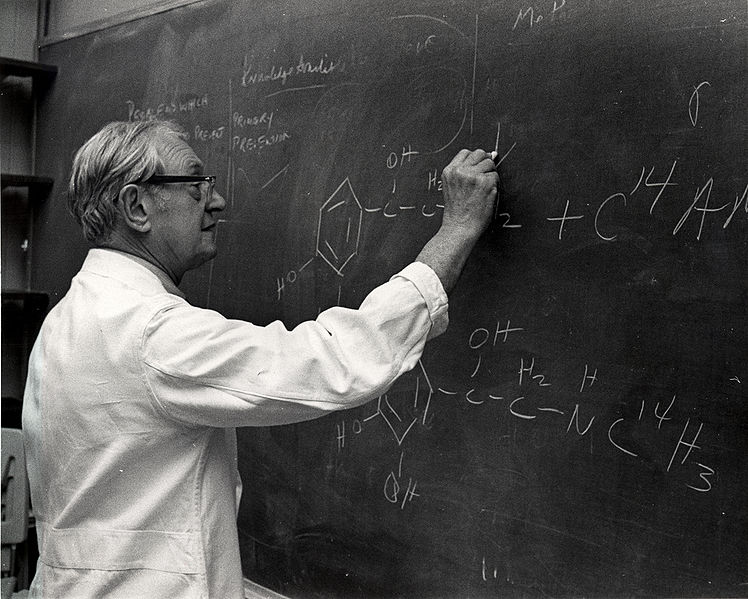 | ||
| Julius Axelrod (Source: National Institutes of Health) |
Really? Good ole' Tylenol might relieve bothersome thoughts about the ultimate threat to our existence? How could I not investigate this further, if only because the report threatens any conception I have of this meek anti-pyretic/analgesic. The title of the study from Psychological Science piqued my intrigue: "The Common Pain of Surrealism and Death: Acetaminophen Reduces Compensatory Affirmation Following Meaning Threat."
The journal article describes two separate studies, but has a background section with some familiar sounding concepts to palliative care clinicians and others which are likely foreign. The authors describe evidence which suggests both physical and social pain may activate the dorsal anterior cingulate cortex (dACC). This area of the brain may serve as a "cortical alarm system" which is sensitive to any discrepancy in the environment (such as a new severe pain stimulus or perceived social slight). The dACC has thus "been theorized to be the source of the unpleasant arousal associated with uncertainty and violations of expectations." Indeed, the authors cite evidence suggesting acetaminophen may reduce activation of the dACC.
What about fear of death? We'll get there, but first, the "Meaning Maintenance Model" which is useful for understanding the study:
In other words, if there's a violation to meaning which is challenging to resolve (e.g. thinking about one's own death), a person might compensate by using cognitive resources to resolve an unrelated but easier to resolve challenge. At the heart of the hypothesis, the presence of a violation of meaning may influence how the person resolves the easier challenge. The person may overcompensate in resolving the "easier" challenge if already presented with a violation to meaning that cannot be readily resolved. How did the researchers test this hypothesis?""The Meaning Maintenance Model" focuses on people’s compensatory responses to violations of expectations, termed meaning threats. The model posits that any perceived meaning threat produces unpleasant arousal that often lies outside of awareness, and is nonspecific to the causal stimulus. This arousal arguably serves to prompt people to identify the source of the perceived discrepancy and, if time and cognitive resources are sufficiently available, to accommodate to the unexpected event....In many cases, however, it is not possible to resolve the violation, either because the problem is too complex or because the source of the arousal has not been identified correctly. When this occurs, people may respond to the arousal by affirming any available unrelated schema to which they are committed. These affirmations of intact meaning frameworks serve to dispel the unpleasant sense that something is wrong."

In one of the double-blind, randomized controlled studies, the participants received either Acetaminophen 1000 mg or a placebo pill orally. After completing some filler tasks to allow time for the drug to reach peak effect, all participants were randomized to complete an essay on one of two topics: 1. What will happen to their body after they die and how they feel about it or 2. The experience of dental pain. Dental pain was chosen because it's an aversive event but likely doesn't create an experience of "violated expectations" like imagining death might.
Subsequently, subjects read about a hypothetical arrest of a person accused of prostitution and were asked to set a bail amount (a "social judgment survey"), an arbitrary task for most of us but one which isn't too challenging to think about.
The researchers found that of all the participants, the group which was asked to write about their own death after taking a placebo pill set the highest bail. The difference between this group and the other groups was statistically significant whereas the difference between the other groups (including the death-writing/Tylenol-taking group) was not significant. In other words, the death-writing/placebo-taking group "compensated" by punishing the accused person more harshly yet this effect appeared to be mitigated by acetaminophen.
Self-reported positive and negative affect did not differ between any of the study conditions, suggesting to the researchers that compensation/"meaning maintenance" is largely not a conscious process.
Included in the paper is another study using similar methods to test the same hypothesis but with different conditions. They found similar results. The authors point out that while Acetaminophen acts at the dACC, it also acts elsewhere, so no conclusion can be made about the neurophysiological basis of any effect.
So, after being asked to reflect on death, participants in this study (who were students at the University of British Columbia where the studies were conducted) inflicted a harsher penalty than normal, perhaps to compensate subconsciously for their inability to resolve the "violation" of thinking about their own death. Should your electronic medical record system now add "existential angst" as an indication for Tylenol? Keep prescribing it for mild pain and fever, but there's nothing in this study which suggests added value of Tylenol for a patient facing a serious, potentially life-threatening illness. There's probably more relevance to defense attorneys who might consider asking potential jurors during voir dire if they have recently been diagnosed with a life-threatening illness (I suspect that's a stretch, too).
What is the relevance of this study, then, to you, the curious Pallimed reader?
Cicely Saunders' concept of total pain and Eric Cassell's deconstruction of suffering are frequently cited in palliative care literature. Both suggest a common pathway by which changes in a person's physical, social, psychological, and spiritual states might inflict the person. I cannot remember coming across a proposed neurophysiological explanation of the phenomena- if one exists, I'd love to see it. The theoretical "meaning maintenance model" described in the article seems to resonate well with total pain/suffering as well as our attempt to intervene through palliation.
If the "meaning maintenance model" is real, what adaptive and maladaptive ways do people use in a subconscious attempt to compensate? For instance, people cannot control the fact that they will die, but can exert some control over decisions about their healthcare. What subconscious processes are at play as patients and their physicians navigate these decisions?
What palliative care interventions provide an avenue for people to compensate when faced with the "unpleasant violation of expectation" which can be associated with the imminent threat of death? Of many possibilities, dignity therapy comes immediately to mind as a therapy which fits the model of "affirming an intact meaning framework" in a constructive manner. What are the neurophysiological effects of dignity therapy?
In the context of this study, it's also interesting to reflect on the variation amongst people with respect to death anxiety. Might this be explainable by differences in neurophysiology? For instance, when faced with death, might a region of the brain (such as the dACC) become less activated in some people than others? What affect could age have on the response of this region of the brain (e.g. does it become less responsive as we grow older, on average). What about over the course of a chronic disease?
What about spiritual practices? Might mindfulness or reflecting on a religious verse about death influence the reactiveness of the dACC? In a very brief search, I did find a few references to the dACC being thicker on average in those who meditate, and a growing body of evidence suggests the value of mindfulness for various physical and psychological symptoms. (My hypothesis: Look at the mirror on your medicine cabinet rather than inside the cabinet for a possible source of relief for death anxiety.)
Lots of questions. Maybe, unbeknownst to me, some answers exist, though I suspect future career(s) could be formed around some of them at the intersection of neurophysiology, psychology, and medicine .
@lfettig
Sunday, May 5, 2013
Thursday, May 2, 2013

Disappointed…frustrated…we’ve all been there. My most vivid memories are of birthdays at home, when books and socks were unwrapped rather than remote control model airplanes and car keys. It wasn’t my birthday this week, but my daily e-mails usually include a gift or two. This week, it came from the National Comprehensive Cancer Network (NCCN) in the form of a link to the 2013 NCCN Guidelines for Patients for Non-Small Cell Lung Cancer (NSCLC). At the time of this writing, it appears to be one of the most recently-updated guide books available.
If you haven’t seen the guidelines on the NCCN website, they are pretty amazing. They look sharp— the graphics are top notch. The NSCLC guide is exactly 100 pages, and is nothing, if not thorough. Diagrams of the lungs and lymph nodes are excellent and informative. The guide covers diagnosis and testing, staging and a broad spectrum of treatment options.
I’ll admit that, initially, I didn’t read it word for word, cover to cover—but I was certainly scanning for key concepts. In particular, I was looking for how the guide would integrate the wonderful work written in 2010 by Jennifer Temel, M.D. and her team at Massachusetts General Hospital on the integration of early palliative care in metastatic lung cancer. (Pallimed posts here and here) Now, more than ever, these findings are extremely helpful and informative in patient education. So, I kept looking…and looking.
There were a couple of references to “best supportive care,” but if that phrase is euphemistic jargon in our industry, I wonder how that is interpreted by patients who are working their way through the 100-page guide.
After my second and more thorough read through, I was convinced I hadn’t seen the word “palliative” anywhere. The good news was that I could access an easy search feature, which I thought would confirm that I had not been a careful reader. However, the bad news was that the search engine said, “There are no results.”
Disappointed…frustrated…
If you didn’t see it the first time, Dr. Temel’s article was a little like a birthday gift…or maybe a birthday gift that showed up a week late. Atul Gawande’s “Letting Go” had just been published in the New Yorker and had provided a glimpse into the world of palliative care, but it was only an anecdotal view. And merely moments later, (well, medical literature moments), the New England Journal of Medicine publishes Temel’s peer-reviewed article that reveals early palliative care in non-small cell lung cancer extends and enhances life. Neither of these articles were a surprise to those of us who advocate for and practice palliative care, but these were wonderful, high-profile stories in the wake of “death panel” rhetoric.
 Fast forward to 2013…one must applaud NCCN for migrating from provider-centric roadmaps and reaching out to patients to help them understand a complex disease process. However, it is hard to understand how a treatment modality that has been shown to make life better and longer for patients with NSCLC, goes virtually unmentioned. It would seem that if early intervention has a survival advantage, we should start seeing a discussion of palliative care in the early sections of this guidebook. Educating patients about palliative care, as a complement to other therapies, would encourage conversations that can otherwise be difficult for practitioners to start.
So, I’m planning on creating a little gift of my own, and am sending these thoughts to a colleague at NCCN. I’m not sure how NCCN develops and promulgates its guidelines, but I know if I don’t say anything, I’m not helping. I have to believe that in an upcoming version of the guide, chapter six will include a section for palliative care.
 Temel, J., Greer, J., Muzikansky, A., Gallagher, E., Admane, S., Jackson, V., Dahlin, C., Blinderman, C., Jacobsen, J., Pirl, W., Billings, J., & Lynch, T. (2010). Early Palliative Care for Patients with Metastatic Non–Small-Cell Lung Cancer New England Journal of Medicine, 363 (8), 733-742 DOI: 10.1056/NEJMoa1000678 - Open Acess PDF
John Hennessy is Vice President, Operations for Sarah Cannon, the global cancer enterprise of Hospital Corporation of America (HCA). His focus areas at Sarah Cannon are medical oncology, survivorship, and palliative care. He serves on the Board of Trustees of the Association of Community Cancer Centers (ACCC), and on several committees for the American Society for Clinical Oncology (ASCO), including the Clinical Practice Committee.
Photo Credit: Gifted by JD Hancock
Thursday, May 2, 2013
Wednesday, May 1, 2013
Case:
Ms Emma N. is a 32 year old woman with type 1 diabetes who underwent a living related donor renal transplant and a subsequent pancreas transplant. Unfortunately, both transplants were complicated by rejection and graft failure requiring re-initiation of hemodialysis in 3 years ago. Since that time she has suffered with constant, intractable nausea with multiple episodes of vomiting throughout each day. Her symptoms were initially thought related to diabetic gastroparesis but they did not respond to metoclopramide, erythromycin or pylorus muscle botulinum toxin injections. An electrical gastric stimulator was to be placed but was aborted when a gastric emptying study was normal. Extensive workup, including laboratory studies, endoscopy, CNS imaging and abdominal imaging, was unrevealing. She received little or no benefit from adequate trials of domperidone, prochlorperazine, ondansetron, oral granisetron, promethazine, trimethobenzamide, scopolamine, mirtazapine, dronabinol, pancreatic enzymes and a proton pump inhibitor.
She underwent voluntary admission to a psychiatric hospital for treatment of any possible contributing eating disorder without any improvement. She has had more than 40 admissions to the hospital for nausea and vomiting. A feeding J-tube was placed to maintain adequate nutrition in 2 years ago. She presented to the Palliative Care clinic for further management of her nausea and vomiting. After a complete history and physical, the etiology of her symptoms remained somewhat elusive. She had nausea before her transplant and it had resolved when the kidney was working then recurred when it failed so the final conclusion was that her symptoms may be due to a poorly defined metabolic process related to her renal failure. Olanzapine was initiated on the first visit for refractory nausea and vomiting and the patient was referred to psychology and psychiatry to help with coping and to address underlying depression and anxiety. At the subsequent visit she noted some benefit so the olanzapine dose was increased and a granisetron transdermal patch was added. At the next visit her symptoms had improved dramatically with a clear temporal relation to starting the granisetron patch. She was only vomiting once or twice in the morning and was relatively asymptomatic through the day. In her first clinic visit she had vomited multiple times through the visit and appeared miserable.
At this visit she was asymptomatic, neatly dressed, wearing makeup and was thrilled at this new level of symptom control which was allowing her to re-engage her life.
Discussion: There were many factors that likely contributed to the dramatic improvement in Ms Emma N’s refractory nausea and vomiting. Better psychiatric care through the palliative care psychologist and psychiatrist almost certainly played a role in her overall clinical turn-around. The close attention, serial visits and supportive counseling she received in the Palliative Care clinic could also have been therapeutic. Up-titration of her olanzapine also likely was helpful. Olanzapine is an atypical antipsychotic that works on multiple receptors including dopaminergic, serotonergic, adrenergic, histaminergic and muscarinic receptors. Of particular interest is its antagonism of 5HT2 receptors which are located in the vomiting center and are not well targeted by other traditional antiemetics. Multiple small trials have demonstrated efficacy of olanzapine for chemotherapy-induced nausea and vomiting.1 Many palliative care practitioners are now also starting to use olanzapine for refractory nausea and vomiting in patients with advanced cancer and other life-limiting conditions.2-4
Even with all of these possible contributors to her improvement, there still seemed to be a clear benefit that came with initiation of the granisetron patch. While intravenous and oral granisetron have been available for some time, transdermal granisetron (Sancuso© - prescribing insert) is a relatively new addition to the practitioner’s toolbox for difficult to control nausea and vomiting. Transdermal granisetron was approved by the FDA for chemotherapy-induced nausea and vomiting (CINV) in September of 2008 based largely on a trial of 582 patients receiving multi-day moderately or highly emetogenic chemotherapy. Patients received either oral or transdermal granisetron and achieved equally good control of their symptoms with either method (approximately 60% in each group achieving complete symptom control). The most common side effect in both groups was constipation.5 The patch is an 8x6cm clear, plastic-backed patch and is worn for 7 days. Pharmacokinectic studies suggest that the patch delivers a dose equivalent to 2 mg of oral granisetron each day it is worn.6
It is thought to exert its antiemetic effect through antagonism of 5HT3 receptors in the gut and chemoreceptor trigger zone.7 Experience with the patch outside of CINV, however, is limited. This case suggests that transdermal granisetron may have a role in other cases of refractory nausea and vomiting. It is unclear why the transdermal form of the drug worked so much better than the oral version in this case. It could reflect absorption issues, especially if she was unable to keep the pills down. It could also reflect compliance issues and may bring into question the adequacy of her prior trial of oral granisetron. Whatever the mechanism, however, the result was dramatic. Further study of this agent in settings other than CINV is clearly needed. Hopefully these results can be replicated and other patients with difficult-to-control nausea and vomiting can achieve life-changing results similar to those achieved by this case.
References:
1. Navari RM, Einhorn LH, Loehrer PJ Sr, Passik SD, Vinson J, McClean J, Chowhan N, Hanna NH; Johnson CS (2007). A phase II trial of olanzapine, dexamethasone, and palonosetron for the prevention of chemotherapy-induced nausea and vomiting: a Hoosier oncology group study. Supportive Care in Cancer, 15 (11), 1285-91 PMID: 17375339
2. Srivastava M, Brito-Dellan N, Davis MP, Leach M, Lagman R (2003). Olanzapine as an antiemetic in refractory nausea and vomiting in advanced cancer. Journal of Pain and Symptom Management, 25 (6), 578-82 PMID: 12782438
3. Jackson WC, Tavernier L (2003). Olanzapine for intractable nausea in palliative care patients. Journal of Palliative Medicine, 6 (2), 251-5 PMID: 12854942
4. Passik SD, Lundberg J, Kirsh KL, Theobald D, Donaghy K, Holtsclaw E, Cooper M, Dugan W (2002). A pilot exploration of the antiemetic activity of olanzapine for the relief of nausea in patients with advanced cancer and pain. Journal of Pain and Symptom Management, 23 (6), 526-32 PMID: 12067777
5. Boccia RV, Gordan LN, Clark G, Howell JD, Grunberg SM, on behalf of the Sancuso Study Group (2010). Efficacy and tolerability of transdermal granisetron for the control of chemotherapy-induced nausea and vomiting associated with moderately and highly emetogenic multi-day chemotherapy: a randomized, double-blind, phase III study. Supportive Care in Cancer PMID: 20835873 - Open Access PDF
6. Howell J, Smeets J, Drenth HJ, Gill D (2009). Pharmacokinetics of a granisetron transdermal system for the treatment of chemotherapy-induced nausea and vomiting. Journal of Oncology Pharmacy Practice, 15 (4), 223-31 PMID: 19304880
7. Wood, G., Shega, J., Lynch, B., Von Roenn, J. (2007). Management of Intractable Nausea and Vomiting in Patients at the End of Life: "I Was Feeling Nauseous All of the Time . . . Nothing Was Working" JAMA: The Journal of the American Medical Association, 298 (10), 1196-1207 DOI: 10.1001/jama.298.10.1196
University of Pittsburgh Medical Center
Original PDF
Pallimed Case Conference Disclaimer: This post is not intended to substitue good individualized clinical judgement or replace a physician-patient relationship. It is published as a means to illustrate important teaching points in health care.
Wednesday, May 1, 2013
When the Case Conference blog was first started in 2008, there was always hope to find an editor to oversee it, but early collaborations ultimately did not facilitate stable editorial leadership.
The aim to use cases to illustrate important teaching points in palliative care is still an important one. The University of Pittsburgh Palliative Care Department has graciously allowed us to continue to be a publishing venue for their excellent teaching cases. We are hopeful to see more open access case based publications from fellowships, palliative care departments and hospice organizations. Pallimed is committed to being a quality forum for these cases going forward.
So for ease of publication and the importance of delivering good content on a consistent basis we will be importing the already published cases to the main Pallimed site over the next year. In addition to these historical cases we will be looking for new cases and encourage submissions for potential publication on Pallimed. All cases will be double de-identified (once by the author and once by the Pallimed editorial staff) for protection of the involved parties.
Current Email Subscribers: All current email subscribers to Cases will be imported to the main Pallimed list. I will work at removing any duplicate subscribers, plus the email updates have a very simple unsubscribe option. If you are only interested in Case Conferences we eventually will be moving to a new subscription system in the May 2013 which will allow for you to just choose Cases if those interest you most.
Comments: Comments on cases.pallimed.org are now closed We will sync your comments over to the new post in addition to posting a follow-back link.
Pallimed Case Conferences (cases.pallimed.org) will stay online as an archived source, but will no longer be updated. For new cases please search www.pallimed.org
If you are interested in submitting a Case or even potentially becoming a Section Editor for Case Conferences please email christian@pallimed.org

When I strike up conversation on the airplane and discussion turns to palliative medicine, the response tends to be either one of a blank stare and question about what is palliative medicine or a knowing smile and a ready story about how hospice and palliative medicine made a difference in the life of a loved one. I love the stories and they reinvigorate me. But to help the public with the questioning, blank stares, we still have a lot of work to do.
As part of the American Academy of Hospice and Palliative Medicine's Shaping the Future Campaign, one of the 3 key areas of focus is Raising Awareness. Each and every member of the HPM community should play a role in facilitating advocacy and raising awareness. A simple way we all can raise awareness is telling stories (with appropriate confidentiality precautions of course!) One powerful patient story is more compelling than a pile of data.
The master storytellers of our day and age are in film. Spielberg, Lucas, Abrahms, Lee are all master storytellers. Pallimed with the help of Elaine Wittenberg-Lyles at Clinical Communication Collaborative (@palcarecomm) has created a wonderful list of films that have palliative medicine themes. Go to the list and add more!
However notably absent from the film lists are documentaries. Documentaries come in many forms but at their best they can change minds and generate conversation. More on documentaries from the Lincoln Center Film Society here.
Good documentaries drive the audience to want to ask questions and learn more. Hosting community screenings of documentary film about serious illness can be an excellent opportunity to educate your community about palliative care. Universities, public libraries, and art house cinema venues are all excellent partners where your hospice or palliative care team can help host a discussion after a screening.It is a chance to tell the story and value of palliative medicine.
An excellent opportunity to get started is coming up June 21. The makers of I Am Breathing are calling for a global screening of their film to raise awareness about Motor Neuron Disease (Amyotrophic lateral Sclerosis, aka ALS or "Lou Gehrig's Disease.") I was fortunate enough to see an early screening at The True/False Film Festival, and the film is excellent! I Am Breathing tells the story, hopes, and coping of Neal Platt, age 34, during his last year of life with ALS. While the purpose of the global screening is to raise awareness about ALS, I can't imagine ALS without comprehensive palliative care early in the illness. Here's a chance to teach that palliative care is for serious illness anywhere in the disease trajectory.
Consider partnering with your local film community or library or university to host a screening. Click here for more details on hosting a screening. Partner with your local ALS neurology team to lead a discussion. Hey, you can build connections to Neurology too. Tell the story of ALS, but also bring the message of how palliative medicine can help with serious illness and can be used sooner. (Palliative medicine is not featured much in the film but they were actively involved. )
And add some documentaries to the Pallimed list of films that have palliative medicine themes.
Friday, April 26, 2013

I know I’m not supposed to say this but I’ll say it once - we’re not a death denying society. I’m starting to learn about death in nonclinical settings. My mind is opening and I’m stoked.
I just returned from 2013 TEDMED where the opening salvo encouraged me to drop my palliative care persona, make intellectual and emotional connections, and ask many questions. I was then immersed in thousands of disparate ideas.
Imagine my feeling when I realized that I don’t understand my patients. Patient perspectives are not seen. This problem, this theme was repeated.

I feel that I possess listening and understanding skills but really had to take a second look when I realized that there is a whole patient vocabulary that I don’t recognize. Sally Okun, Vice President of Advocacy, Policy, and Safety at PatientsLikeMe is systematically curating a “patient lexicon”. Patients can’t be heard if patients aren’t understood. This patient lexicon will amplify voices so stories can be heard and understood.
An understood story is important. Amanda Bennett, Pulitzer Prize winning journalist and author of The Cost of Hope told a poignant story of her journey with her husband through his illness and eventual death. Through their courtship and marriage they did everything; they travelled, they adventured, they had many children, they had hope. Through his cancer, they "did everything". They had hope. They had directives that clearly stated to “stop everything” when there was “no hope” but they always had hope. They did not have a narrative for death. Denial was not a bug, it was a feature. What people called denial, they called hope. Stories need to be heard.
 |
| Michael Hebb |
This honesty happens amongst ordinary people. I was not surprised when meeting other physicians that death was not on conversation. Michael Hebb, chef and “underground restaurateur, impresario, provacateur” is starting a project called, Let’s Have Dinner and Talk about Death. During these dinners, they talk about the beauty, mystery, fears, and hopes and the challenges of end-of-life planning. The wonder of this is that it’s done in a comfortable dinner setting. Michael stresses that these conversations should not be with physicians, nurses, or lawyers but amongst ordinary people. People want to talk about death when coupled with the right ingredients. Michael’s project is popular, it’s artsy and it’s potentially scalable. It’s such a great idea.

People long to and are so grateful when they are identified. The artist Raghava KK said, "Teach perspective, learn empathy". He has it right. I'm taking a view and saying it again - we're not a death denying society. What do you think? Is this an idea worth spreading?
Photo Credit (some rights reserved on photos)
TEDMED Panel by Jerod Harris/TEDMED
Michael Hebb by Wayne Price - DeathOverDinner.org
Friday, April 26, 2013
Wednesday, April 24, 2013
I'm sure some of you are surprised to see you email boxes filling up with Pallimed posts again. Since coming back from the AAHPM/HPNA Annual Assembly we have been busily working on a few projects behind the scenes as we look to the future of this website.
Energizing the base
We had a great meeting of Pallimed contributors in New Orleans during the New Orleans meeting in March. There were many fresh commitments from some of our key contributors, and you can see that both Lyle Fettig and Suzana Makowski have started writing again. The conversations sparked a energy which made all of us realize how satisfying, fun and important it is to talk about hospice and palliative medicine.
Adding new bloggers
We already have two new contributors this week and there are a few more in line. Fresh insight is always good, and these new writers are already bringing great ideas to the table.
Refreshing apps and blog
I have let me coding skills slide a little, but over the past month I have been making small tweaks to the apps and the blogs (including the comments system). Not all the kinks are worked out, but we are making progress. If you find any errors or issues, please send them to me so I can get them worked out christian@pallimed.org
Updating the subscription system
This is my next big project, so to really test out the new system you may see some more frequent posting as I try some options behind the scenes before it goes live. Instead of grouping blog posts all in one day, I will likely have periods where the posts come every day for a few days. There should be a lot of new features and flexibility for you the reader.
Integrating Arts & Humanities and the Cases blog to the main blog
One key change we all agreed on in New Orleans was to combine the three Pallimed blogs into one. The new subscription system will allow for you to personalize what content you want to see and how often. To get all the content into one blog for posterity, we will slowly be including historical posts from both sites to the main blog. All historical posts will be identified. The comments will be ported over as well but that may be a little challenging so if you see any hiccups, please share them with me.
We have some other big and fun changes coming up soon, but I'll save those for another post.
Wednesday, April 24, 2013
