

Thursday, October 29, 2009
Dialysis, function, and how you spend your time
First is from the NEJM and looks at functional status in older adults residing in nursing homes before and after initiating dialysis. It uses data from the Minimum Data Set and the US Renal Data System, and looks at all ~3700 patients (mean age 73 years, 60% women, 64% white) residing in US NHs 1998-2000 who initiated dialysis while in a NH. They compared functional status (essentially a composite measure of ADLs) before and after dialysis initiation.
Gross survival outcomes are presented: 24, 41, 51, and 58% of patients had died by 3, 6, 9, and 12 months, respectively. (So: worse survival than many metastatic cancers, and being a NH resident and initiating dialysis is almost a hospice-qualifying event, at least by prognostic criteria.)
In addition, most patients' functional status declined, whether or not they survived, and by 12 months only 15% of patients had intact functional status; everyone else was dead or with diminished functional status. With complicated modeling, they indicate that the rate of functional decline increased rapidly just prior to initiating dialysis, leveled off for ~3 months afterwards, then steadily declined again.
(One major caution here - these functional status findings only describe patients who remained in a NH (such that MDS data were available), and so don't include those who were discharged home (the mortality data include everyone initiating dialysis). They note that for the 12 month functional status measurement, they were missing data on over 700 patients, at least some of whom one imagines rehab'd ok and went home with stable if not improved functional status. They do note, without presenting their data, that the results were similar if they assumed all those who went home as having 'maintained' functional status, but it's not clear how many patients this actually represents. I can't imagine the results would be unchanged if it was most of those 700.)
So, as best as can be told, for frail older patients (assuming residence in a NH as a proxy for frailty), initiation of dialysis does not seem to improve quality of life, at least as measured by functional status. This is an important, and thought-provoking finding. As a palliative consultant, I see these patients all the time (frail, older patients, who initiate dialysis and really not much gets better: still weak, still debilitated, lots of catheter/access complications, in and out of acute care settings with infections, pnemonias, and vascular events). I assumed however I was seeing a small, self-selected section of these patients - the minority who don't do well after dialysis initiation - but these data suggest this minority is not small, and is perhaps the norm (again, with the caveat that these are NH residents, and not representative of all 73 year olds who initiate dialysis).
As an aside, I'll also cheer the authors for throwing in this sentence in their discussion about why dialysis might not improve function in most frail older patients: 'Finally, kidney failure may be a reflection of terminal multiorgan dysfunction rather than a primary cause of functional decline, and thus the initiation of dialysis may not rescue patients from an inevitable decline.' This 'whole-organism' concept, that death may not just be a result of organ failure (which if it was then presumably one just needs to fix/replace/circumvent those organs and people will be fine), struck me as a bit subversive.
The second paper is from the Clinical Journal of the American Society of Nephrology and tries to compare outcomes between older adults (over 70 years) with ESRD who initiate dialysis and those who don't. It comes from a single institution in the UK, and it should be noted addresses a different population (ie not just NH residents) than the NEJM one.
The study involves comparing patients in this institution's ESRD referral clinic who are 'dialysis-ready' (essentially an estimated glomerular filtration rate of 10.8ml/min or less) who choose to proceed with dialysis vs. those who don't. Those who don't at this institution receive what they call maximum conservative management, which was not strictly controlled in this descriptive study, but per their report commonly involves interventions to maintain adequate serum hemoglobin, loop diuretics, potassium restriction, as well as end of life counseling (why they call this MCM I'm not sure - it just seems like good management of ESRD without dialysis to me - promoting symptom alleviating and modestly life-prolonging treatments - perhaps this is distinction with a strictly symptom alleviating/very conservative approach?).
Patients who received dialysis (n=173, mean age 76 years) were compared with the 29 patients who did not (mean age 82 years). To compare survival after dialysis initiation, they created a model which predicted when the MCM patients 'would have' started dialysis had they chosen to (ie, at the same eGFR as the actual dialysis group), to make the survival comparisons as valid as possible. Despite the age differences, comorbidity (using the Charlson Comorbidity Index) was similar between groups, as were baseline hemoglobin and albumin (two well established prognostic markers in ESRD). It's important however, when reading the results below, that there was nothing controlled or experimental about these data: this is simply a description of what happened to those who sought dialysis vs. those who didn't at this center.
Median survival in the dialysis group was 38 months vs 14 months in the MCM group. The authors also do a variety of analyses to look at how those months were spent in the different group, how they differed, as well as how the different groups died. The MCM group had a far less medicalized last 14 months: 40% died at home or hospice vs. 70% of dialysis patients. Rates of hospitalization were different: 25 days/patient/year in the dialysis group vs. 16 in the MCM. Of most interest, they measured days of 'institutionalization' (essentially days of hospitalization plus days spent receiving hemodialysis - they included HD days as full days with the idea that many of their older patients essentially devote the entire day to HD - transport to and from and receiving HD can take the better part of a day, etc.) between groups. Patients receiving hemodialysis were 173 per patient per year (e.g. 47% of days) vs. 16 (4.3% of days) in the MCM group.
Mashing these findings together, they conclude that for their patients, nearly all of the survival increase with dialysis can be accounted for by days in the hospital or actually receiving dialysis: nearly every day gained by dialysis is a day spent receiving dialysis (or in the hospital with complications of dialysis/other comorbidities). To be fair, they gained probably 3 months of institution free days too, but still a far less gain than the ~2 years when looking strictly at gross survival.
So not a banner day for dialysis in above 70 set. The results speak for themselves, I think, and I'll refer you to some of the links below to better discussions of the palliative care implications of this than I can muster now. The one thing I'll muse about, is what should we be telling our patients? Or, how can we counsel our patients about this? Despite what the death panelists seem to believe, no one out there is going to grab these findings to suggest dialysis shouldn't be offered to older patients (and for those who fear 'socialized medicine,' one should reflect that the 2nd paper, which involved dialysis hundreds of 70+ year olds, involved residents of the UK). However, we should be trying our best to honestly counsel them about the limitations of dialysis: it might not improve your function, it involves a lot of medicalization of what are likely your final few years, etc.
I was talking with some folks the other day about whether it made sense to show patients videos of 'actual' CPR when discussing code status, and we talked about the work of Angelo Volandes who is working on that very thing (see here - the videos aren't available for public viewing as far as I can tell), and I wonder if 'living with frailty and ESRD-HD' might be a good topic for video advance care planning?
Thanks to Dr. Eric Cohen for sharing the CJASN paper with me.
See also Alex Smith's discussion of the NEJM paper at GeriPal, as well as the accompanying editorial in NEJM, both of which more directly discuss the role of palliative care in all this.
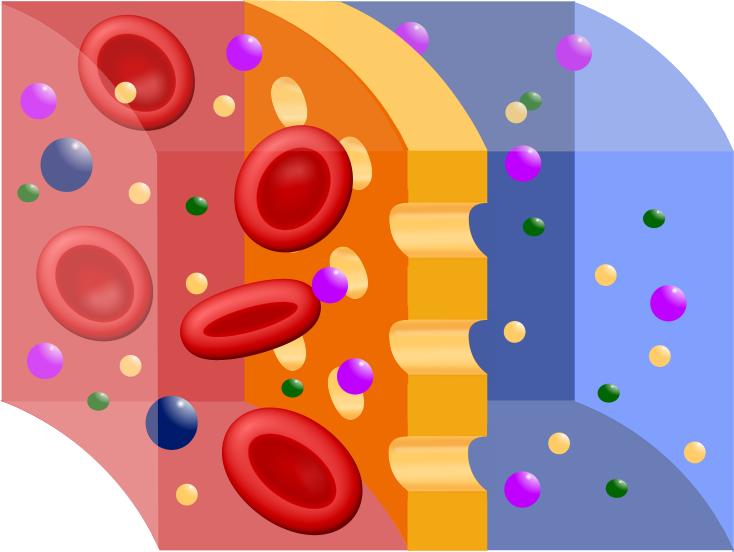
Image, Semipermeable Membrane, is from Wikipedia.


