

Tuesday, March 17, 2020

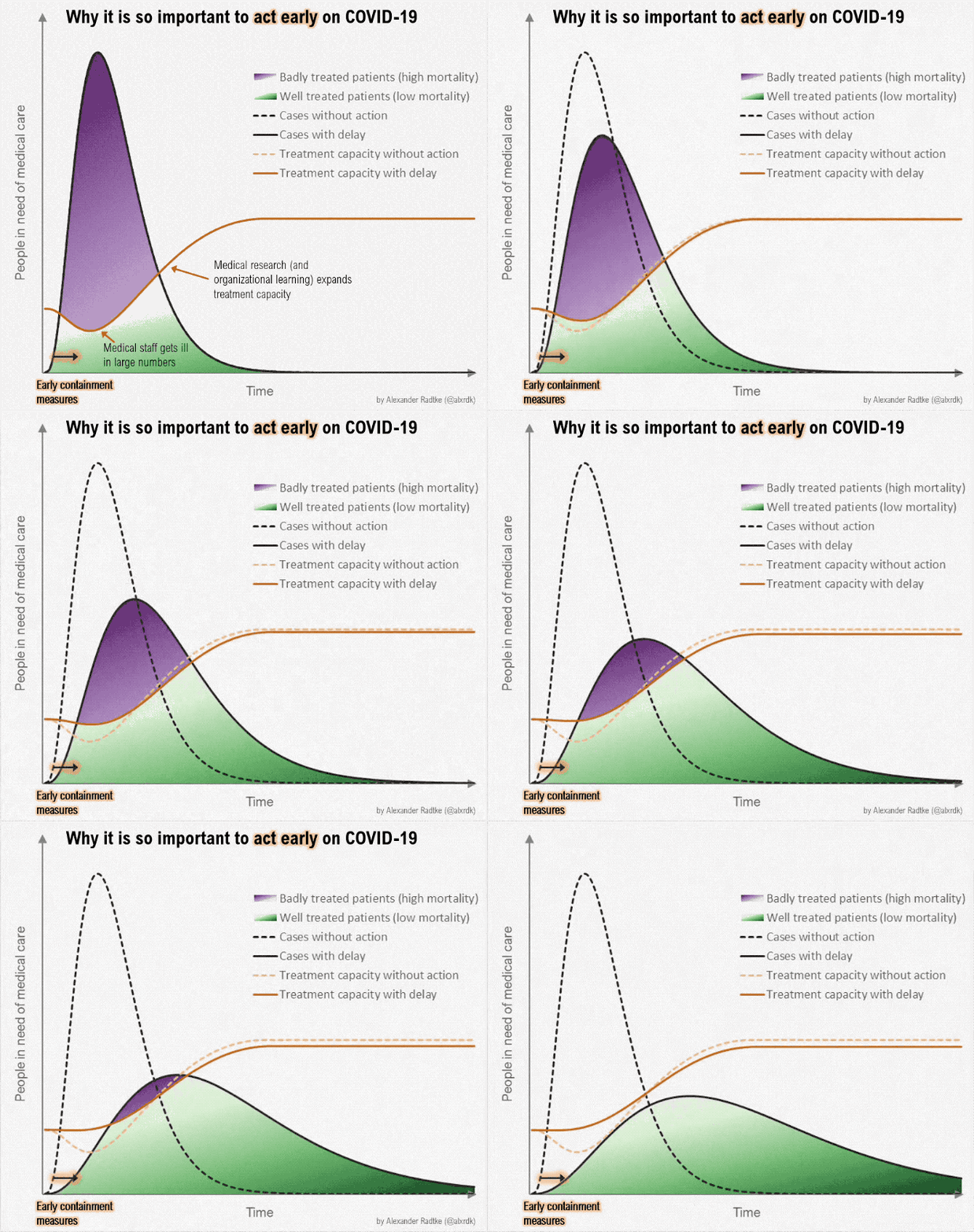
The guidelines outlined in the recent letter co-sponsored by Pallimed and Geripal serve as important reminders of key messages for clinicians: social distancing, handwashing, use of personal protective equipment to help flatten the curve of viral spread, adhering to protocols about screening, testing and even triaging.
I would advocate for another layer of engagement in this effort. Palliative care as a specialty is uniquely positioned to address the people who are likely to be disproportionately affected by the disease: the chronically ill and the aged. After all, this population is the demographic adult palliative care clinicians see frequently.
There is a likely double risk to this population – first from the virus itself. While the overall mortality rate of COVID19 is likely to hover around 1-2%, the mortality rate for people over 80 has been reported to be 14.8-21.9%, for patients with cardiovascular disease 10-13.2%, diabetes 7-9.2%, pulmonary disease 6.3-8%. The second risk is from the triaging that will occur if indeed the burden to the US health system is even half of what is predicted.
In this second scenario, hospitals, ICUs, will be overflowing with cases, as reported currently in Italy. The number of hospital beds per capita in the US is far less than those in many other countries. In Italy, ventilators are considered to be gold. Triaging is occurring, with an aim to prioritize intensive care, ventilator utilization for patients most likely to survive the infection, rather than those who have the greatest likelihood of a poor outcome. News articles are telling stories about older people and those with chronic conditions, being sent home. The implication is they are left alone, without resources.
As Dr. Kathy Kirkland, Chief of Palliative Care at Dartmouth Hitchcock Medical Center notes, “decision support both for individuals and also for the organization if they are in the position of deciding how to allocate scarce resources is critical in times like these, and making good decisions in the face of uncertainty is one of our areas of expertise.” There are people who will choose not to be intubated, and they likely need to know , what might they can expect. ‘No care’ should not be their perception as the ‘other option’. As palliative care experts, it is incumbent on us to define what the alternative will be.
Social distancing means providing alternatives to testing in hospitals and getting supportive care in hospitals. Visiting nursing agencies around the country are training nurses to test patients in their homes. Supporting these agencies, as well as engaging hospices to help optimize symptom management at home is crucial.
Aligned with all of this, ensuring patient’s care wishes are known and documented is perhaps more critical than ever. A fear I have heard is the perception that discussing code status will equate with no treatment or triaging out of care. I understand this fear. I remember recoiling with horror upon reading the New York Times Magazine, and then hearing the keynote at AAHPM annual assembly outline the horrific and difficult decisions made at Memorial Hospital post Katrina. Patients with DNR orders left aside or euthanized. Thankfully now POLST orders allow for distinction between code status from intensity of treatment preferences. And comfort should always be provided.
Our voice about how to help make these decisions, along with ethicists (many of us are both) can change the dialogue of triaging this pandemic. We can honor a patient’s wish to be DNR with intubation by asking of their wish, and in doing to perhaps help alleviate some of the anticipated strain on access to ventilators and non-invasive ventilator support, while actually also ensuring the patient still receives care and treatment.
Palliative care, often in partnership with the work of home health agencies and hospices is leading the innovation in telehealth to enhance care at home. Already, in the early weeks of March there has been an upswing in use of telehealth among palliative care clinicians. Patients are asking for alternatives to clinic and hospital visits – wisely, and our field is responding.
We learned at CAPC in the fall of 2019 about colleagues using encrypted conference lines to facilitate the visits, even if formal telemedicine programs are not available to a group or institution. Honestly, we have for years held family meetings where family members who are out of state or out of country join the meeting via cell phone, FaceTime, WhatsApp, Skype, or another similar program. Now the process is going to be more formal. What patient encounters can we do in this manner, compared in in the patient’s room? In some ways I can engage in a more personal way using video conferencing where my face, my expressions, my non-verbal cues can be seen rather than my body hidden from within the confines of an N95 mask and goggles, or powered air purifying respirator (PAPR).
Patient education and caregiver support is another area of our expertise. But now we need to educate and support more people. Our specialty has also been a leader in use of social media for collaboration and education of peers. How can we build on this movement and provide a platform to share best practices with lay caregivers, as well as the aides and nurses in long term care facilities who have not learned the tricks of our trade?
You know all this – but what do we do differently?
For all the strengths of our specialty, there is one area we are generally no too familiar with: the step to be proactive. We tend to be the specialty to respond when all else fails. But now, we have to step in early.
To flatten the curve of this disease, we have to use all these tools and skills in the following strategic way by partnering with our organizations, regional, and state task forces to:
1. Define processes and interventions to keep people home who would prefer to avoid hospitalization.
- POLST allows patients to choose to receive full interventions, or some, or comfort. It is not about absence of care. How can we help patients make their wishes known now, without fearing being triaged away from care they would want?
- We must support VNA and hospice agencies in their efforts to screen, test, and treat patients at home. Partnering with them in expanding telehealth visits, patient and staff education about symptom management, and other creative initiatives should be considered.
2.Being a strong voice, along with ethics, in defining and clarifying the processes of triaging patients when resource allocation is slim.
- At the bedside (or via telehealth) – we are well suited to facilitate these discussions, and support families through the tough choices, especially if a true choice is available.
- In the boardroom – we cannot allow the alternative to ICU to be ‘no care.’ If a patient with a chronic illness is dying of COVID19 complications, we know how to alleviate their breathlessness, nausea, fear, abdominal pain better than just about anyone. Those protocols need to be at the table.
- Perhaps the triage can happen before the hospital, in the community, with optimal care there. We need to be the interdisciplinary voice to facilitate the possibility of this partnership and coordination of care. We do it every day in discharge planning. Now it is time for us to bring it to the intra-organizational level.
3. Use our foundational principles.
- We have multiple frameworks for dealing with crises – Maslow’s hierarchy of needs, biopsychosocial approach, 8-domains from EPIC, etc., and a recognition of as well as embedded process of interdisciplinary collaboration like few other groups in healthcare to address not only the medical and physical needs of patients and families, but the full catastrophe of this pandemic.
- We have the voice and practiced reflect to collaborate with people who see challenges from differing points of view presenting a variety of solutions.
- We can help our health system understand how to collaborate with the wisdom embedded in our communities – not only the doctors, nurses, social workers, and chaplains we often work but even beyond. It is time to expand our interdisciplinary team. How wide? It’s your decision, based on your community.
We are called to step up, not merely to participate in the rules and recommendations recommended by the epidemiologists, infectious disease experts, and others but to come to the table with ideas and perspective to mitigate the extent of the possible challenges and alleviate the suffering our communities are about to experience.
Lastly, I do wish to address another concern. Like just about every physician and nurse, healthcare professional, we are called to step in when times get hard. There is a temptation to be a hero or even martyr of some sort. We like to be close to our patients, to hold their hands, to share a hug when needed. But now is not that time. We have to find other ways of leaning in, lending strength, being present with, other than physical closeness. For many of us, this will be hard and even feel as though we are failing our patients, or part of our own sense of purpose. The greater good must prevail right now. Remember music can touch a heart from a distance. Your skill in listening and being present can also transcend distance.
Suzana K. Everett Makowski, MD MMM CPE FAAHPM FACP comes back after a long hiatus to contribute to Pallimed again. She currently is Chief of Palliative Care at Exeter Health Resources, a community health system in New Hampshire. Having grown up internationally as a citizen of Brazil and the US, she has a passion for inter-cultural communication and collaboration in palliative care. Other areas of interest include complexity science and positive deviance, lean and culture change, leadership and innovation.
She can be found on Twitter @suzanakm
For more posts on COVID-19, click here.
For more posts on Emergency Preparedness, click here.
For more posts by Suzana Makowski, click here.
Check out the Pallimed COVID-19 Resource page here.
Tuesday, March 17, 2020

Check out the Pallimed COVID-19 Resource page here. - Ed.
I love the letter co-published by Pallimed and Geripal about COVID,and you should read that too. As an erstwhile (for now) Pallimed contributor, I thought I'd toss in my two cents with some additional thoughts/reflections based on week 1 of preparing for the COVID pandemic as a palliative care physician.
Over the last week, I've operated mentally in most of these lanes:
1. Primary prevention and public health: Through extensive advocacy for social distancing and widespread testing. I have talked about it with my patients and my own family and friends. This also included persistently calling governmental officials, pulling my sons out of school, writing letters, and re-entering social media after an over two year hiatus
2. Assessment of patients with suspected COVID-19, like a person I've been following for 4-5 years who had pneumonia last year and called with complaint of a cough. The usual clinical reasoning of the scenario was complicated as I tried to balance the desire to get him evaluated with the public health considerations.
3. Management of mildly ill confirmed cases and mitigating the public health risk. Haven't dealt with this yet. Just waiting for the first call on one of my high risk clinic patients to have this. I know that even if they have mild symptoms, they might progress to lane 4. It feels unfair to think that an emerging infectious disease would take any of their lives.
4. Management of seriously or critically ill patients who might die. We've spent a lot of time with our critical care colleagues over the last week, swiftly trying to figure out what we would do with a "surge" and how it would change our usual collaboration, which is robust and well established. Enter the age of inpatient teleconsults, including a first: A surrogate asking me if he could email me a photo of himself so I could see what he looks like.
5. Worst case scenario of resource allocation issues: We hate talking about this, but it might happen, and we have to face it and be prepared.
It's dizzying to think about all of these lanes, on top of the usual issues our patients and teams face. Lane 4 and 5 are scary enough to serve as motivation to put a lot of attention into lane 1. Even though our ICU is a place with plenty of windows and sunlight, for some reason, I imagine lane 4 and 5 as a dark windowless place without walls, just a massive ward full of despair. It's enough to move any of us to tears and action.
I've found it helpful, in conversation about the pandemic, to identify which lane we are talking about at that moment, especially with respect to lane 4 vs. 5. In lane 5, there will be factors out of our control that determine whether patients get what they need. Routine palliative care practice (fueled by extra coffee and fewer administrative meetings) will serve our patients and their families well. Under any circumstance, we will do what we can to support shared decision-making, even if there are factors out of our control (as there always are).
Here are a few thoughts as we enter the new week:
Let's keep advocating in lane 1 while we prepare
It's surreal to see cars on the road and just feel, well, disturbed. After I finished pumping gas today, I wiped the handle off with Chlorox and went onto the next pump to wipe that one down too. (What have I become?) We are still woefully under testing for SARS-CoV2. Still some people think this is a nothingburger. Continue to educate patiently and figure out what's hardest for them about social distancing, and empathize. I'm struggling with it. I've been avoiding touching my family, changing clothes in the garage before entering, etc. It's for the birds.
Remember the concept of mortality salience and terror management theory
I'm scared. For myself, for my own health. It's tempered by probabilities, but you know, anecdotes. I'm scared for my family's health, and my parents are hunkered down, not even allowed to touch their mail. For the health and comfort of my current patients and their families. For the suffering that our new patients in this time period of isolation. Loneliness is already an epidemic, and the pandemic will amplify this. "Comfort and company" is essential to the end of life experience, as one of my mentors Greg Sachs likes to say. The thought of having a large number of people dying in uber-isolation, swimming in PPE, without their families.
I know I'm not alone. I've talked to colleagues about the three levels of fear: for our patients, personal, and professional. Everyone is walking around with extra fear.
What does evidence for Terror Management Theory suggest about what this will do to us? When people are confronted with their mortality, there's evidence to suggest they act in heightened ways consistent with their own values. (There was the famous study where judges handed out worse punishments for criminals after being reminded of their own mortality) It may make us more protective of those values as well. In stressful times, there's more likely to be tension about little things. Pause and make sure you're not actually on the same page about the values. In times like this, there may be uncertainty about the best means to accomplish certain goals. It helps to solidify agreement about the goal or value itself. "What we both value is..." This is the VitalTalk "align" statement from REMAP. It works for us as well as our patients and families.
Don't let perfection be the enemy of the good
"Be fast, have no regrets."— Sky News (@SkyNews) March 13, 2020
Dr Michael J Ryan says "the greatest error is not to move" and "speed trumps perfection" when it comes to dealing with an outbreak such as #coronavirus.
Get the latest on COVID-19 👉 https://t.co/HMPNwaVk37 pic.twitter.com/wDa7XOMw8Q
Remember the secret sauce of palliative care
 What's the secret sauce? There is more than one ingredient, but in addition to all the skilled professionals from various disciplines who bring compassion and persistence to care of individuals, I think the sauce is Relational Coordination. Timely, accurate, frequent, and problem solving communication that is oriented around shared goals, shared knowledge, and mutual respect. Lean on these in the days and weeks ahead: With teammates, colleagues, hospital leaders, and most of all, patients and families.
 Relational coordination defines the collaboration between palliative care and critical care at many places, and I can't imagine my career without this collaboration. I have a deep admiration for the critical care physicians I work with, many who have become friends over the years, sharing in the care of some of our sickest and most vulnerable patients and their families. Much has been written about avoiding war metaphors (with cancer and such), but I'm setting aside my pacifist ways for this virus. We're going to war now, locked arm and arm against this tiny alien and the cascading effect on individuals and society. The relationships built between colleagues will help us find our way through.
Let's save as many lives as we can and palliate this broken world along the way.
Flatten the curve, but when it hits, charge up the hill.
Source for image 1: Meredith MacMartin
Source for image 2: https://heller.brandeis.edu/relational-coordination/
Dr. Lyle Fettig is an Assistant Professor of Clinical Medicine in the Department of Medicine/Division of General Internal Medicine and Geriatrics. Dr. Fettig directs the IUSM Palliative Medicine Fellowship and works clinically with the Eskenazi Health Palliative Care Program.
For more posts on COVID-19, click here.
For more posts on Emergency Preparedness, click here.
For more posts by Lyle Fettig, click here.
Friday, March 13, 2020

Dear Hospice and Palliative Care community,
We are sad we cannot be together this year at the Annual Assembly and deeply concerned about the growing risk of the novel coronavirus. We want to send you a bit of encouragement, and some thoughts on how we can take care of ourselves, our teams, and our community in the setting of this new pandemic.
We have always “punched above our weight” as a field, and the secret to that has been hard work, community, and being smart.
We don’t have to tell you to work hard. You and your teams know how to do this.
1) Start social distancing from others (except patients) now, wherever you are in the country. While we realize this is a stronger recommendation than currently being asked for by many public health entities, we are doing so in the interest of health care workers and patients
--COVID-19 is spreading rapidly, sometimes with minor or no symptoms, with serious impact to healthcare systems worldwide. The exponential growth in cases in China, Italy, and South Korea has overwhelmed the healthcare systems, and has affected our patient population most seriously - the chronically ill and older adults.
--We need to be ready and able to respond when the time comes. We will be exposed to the COVID–19 virus, and we cannot afford to lose our hospice and palliative care clinicians to isolation restrictions or illness, especially given the workforce shortages many of us face already.
--Stay away from public gatherings like movies, sporting events, concerts, the theater, houses of worship and other places where people assemble. Try to participate in these from home via electronic means, if possible. Talk with your spiritual leaders about making services available via streaming tech, for example.
--Attend all meetings electronically unless physical presence is absolutely necessary. Replace non–essential meetings with email or other asynchronous communications,
--Eliminate all non–essential travel, and
--Protect yourself at work using PPE and rigorous technique. *Reminder of how to safely don and doff PPE here
--Wash your hands or use at least 60% alcohol hand sanitizer
--Avoid touching your face. (Holly finds this impossible, so she wears her hair up and bobby pinned normally, to avoid itching her face and tucking her hair behind her ear constantly.)
--Stay home if you are sick, until the symptoms are gone for at least 24 hours. (This is hard as we have been trained to just work anyway. Don’t do it. Stay home.)
--If you are exposed and/or have COVID-19 symptoms, you should isolate at home for 14 days. If you think you should be tested, make sure you call ahead and know how your region is handling testing for health care workers. (You should have received copious emails from your institutions on this. If not, contact your institution's occupational health team or COVID response team for local instructions on how to access testing.)
--If you have traveled to or had a layover in any of the 5 countries (China, Iran, Italy, South Korea, or Japan) then you need to stay in isolation at home even if you are asymptomatic. Note these countries may change after this is originally posted on Mar 12, 2020.
--See CDC for the latest guidelines: www.coronavirus.gov
--Wash your hands the right way. (Yeah, we said it already).
3) For hospices and home-based palliative care:
--NHPCO has an excellent resource page for that includes CDC guidance for hospices on COVID-19 infection control and prevention : https://www.nhpco.org/coronavirus
--Proactively provide education to your patients and their caregivers on how to stay safe and get food, medication, pet food, household goods, and other necessities, including companies that deliver to minimize household exposure. You may deliver the patient’s medications, but their caregivers will also need to get their medications.
--Proactively remind patients and caregivers about CDC guidelines (e.g. handwashing, greeting people, etc.), and to clean their cell phones.
--Consider having non-caregiver loved ones Facetime or Skype to “visit” rather than coming in person.
--Use virtual visits whenever possible.
--For patients who need to be seen, send only the necessary team members.
--Call ahead to screen for exposure and symptoms of the patient or caregivers to see if PPE is necessary.
--Ensure your team members have appropriate PPE in their cars, as well as disposal containers. Consider donning and doffing the PPE in attached garages or entryways to help maintain patient privacy.
--Make sure people going into homes know how to don/doff PPE and are FIT tested, if appropriate.
--Wash hands or use hand sanitizer prior to and after seeing patients.
--Wipe down all equipment and cell phones before and after each patient.
--Follow all guidelines for facilities and minimize in-person visits to only needed personnel.
--Don’t let fear prevent appropriate patient care.
4) For ambulatory palliative care:
--Proactively provide education to your patients and their caregivers on how to stay safe and get food, medication, pet food, household goods, and other necessities, including companies that deliver to minimize household exposure.
--Remind patients and caregivers about CDC guidelines (e.g. handwashing, greeting people, etc.) and to clean their cell phones.
--Consider having non-caregiver loved ones Facetime or Skype to “visit” rather than coming in person.
--Screen all patients and caregivers for symptoms or exposure when calling to remind them of their appointment.
--If URI or COVID symptoms, follow your institutional guidelines about home isolation and testing.
--Consider which patients’ needs can be met with virtual or telephone visits.
--Work with your institution to implement HIPAA approved telehealth visit capabilities if you do not have them. Understanding some telehealth visits cannot be reimbursed, talk with your colleagues and health system about what amount of service can be feasibly provided without guarantee of reimbursement.
--Consider which team members really need to be in the room, versus can call to provide information or support.
--For now, do not require that patients be seen at a certain frequency for controlled substance monitoring if it can be safely done for a particular patient, unless required by law or regulation.
--Don’t let fear prevent appropriate patient care.
5) For inpatient palliative care:
--Provide education to your patients’ caregivers on how to stay safe and get food, medication, pet food, household goods, and other necessities, including companies that deliver to minimize household exposure for when the patient is discharged.
--Remind patients and caregivers about CDC guidelines (e.g. handwashing, greeting people, etc.) and to clean their cell phones.
--Consider having loved ones call, Facetime, or Skype to “visit” rather than coming in person, if they even are allowed into the hospital.
--Consider having physicians, NPs, and PAs who are at home in isolation due to a cold, travel, or COVID exposure, be a triage/advice person for your consult service. Palliative care teams are often at capacity without an epidemic, so with COVID we may need to give recommendations to non-palliative clinicians (e.g. teleconsults or curbsides) when we can, and only see the patients who need our in-person services.
--Establish and update what a “patient who needs your service” means as a team at each site, so there is not confusion if the definition changes during a surge. For a palliative care team covering multiple hospitals, consider asking for emergency privileges now at all the hospitals, so all clinicians can flexibly cover hospitals they don’t normally practice in.
--Make sure your institution is planning for symptom management needs, like opioids and benzodiazepines for dyspnea and anxiety.
--Be prepared to offer virtual bereavement support to families who are not allowed to be with critically ill patients.
--Support other teams in the hospital, everyone will be stressed and a kind word or offer to help may go a long way.
--Don’t let fear prevent appropriate patient care.
6) For Program Directors:
--Consider going virtual for education and fellow support.
--Have the trainees see the non-COVID cases, to minimize their exposure and conserve PPE. Attending physicians will need to see the patients, and can teach about COVID outside the room, so the trainees don’t lose out on the learning.
--Consider extra support, like virtual video check-in’s, or more frequent texts/ or calls about the fellows’ well-being, given the stress on the system.
--Make sure your fellows can get food and necessities, and have a place to go, if they are asked to isolate
And as all us hopefully do, prioritize kindness. There are reports of xenophobia behaviors, and shunning of people with COVID, and with heightened emotions we may need to remind people we ALL do better when we care for each other and treat each other equally.
Finally... together we can do this. As hospice and palliative care people, we understand the value of team. And right now we are all on each other's team. While we may be social distancing, we have a vibrant virtual community, as well your home community. AAHPM has Connect, we can find each other at the #hapc hashtag on Twitter, or at the #hpm tweetchat. Take care of you, take care of each other.
Much love folks. Let’s be safe, and let’s be prepared.
Strong back, soft front. Deep breath. Stay grounded.
Holly Yang, Alex Smith, Christian Sinclair, Eric Widera, Paul Tatum, Drew Rosielle
For more posts on COVID-19, click here.
For more posts on Emergency Preparedness, click here.
Check out the Pallimed COVID-19 Resource page here.
Resources: NHPCO - COVID-19 Information
CMS - CMS Actionable Guidance to Providers about COVID-19 Virus
Friday, March 13, 2020
Monday, December 18, 2017
 by Shayna Rich
This year, our hospice went through Hurricane Irma, and although its destruction was limited in Florida, our preparation was based on predictions for major damage. In northern Florida, that means substantial flooding and wind damage destroying the electrical grid. Other parts of the country have different safety concerns (fires, tornados, snowstorms) but the solution may be the same—moving patients from out of their homes and into facilities. This article is the first in a series about our hospice’s response to the storm emergency.
We triaged patients to maintain their safety, based on their risk of flooding at home and the risk of electricity loss (especially for patients who relied on high oxygen flows). We moved high risk patients to care centers with low flood risks and back-up electrical generators. This included moving at-risk patients out of hospice care centers, assisted living, nursing homes, or their homes.
At my care center, we took 16 single-occupancy rooms, and set it up for 30 patients and their families (double-occupancy for all but 2 rooms). Space was cramped, limiting privacy and comfort. Rooms were set up with portable hospital beds and sheet curtains as dividers. To maximize safety and comfort, we organized patients based on the criteria below.
General Criteria for Rooming (Determined most room assignments)
Gender: The initial criterion was the most straightforward. We assumed that rooms should be single-gender for patient comfort. This assumption was the strongest limit to our ability to accept patients, as we ended up with a (predictable) predominance of women. This necessitated rearranging rooms on an ongoing basis, to maximize occupancy.
Oxygen needs: Most respite patients came to the care center for concerns of oxygen availability (high-flow oxygen needs and high risk of power loss), so this was a critical consideration. Our rooms were designed as single occupancy, and each had a single oxygen outlet. We obtained a few oxygen concentrators, but they required available hardened electrical outlets to continue to work after power loss. We spread our oxygen-dependent patients across rooms to limit the need for concentrators.
Acuity: Single rooms were reserved for patients who were admitted for General Inpatient Care (GIC) level of care, especially those with agitation, delirium, or other difficult-to-manage symptoms. Patients with high acuity and those with fall risk were roomed closer to the nursing station, for more frequent monitoring and easier access to medications. This was particularly critical given the high total workload for nurses and CNAs.
Prognosis: We roomed patients with similar prognosis and activity level together. In most cases, this meant rooming patients who were actively dying together or keeping them in single occupancy rooms. This also ensured that patients who were alert and liked to interact and talk to their roommate had someone available who could respond. They could also watch TV or talk without worrying about overstimulating a dying patient. Importantly, we attempted to avoid patients having to watch a roommate die a few feet away.
Any attempt to predict prognosis is imperfect, especially in the setting of increased stress levels due to evacuation and concern for family safety. It was inevitable that a few patients declined and died faster than expected. The body was removed from the room as quickly as possible.
Established patients: We avoided moving patients who were already settled in a room, and tried to allow these patients to remain single-occupancy. This consideration often overlapped with acuity and prognosis, as existing patients had been admitted for management of symptoms or terminal care. Expectations had been set at the time of admission, and it was easier to avoid the inconvenience and extra logistics of moving patients and beds when possible.
Additional Criteria to Consider (Affect 1-2 patients each)
Infection risk: As with most hospice care centers, we have a small number of infection control rooms. These rooms are much smaller than our other rooms due to the attached alcove for gowning, so they were only practical as single-occupancy rooms. These were reserved for patients at high risk of infection (e.g., patients with cystic fibrosis or those with tracheostomy). We did not have any patients with active infection during the storm, but they would also have been appropriate for quarantine in these rooms.
Temperature and air flow: One reason to room oxygen-dependent patients together was temperature and air control—COPD patients usually prefer a cool room with high air flow. Throughout the building, we turned down the thermostats to cool the building in anticipation of loss of power and air conditioning (which is not on generator backup), but it is best to match environmental preferences. For one patient, this was untenable, as he preferred a temperature in the 80s Fahrenheit. Unfortunately, we initially roomed him with a patient who preferred a temperature in the 60s. We separated them the following day, but it made for a highly disturbed night.
Other electrical needs: Although most hardened electrical outlets were used for oxygen concentrators, it was important to consider whether patients need electrical appliances to manage their symptoms. This came into play with need to power beds (especially low air loss mattresses, which may flatten and become hard if they lose power) and fans.
Family: We opened our care center as a shelter for family to ride out the storm with their loved one. Of course, the number of pull-out chairs and cots in the building were limited. We brought in extra cots, but most were outside of patient rooms. Some families were so large and boisterous that they strained our rooms even as single-occupancy. We considered both the number of family members and their boisterous or argumentative nature when determining who should be roomed together or given a single-occupancy room.
Psychological concerns and stress: A few of our patients had active psychological diagnoses and most of them had a high stress level, even before the storm. For example, one of our respite patients had severe OCD and did not want to leave home, so he found it hard to have a roommate. Some of our other patients had a much harder time with storm-related anxiety and uncertainty about their family and homes. Rooming as double-occupancy was stressful to all, and psychological concerns could not trump safety-based concerns. But where possible, it was helpful to consider personality match and stress levels, splitting up anxious patients.
This list of criteria is not comprehensive and flexibility is the best guide for managing patients in an emergency. We had several patients evacuated from a nursing home in the middle of the storm unexpectedly, and deaths or changes in acuity necessitated moving patients. As described above, sometimes patients had to be moved to accommodate symptom management or patient preferences, but these criteria provide some basic ideas for arranging this complicated puzzle.
Shayna Rich, MD, PhD, is an associate medical director for Haven Hospice in Lake City, Florida. She is glad to help others think through emergency planning, and she is glad that this year’s hurricane season is over.
Monday, December 18, 2017
Wednesday, September 27, 2017

Trouble Brewing
Between the network news and many institutional emails on hurricane preparations, we at MD Anderson knew were in for something ‘big.’ Harvey made landfall on August 25th as a Category 4 hurricane about 190 miles southwest of Houston. The outer bands brought rain without any major disruptions to our practice. As expected, upon landfall, Harvey rapidly weakened but stalled over Texas. The subsequent two days brought a level of rainfall best described as apocalyptic. The institution’s leaders activated the ‘ride-out’ team where the core essential physicians and staff remained in-house for the duration of the disaster.
Bare Bones Palliative Care? Interdisciplinary Team of One
‘Skeleton’ staffing seemed inherently counterintuitive to the model of Palliative Care through the interdisciplinary team (IDT) of physicians, Integrative Medicine team, psychologist/counselors, social workers, case managers, and chaplains. Of course, all the bayous and retention ponds were no match for 50 inches of rain that fell in a matter of a few days. So the roles of the IDT were condensed to the Palliative Care staff who were riding out in the hospital. Our in-house Palliative Care ride-out physician, Dr. Marvin Delgado, embraced his several roles and adds how he was open with his time, and ensured that he and the patient had “the opportunity to cover aspects of symptom management, the physical, emotional, and spiritual, as well as time to discuss and counsel about what’s been happening.” Dr. Delgado adds, “As I realize that I cannot do much about what’s happening outside, but the simple fact of sitting down and listening to [the patient] helped them a lot.” Dr. Delgado goes on to reflect how striking it was that despite their own struggles and suffering, the patients were still worried about others around them; they were very open to sharing their thoughts and sentiments about the situation with him.
#Palliative Chair Dr Bruera is here seeing our Supportive Care pts for pain & symptom control #harvey @CancerMedMDA @MDAndersonNews @edubru pic.twitter.com/wmMZFwlfvH— Ishwaria Subbiah, MD (@IshwariaMD) August 29, 2017
Multimodal Care!
Harvey became a test of a multimodal care model during any disaster (natural or otherwise). Overall the Palliative Care team cares for about 155 people (and their families) on a daily basis between the Supportive Care clinics, inpatient consult team, and inpatient Acute Palliative Care Unit (APCU). It was amply clear that access to the Texas Medical Center was neither safe nor feasible. Within our faculty and staff, several were experiencing active water damage to their homes, and many more were under mandatory evacuation orders. The remainder of us were ‘hunkering’ down at home. So how do you provide care when your traditions of practice (i.e. face-to-face encounter, etc) are simply not possible?
Soon, emails started floating around to our department mailing list – ‘my streets are flooded but I have power and internet access and can help from home.’ Faculty, fellows, nurse practitioners, and physician assistants announced their availability to help via phone. As a priority, the in-house physician for our service first rounded on the APCU patients, for whom we were the primary inpatient physicians. From their home, our medical assistant and Palliative Care fellows took charge of the department pager. They answered the calls from two sources – the inpatient consulting teams and our outpatients.Perspective: 15 TRILLION gallons in a few days. #Harvey pic.twitter.com/6ZJ8YVd15G— Ishwaria Subbiah, MD (@IshwariaMD) August 29, 2017
Telephone Care
As is standard practice, when the inpatient primary teams paged to report sub-optimally controlled symptoms, our responding Palliative fellows (with the assistance of faculty available via telephone) provided recommendations and, for those consult patients with the highest level of distress or a suspected toxicity, the in-house PC physicians evaluated them in person. The underlying sentiment among all in-house at MD Anderson during the ride-out was clear – this is an exceptional time and we will all deliver as effective a care as possible under the circumstances.
For Palliative Care, this translated to a level of understanding from the primary consulting teams that whereas at any other time, we as PC team would be there to evaluate most patients in person, during these times, we will get as much relevant info over the phone prior to giving recommendations to them to order and execute if they feel it is appropriate.
Outpatient Calls – more than pain!
Our Outpatients paged us, mostly concerned about the institution’s closure and their cancelled Oncology and Supportive Care clinic appointments particularly because they were due for a refill of their opioids for cancer pain. With a telephone assessment for opioid-associated toxicities and efficacy and based on their electronic medical history (in particular any prior concerns for aberrant opioid use), as a departmental decision, we transmitted an e-script for a 2-4-week supply of their controlled substances until their next visit. By the 3rd day, a Palliative Care clinic crew of 4 physicians and 2 nurses assembled in the clinic to individually call each patient who had contacted us as well as those with missed appointments. Patients shared the overwhelmingly positive, qualitative response to have a clinician directly speak to them during this time of distress.
Uncertainty ruled in every aspect of life
Beyond pain or whichever symptom prompted the patient to call us, the universal sentiment we observed was distress of varying degrees as a direct consequence of uncertainty – an uncertainty extending through nearly every aspect of their life from disease management to their own homes/lives to the state of their medical care providers’ facilities. Regarding their cancer treatment, questions ranged from the cancellation of a scheduled infusion, the consequences this delay and interruption to this treatment and disease outcome, and the limited communication (since the clinics were closed) during the early period of the worst rains when it was not clear when the clinics and infusion centers will be back up and running. Patients were also concerned about their home (flooding, electricity, flooded cars, access to food and water) as well as access to care (flooded roads at home or near the hospital, most pharmacies being closed, major hospitals being inaccessible even through 911). Ultimately, the amalgam of all these elements of distress presented with a greater need for Supportive Care.
@ MDA now: #RainOrShine #SupportiveCare Dr Delgado and Pharmacist Kristy are here providing superb care for our patients! #harvey #endcancer pic.twitter.com/BlbTHJIyuy— Ishwaria Subbiah, MD (@IshwariaMD) August 29, 2017
“An Army of People”
On Monday August 28 and Tues August 29, when the medical center was inaccessible, we had an in-house ride out team led by Dr. Marvin Delgado and our Chair Dr. Eduardo Bruera as well as 6 faculty, 4 NPs/PAs, and 4 fellows (many of whom had sustained damage to their own home) provided telephone care for all new inpatient consults, our current inpatients, as well as clinic patients.
The Supportive Care “Army of People” (as our Chief Medical Officer Dr. Karen Lu phrased to NPR) was out in full force in support of our patients, families, and consulting teams during these trying times! By August 30, when the rains slowed, water in the Texas Medical Center receded, and a handful of roads became accessible, the larger IDT recognized the distress that disruption of a person’s scheduled care can cause. The Supportive Care team mobilized 12 Palliative Care physicians along with our department administrator, 2 Integrative Medicine physicians, 2 Rehabilitation physicians, 8 nurse practitioners/physician assistant, 4 Palliative Care fellows, and 2 psychologists/counselors – all of whom came into the hospital during the ride-out phase voluntarily to take care of the comprehensive needs (both physical symptoms including management of pain, nausea, vomiting, shortness of breath and psychosocial symptoms including high level of distress, anxiety, depression) of over 100 inpatients and their families, in addition to calling many more clinic patients with a management plan during the outpatient closures.
Volunteering w pharmacist Jaime Anderson providing essential medical care at NRG shelter #MDAndersonStrong #endcancer #harvey #HoustonStrong pic.twitter.com/eszYkvwVHP— Ishwaria Subbiah, MD (@IshwariaMD) August 31, 2017
“It was a call, a necessity to help!”
Ultimately, we as Palliative Care practitioners observed that the uncertainty and associated distress of a large scale disaster can be mitigated to an appreciable extent by the presence of the medical team and sense of ‘normalcy’ brought on by the care of the palliative care provider, and, knowing that in due time, the logistics of missed appointments, infusions, etc. will be sorted out. (Indeed, in the subsequent two days, the hospital leadership and clinic teams effectively rescheduled a majority of missed visits and infusions including the medical teams opening full clinics on Saturdays and Sundays.)
As the rains began while he was home, Dr. Delgado reflects on the compelling overwhelming sentiment to come to see patients. He notes, “I believe that people with advanced illness are people who are having their own Harvey in their lives and on top of that they are experiencing something else that is happening outside that they cannot really control. It was a call, a necessity to help!”
Ishwaria Subbiah, MD, MS, is a medical oncologist and Palliative Care physician at the University of Texas MD Anderson Cancer Center. When she's not chasing after her 3 young kids, she and her husband can be found at the opera (sans children, of course).
Wednesday, September 27, 2017
Friday, November 21, 2014

Dr. Calkins praised the work of the nurse managers who called each patient ahead of the storm to verify important areas like safety, medications and emergency plans. "We are calling our patients every day, more if needed. But new issues arise when a patient suddenly has severe symptoms or begins to enter an active dying phase." She noted calling several pharmacies to find many of them closed. The two she found open (with pharmacists stuck there when they could not get home) were able to fill medications, but the patients nor families could not necessarily get to the pharmacies!
"What about walking?", I asked. "Impossible in many areas because the snow is too deep and there are no safe areas to walk," she replied. "We have some of our emergency services using snowmobiles. We are really appreciative the ambulance service has given priority to our patients when needed."
Imagine being greeted by this when you head out to get the milk! More crazy #snow scenes in NY state #Buffalo... pic.twitter.com/GYjnwKKyEx
— Simon King (@SimonOKing) November 21, 2014
Another issue hospices may overlook when transportation is cut off because of natural disaster is the complications of after-death care and safe removal of someone who died. Since funeral homes are unable to arrive, ambulance service may be the only option, which is not a customary choice when you think about a death on hospice.Most of the staff have been handling crises by phone, but the staff are not immune to the effects of the storm. "Both our patients and our Team 6 staff live in the south Buffalo area which was hit hardest." If staff cannot get out of their homes, they are not going to be able to get to patients obviously. In addition, they may be primary caregivers for children or adult family members in an already stressful situation.
Dr. Calkins is hopeful the upcoming warm weather will provide relief from the snow, but is aware the risk of flooding remains high, which may put the integrity of houses at risk even more than the potential of a snow-collapsed roof.
When these natural disasters hit, the attention almost always focuses on hospitals, fire and police, but it is critical to support home-based medical services as well. A big thank you for the strong work by all hospice and home health professionals in Buffalo.
Here are some pictures provided to us from Hospice Buffalo:
.jpg)
.jpg)
.jpg)
.jpg)

Check out the past stories in our Disaster Preparedness series:
Iowa Floods Affecting Hospice Care
Hospice Care in the Aftermath of Hurricane Ike
Video Credit: Drone Footage Storm Day 3 by James Grimaldi via YouTube
Photo Credit: "Buffalo, NY" jilleatsapples via Compfight cc
Photo Credit: All other images courtesy of Hospice Buffalo - All Rights Reserved
Friday, November 21, 2014
Sunday, March 20, 2011
Looking for people in Japan with stories about palliative care around the Tsunami and Earthquake events

If you have any stories please email christian@pallimed.org and we will arrange for an interview by email or Skype.
Photo courtesy of Boston.com The Big Picture
Sunday, March 20, 2011
Thursday, August 27, 2009

"Thiele practiced palliative-care medicine and was certified to teach it. He told me that he knew that what they were about to do, though it seemed right to him, was technically ‘‘a crime.’’ He said that ‘‘the goal was death; our goal was to let these people die.’’"Topics covered in the article particularly relevant to palliative care include:
- the role and varied meaning of DNR orders
- the administration of morphine and/or versed as a potential cause of death
- the role of medical professionals in civil emergency and potential liability
- patient centered care and the difficulty of informed consent in emergencies
- the ethics of rationing medical resources (medicines, personnel, technology) in emergency
- the role of the chaplain and others for staff support
- the meaning of dying with measurable opioids in your blood
- the selection of a triage protocol when mortality risk is high
- the difficulty of prognostication and it's role in every medical decision
- the role of double effect
"Doctors, nurses and clinical researchers who specialize in treating patients near the ends of their lives say that this ‘‘double effect’’ poses little danger when drugs are administered properly. Cook says it’s not so simple. ‘‘If you don’t think that by giving a person a lot of morphine you’re not prematurely sending them to their grave, then you’re a very naïve doctor,’’ Cook told me when we spoke for the first time, in December 2007. ‘‘We kill ’em.’’"See I told you that you should read it. Read the whole article before casting any judgments on the above quotes please.
We have covered the case of Dr. Anna Pou at Pallimed in the past here and here.
![Reblog this post [with Zemanta]](https://lh3.googleusercontent.com/blogger_img_proxy/AEn0k_sDaY82IRUUND3A3IjWTJYCz2rwbl4ejemoF1oYNKlL_Gd8kOmDrG-YL5BWAnADT4osyd9FSHq_9wtKOT1onwZ_fhdJNQWFwyeBsFjuEbciLPiKIPmTlwwaqzcbX-WhdOuVwGBCpjqFQ7OR3wf_W1os=s0-d)
Thursday, August 27, 2009
Sunday, December 7, 2008
 It was only 3 short months ago that Hurricane Ike devastated the Texas Gulf coastline creating havoc in the Galveston and Houston areas. I had a chance to share some emails with Deborah Perryman, LMSW (Executive Director) and Beverly McCormick, RN, BSN, CHPN, (Community Outreach Education Liaison/Admission Nurse) with Hospice Care Team, a not-for profit hospice that serves the areas hit by Hurricane Ike. Here are some of the excerpts from those emails demonstrating some of the adverse conditions during and after the hurricane. For another Pallimed post on natural disasters and hospice check out the post on the Iowa Floods.
(Note: some details regarding patient stories has been changed to protect patient privacy)
How do you deal with your own needs and losses along with our patients?
McCormick: We have offered each other lots of support, designated a special room where anyone could meet with bereavement person or SW or each other. We've cried a lot at different times, we try to help each other as needed. Now further out, our executive director encouraged trying to take time for ourselves and have fun. We even planned some events just for staff.
We are all clear with boundaries, we do not share our losses with our patients, they have enough to deal with. We can support each other, and can make general comments but focus on patients and families at this trying time. ( That is as always ).
Since many patient couldn't return, our census was greatly impacted which affected staffing, and sadly we had to make some layoffs.
Perryman: It was hard dealing with my own needs and loses because there were so many people hurting. I changed the route coming to the office because the National Guard and Disaster Relief groups made me cry. When we found real food, lunch was provided to the staff which consisted of chili, hot dogs and chips. What a feast! The staff cheered when we received mail for the first time after the hurricane. When the office reopened, there was no power but we decided to meet anyway as patients/families were calling with needs. About 15 minutes after our chaplain prayed, the lights came on. Boy did we cheer then. Driving around town everyday brought new challenges and new waves of emotions. That was certainly a life altering experience.
The staff met every morning to share information ( where to get water, ice, food; stores opened; where to get gas, etc), hugs, tears and accounting for patients/families. Staff was encouraged to take time for themselves. I was finally sent home on Thursday after exhaustion took over. The staff at HCT is awesome and handled the Hurricane like the professionals that they are. Kudos to the staff!!!!!
Can you share some challenging events your hospice staff have encountered?
Perryman: One of the biggest challenges was the cell phones. FEMA and others took over the cell towers prior to the storm on Friday and it was difficult to impossible to get cell phone coverage. My home land line remained intact throughout ALL of the storm and after the storm. One of the hospices in our alliance provided an emergency number just hours before Ike hit. It was a blessing as the patients, families, and staff could stay in touch. Between my home line and cell phone, we were able to remain in communication with everyone.
Another big challenge was that people wanted to return home right now!! There were curfews, gas shortages, no food in stores, many (like me) still had no power. Some employees slept in the office as there was power and air conditioning!! One nurse had to go out during the curfew
to make a visit as the patient was transported home at the family's request to get him settled and order meds.
McCormick: I talked with a patient from a trailer in the woods to try and get access to oxygen refills and refill medications just so he could return home. Nursing facilities were totally stretched going to places with halls for rooms and their sack of personal belongs, traveling with staff who had to leave their families etc. A church sent volunteers to help with care. One nursing home was so damaged, it is closing, the other doesn't want to reopen without UTMB hospital to send patients. So many people are so uprooted.
Were your emergency /disaster plans helpful?
Perryman: Yes. HCT practiced the emergency plan for Rita and it was okay. Since then there had been some drills and were able to work out a few hitches. The biggest challenge with the emergency/disaster plan was that every time we began a phase of the plan, the path of Hurricane Ike came closer and closer to Galveston County. It was a challenge staying one step ahead of the storm! Thankfully, all of our patients were accounted for and provisions made to meeting their needs.
McCormick: We do have a good emergency plan in place and it worked. We triage our patients on admit and weekly; they have hurricane info in their patient handbook. We send two weeks meds, supplies, obtain oxygen and give names of hospices in locations they evacuate to. Any particularly difficult clinical situations that you would care to share?
McCormick: I admitted a patient the Thursday after the hurricane and their friends graciously took in three families on evacuation including this dying patient who in fact died only a few days later. I readmitted a patient last week who had been followed at home by Houston hospice, now living in a rented condo in Galveston. Her husband was home trying to save belongings before their house was cut down as most are up to four feet through the sheet rock down to wood. He lost most of his belongings plus knowing he'll lose his wife of 50 years soon as well. Fortunately they are blessed with adult children who help.
I went to admit a patient and it was almost impossible to get into the house. There was a chair at the bottom of the front door to the trailer about 10 feet below, fortunately, there was a way to get in the back door, no AC, caregiver a young mother with an infant. Tough times.
I met with a man at small community hospital who hadn't evacuated in Galveston, but got so sick with no power, water, etc, he had finally gone there (to the hospital). He wants to return to home, but has no caregiver and so we'll see what we can do. He said he had hoped to be washed out to sea with the Hurricane as his doctor told him he was a goner! (I doubt that, but that was his interpretation and why he accepted home hospice when discharged).
Our chaplains and social workers are giving much support; and volunteers, if not affected, have been helping as well, one is giving out food from a church and offering support.
We've all been working hard. Lots of things are hard as very few live in their homes.
Perryman: The most difficult was trying to staff crisis care around curfews. We were very limited in mobility due to no power, NO GAS, damage in neighborhoods. Staff was able to meet everyone's needs by being creative and resourceful during and after the hurricane.
HCT was able to keep a core team (RN, social worker, and chaplain) within miles of our service area.
Three months later, it is amazing where we are. Our Emergency Management, Bruce Clawson, in Texas City was awesome. He provided guidance and assurance prior to the storm. After Hurricane Ike, daily calls provided needed information and updates to meet the devastation
that was left behind. It was hard at times not to panic-- which is the right decision totally pack the office or leave it-- go or stay--and yet all of the choices made worked. We are very blessed and look forward to a break until next Hurricane Season.
Thanks to Ms. Perryman and Ms. McCormick for sharing this helpful insight. If you are making any donations to hospices this year in your local area, you might consider giving to some of the hospices in the areas hit by Hurricane Ike.
(Images via Wikipedia Commons)
![Reblog this post [with Zemanta]](https://lh3.googleusercontent.com/blogger_img_proxy/AEn0k_v33cVvn4whgifAlwarZoU0q26wz2RNvmdqxYOgEN0WXH2UPRAOKhzhU0DqggaL2XC8pQ2LmjccXcZnot6NesG4khzDAWSRoOeT7PHBsu2ATZiIxSwdNZaLdSleBLnJzKm1gOfX0CuZ5290jN_OQeX9=s0-d)
Sunday, December 7, 2008
Wednesday, July 23, 2008
Dr. Anna Pou, the doctor who was accused of murdering patients during the aftermath of Hurricane Katrina gave a rare interview covering her experiences and discussing a new law to cover medical personnel who assist in a disaster. The grand jury and attorney general eventually dropped the charges but she still faces two civil suits.
Here are some quotes from the Associated Press article:
When nightfall came, the hospital and the city were in darkness. Water pressure dropped, toilets backed up and the temperatures began to swelter."The smell got to be rancid in no time," Pou said. "It burned the back of your throat."
...
Pou said staff struggled to climb stairwells, carry supplies, and spent two-hour shifts squeezing ventilators to keep patients alive.
"The heat was so terrible, it wore you down," Pou said. "We were trying to keep the patients comfortable. The 9-year-old daughter of one of the nurses even took shifts fanning them."
...
"I felt very alone," Pou said of her year of fighting the criminal accusations. "Even if people were around me I felt an intense loneliness. It was as if no one knew what I was going through."
Wednesday, July 23, 2008
Wednesday, September 27, 2006
Morley Safer interviewed Dr. Anna Pou about the case that made headlines in the Hurricane Katrina aftermath. The Attorney General (AG) for Louisiana has accused Dr. Anna Pou (ENT Oncologist/Surgeon, and Lori L. Budo and Cheri Landry (both nurses) of murdering 4 patients in a long-term acute care hospital a few days after Hurricane Katrina hit NOLA.
The 60 Minutes piece (transcript and video here) is very informative, and takes a innocent until proven guilty approach, which does not seem to be the approach of the AG. No detailed records have been released to the public, let alone the defendant's or their lawyers. The evidence presented thus far has been reports from witnesses and the medical examiner's report. Apparently they were given 'lethal' doses of a benzodiazepine (midazolam, aka Versed) and an opioid (morphine). So basically no new details but this story allows you to imagine the experience in that hospital. The nurses and the doctor seem genuinely distressed and upset over the accusations, understandably. As more info comes out about this case we will make sure to share it with the Palliative Medicine community, as it may come up in conversation in our daily work.
Here are a few blogs that comment on the issue as well:
Kevin MD
Kevin MD #2
Pallimed (old post)
NPR (02/06)
And Rightly So! (includes posts from those who trained with Dr. Pou)
Websites for Dr. Pou and the Nurses Landry and Budo
Wednesday, September 27, 2006
Wednesday, July 19, 2006
Well it's happened. A physician and 2 nurses have been charged with the murder of 4 people at Memorial Hospital in New Orleans during the Hurricane Katrina catastrophe. Probably more indictments will be forthcoming. I cannot of course pass judgment on what happened--either to defend it or outright condemn it--the legal process has to play out, and all I can hope for is justice for all involved. Euthanasia (if that is what this is, which it probably actually isn't...) is morally objectionable to most of us practicing medicine in the US, including palliative medicine, but at this point it's too early to get any clear sense of what actually happened, let alone judge or defend what happened one way or the other, particularly given the extreme circumstances these individuals were acting in.
That said, I'm quite concerned the media coverage of the charges and the public discussion of what happened is going to spill over onto 'regular' end of life care and be full of misrepresentations, half-truths, and gloriously inaccurate and damaging portrayals of end of life symptom management, comfort care, etc. being life- shortening care, and somehow dangerous and ethically suspect.
Example one, from the breaking story yesterday on cnn.com:
According to the court document, the morphine was paired with midazolam hydrochloride, known by its brand name Versed. Both drugs are central nervous system depressants. Taken together, Foti said, they become "a lethal cocktail that guarantees that you die."
(Mr. Foti is the district attorney bringing the murder charges.) One had better inform (the majority?) of ICU survivors in the US that were intubated that they received at some point during their hospital stay a 'lethal cocktail' which should have guaranteed their death.
This same CNN piece at one point seems to differentiate between euthanasia (usually conceived of as a physician deliberately ending a patient's life early at the request of the patient in order to end suffering in the setting of a life-limiting disease) and run-of-the-mill homicide and then later conflates the two. It's going to be a mess.
I invite submissions of aggregious misrepresentations of end-of-life medical care, medical ethics, etc. that come up during this case--email me or leave a comment here.
Wednesday, July 19, 2006
