

Thursday, April 4, 2013
It's the first week of April, and we're on the verge of the penultimate games of the NCAA Basketball Tournaments. Since only four teams remain, chances are good that your favorite team is out of the tournament. As someone who has experienced that feeling 25 times over the years (but who's really counting?), I offer my condolences. To the few who still have a team in the tourney, condolences are pending for 75% of you.
In honor of March Madness, I offer a challenge. Watch the video below and follow the narrator's instructions to count the number of times the team with the white shirts passes the ball.
In medicine, the team with the white shirts passing the ball back and forth represents many of the activities of medicine. Look at all the energy which goes into deciding on the best chemotherapy regimen, the optimal time to extubate, whether to proceed with a coronary artery bypass graft or manage medically, or to get a PET scan to rule out metastases before operating. Also, it represents titrating analgesics to reach the patient's goal for pain control, discussing code status, talking about the last game to establish rapport, and educating about the benefits of hospice.
The team with the black shirts represents many things as well. Your pager going off three times in five minutes while trying to talk to a patient, the patient in the window bed launching unhelpful editorial comments, that pesky ache adjacent to your right shoulder blade, your kid waking you up three times the night before, the patient you had last year with the same diagnosis who responded unexpectedly poorly to the usual treatment, and that presentation you're scheduled to make in two days which you haven't started. It's also the TV being on in your patient's room with the channel tuned to the game featuring your favorite school. (Should it take a palliative care rotation to help one learn the value of turning off the TV?)
Medical school taught us well how to watch the team wearing the white shirts. There's so much happening in the video of medicine, it's easy to miss the suffering of the patient and their loved ones. In his classic treatise, "The Nature of Suffering and the Goals of Medicine," Eric Cassell defined suffering as a threat to the integrity of personhood. One should not equate this with a horrible symptom: The pain of natural childbirth is typically excruciating yet transient and soon eclipsed by the joy of the newborn child. Cancer pain which is now controlled by morphine may still "cause" suffering if the person fears the inability to fulfill one of their central roles in life. What if the pain comes back and I'm unable to make it through my son's graduation? What if the response to cisplatin/etoposide isn't durable? How long will it be before the other shoe drops? Unique to the individual and potentially isolating, one person may struggle with these questions given a particular illness or symptom while another person may struggle with an entirely different set of questions. We maintain hope that by keeping our eyes on the ball, maybe the questions will stop appearing. When faced with a serious, incurable illness, if a question fades you can count on another to appear, all the way through the loved ones' grieving process and beyond. We have shockingly little control over this fact.
I take pride in my expertise at watching the guys in the white shirts pass the ball around. This pride led to slight embarrassment when I watched the video at an AAHPM pre-conference conducted by Epstein and Back entitled, "Witnessing Suffering: An Introduction to Mindful Practice and Mindful Communication." I say embarrassment, because admittedly I found myself just as surprised at the end of the video as when I saw the video the first time about a year ago.
What to do with suffering we may not be able to "fix"? First, learn to recognize it. You don't stand a chance to fix something that you haven't diagnosed. Second, pay attention so you don't miss it. Here's where things get more complicated. You are still responsible for keeping your eyes on the ball. One might argue that suffering should be "the ball." You won't find any argument here, but the rest of it is still there. Mindfulness, or the practice of bringing one’s complete attention to the present experience on a moment-to-moment basis, may help you with all the layers present, some which may opacify the lens through which suffering may be found.
If this isn't something you've considered before, you can start by thinking of the this as an exercise in efficiency. Where there is suffering, you will likely find what is most important to your patient at that moment and from there, decide how much focus to place on everything else. Which of your many potential actions will maximally reduced the suffering? You will find yourself closer to the heart of patient-centered goals of care.
Sometimes, there are no balls, no players- nothing which can be "fixed" and only a patient, a physician, and suffering. In this moment, you cannot fulfill the task of fixing problems which society assigns to physicians and we to ourselves. In our own isolation, we can be mindful of it in the present moment, be aware of the feeling of inadequacy, increase our focus on the person sitting in front of us and thus offer hope of reducing that person's isolation.
Need research regarding the benefits of mindfulness to the clinician? Here's just one study. It demonstrated that primary care physician participation in a mindful communication program was associated with short-term and sustained improvements in well-being and attitudes associated with patient-centered care.
Have I piqued your curiosity with this brief introduction? Ample information about mindfulness exists on the internet. Epstein and Back pointed to an intriguing four day workshop as an opportunity for clinicians who face serious illness and mortality in their practice to learn more about the topic.
by: Lyle Fettig (@lfettig)
Thursday, April 4, 2013
Monday, April 1, 2013

by Abe R Feaulx, Special Reporter
When death is near, and no cure is available, more and more patients are turning to hospice to meet their end-of-life needs. To meet those needs, more and more hospice agencies are building hospice homes. These state-of-the-art facilities provide a place for patients to spend their final days, away from the commotion of the hospital or the dreariness of the nursing home. A hospice home is a free-standing facility designed to provide a private and comfortable setting where patients can die peacefully, often surrounded by friends and family. Yet many hospice homes are finding that privacy can be difficult to maintain, especially in the final hours.
“We were sitting next to dad at the hospice home as he took his final breaths, and someone barged in to ask what he wanted for dinner,” said Tim Jordan, whose father was dying of cancer. “She meant well, but I wish there had been some way for her to realize what was going on, without me having to say ‘he’s dying here.’ “ Nancy Underhill had a similar experience: her mother was approaching death just as a member of the maintenance staff walked in to repair the broken television remote. “We mentioned the remote when she first arrived, but when they came in to fix it two days later, she was near the end and we were saying our goodbyes. The timing couldn’t have been worse.”

One hospice agency plans to put a stop to inadvertent intrusions in the final moments of life. Happy Endings Hospice, one of Fisherville's leading hospice providers, recently opened their hospice home in nearby Grim. The agency incorporated an innovative feature: Death Panels™™. “We originally wanted to make signs to hang on the door, but that seemed too gauche,” said Cecil E. Saunders, chief engineer for the project. “Then someone on our design team had the bright idea to add floor-to-ceiling sliding blinds in each room.” The large panels, tucked away in the wall, easily slide on tracks built into the ceiling, and create instant privacy. As the patient’s final moments approach, the panels encircle the bed, allowing family and friends to say goodbye in an intimate and secluded space. The Death Panels™ also send a clear message.
“When I see Death Panels™ extended, I know to stay out unless I’m called,” says Jane Parrish, hospice nurse. “I think it is a wonderful way to protect patients from unwanted disruption.” The panels each have a unique theme that matches the décor of the surrounding unit. One room, which features design elements reminiscent of ancient Greece, utilizes panels depicting Thanatos, the Greek god of death. Another room, with a more modern feel, exhibits panels covered in a simple, charcoal grey. Will Levine, the facility’s chief designer, explains the fashion choice: “I heard that grey is the new black.”
While Death Panels™ have been well received by most, they are not without controversy. Former Alaska Governor Sarah Palin created a national stir when she complained that the new Affordable Care Act would mandate the establishment of death panels. “I’ve read through the entire law, and I just can’t find it in there,” says Angela Harp, director for policy at Happy Endings. “I don’t understand the big deal. I mean, they’re just big slabs of wood that slide around. Quite frankly, I wish Death Panels™ were covered, because those things were expensive.” Cost aside, Angela is hoping that other hospices turn to Death Panels™ as a means to ensure that patients’ end-of-life wishes are honored. “If you or a loved one is comparing hospice agencies,” says Angela, “ask them if they use Death Panels™.” You may be surprised by the answer.
Find more great articles by Abe R Feaulx on Pallimed here:
Specialty now known as Hospice, Palliative Care and Puppies
Monday, April 1, 2013
Sunday, March 17, 2013
The State of the Science plenary is one of my favorite traditions at the AAHPM Annual Assembly. This year, Jay Horton and Kim Johnson took the lead in presenting analyses of some of the previous year's most important hospice and palliative medicine research. For those attendees interested in seeing their slides again, you can find them here.
Some of the research below further confirms our previous understanding of the state of the science (for instance, the studies on the low utility of feeding tubes in many circumstances). Other studies provide quality randomized controlled trial data on questions which have nagged our field but where previous RCT data are minimal or completely lacking (e.g. parenteral fluids near end of life and ketamine for cancer pain).
We'd love to hear what you think about each study. Feel free to comment on the blog. If you like a study, you can further disseminate it by Retweeting it directly from this post!
Associations between end-of-life discussion characteristics and care received near death: a prospective #hpm13 ncbi.nlm.nih.gov/m/pubmed/23150…
— Lyle Fettig, MD (@lfettig) March 16, 2013
A randomized, placebo-controlled trial of acupuncture in patients with COPD #hpm13 state of science ncbi.nlm.nih.gov/m/pubmed/22905…
— Lyle Fettig, MD (@lfettig) March 16, 2013
Barriers to conducting advance care discussions for children w/ life-threatening conditions. #hpm13 state of science ncbi.nlm.nih.gov/m/pubmed/22392…
— Lyle Fettig, MD (@lfettig) March 16, 2013
Surrogate decision makers' interpretation of prognostic information: a mixed-methods study. #hpm13 State of Science ncbi.nlm.nih.gov/m/pubmed/22393…
— Lyle Fettig, MD (@lfettig) March 16, 2013
RCT to assess the efficacy/ toxicity of subcutaneous ketamine in management of cancer pain. #hpm13 State of Science ncbi.nlm.nih.gov/m/pubmed/22965…
— Lyle Fettig, MD (@lfettig) March 16, 2013
Feeding tubes and the prevention or healing of pressure ulcers.#hpm13 State of science ncbi.nlm.nih.gov/m/pubmed/22782…
— Lyle Fettig, MD (@lfettig) March 16, 2013
Does feeding tube insertion and its timing improve survival?#hpm13 state of science ncbi.nlm.nih.gov/m/pubmed/23002…
— Lyle Fettig, MD (@lfettig) March 16, 2013
Parenteral hydration in patients with advanced cancer: a multicenter, double-blind, RCT #hpm13 state of science ncbi.nlm.nih.gov/m/pubmed/23169…
— Lyle Fettig, MD (@lfettig) March 16, 2013
meaning of IV/sq hydration 2 family caregivers & pts with advanced ca receiving hospice care.#hpm13 state of science ncbi.nlm.nih.gov/m/pubmed/22459…
— Lyle Fettig, MD (@lfettig) March 16, 2013
Influence of hospice on NH residents with advanced dementia who received Medicare-SNF near the end of life. #hpm13 ncbi.nlm.nih.gov/m/pubmed/23110…
— Lyle Fettig, MD (@lfettig) March 16, 2013
Sunday, March 17, 2013
Friday, March 15, 2013
One could write pages about David and Debbie Oliver's remarkable plenary presentation Friday at the American Academy of Hospice and Palliative Medicine Annual Assembly in New Orleans. David has stage IV nasopharyngeal carcinoma and has taken his cancer journey to the public. Before I go any further, I'll refer you to David's book, "Exit Strategy: Depriving Death of Its Strangeness," Paul Tatum's Interview with David at Geripal from August 2012, and below, see a clip from David's Cancer Videoblog in which he talks about cancer and palliative care.
Of the many themes which arose from their presentation, I was especially struck by David's statements about the disclosure of his diagnosis to others and his frequent need to comfort the person receiving the news. Our culture struggles with the language to respond when surprised by the news that someone we know or meet has a serious illness. David talked about his 94 year old mentor telling him, "don't panic, don't struggle, relax, and accept it" in the face of the illness, and he's really taken the advice to heart. Yet I'm sure that many people he meets project their own fears about developing a serious illness, and thus assume that every day is a monumentally and persistently dour struggle. (I've had medical students and others remark to me before about a terminally ill patient, "how can they be in such a good mood?" as if this were forbidden once the illusion of immortality has been cast aside.)
I think David has the right formula for responding to people. He deprives death of it's strangeness by providing comfort to them.
I ask most patients what they have told their loved ones and how their loved ones are coping with the patient's illness. I don't routinely ask patients how others respond to the news of the illness. What happened when you told your hairdresser? The doorman? Your colleagues? Was their response comforting, unsettling, or downright bothersome? Do you feel comfortable talking to others about it? Perhaps those conversations go well. But when they don't go well, it results in social and psychological suffering. As David said today, "Don't move too quickly through the (anticipatory) grief!" (i.e. I'm still alive and treat me like I am!)
I briefly surveyed twitter and a few people in person, and there was general agreement that this type of question usually isn't asked (at least by many physicians) although some responded saying that they did usually or always ask about how others respond to their illness disclosure. I hope this is an opportunity to reflect on the value of this line of questioning and how we might help patients communicate more effectively with those around them in the interest of their social well-being.
Here's a study which further clarifies the emotional work of disclosing a breast cancer diagnosis.
Friday, March 15, 2013
Monday, March 11, 2013
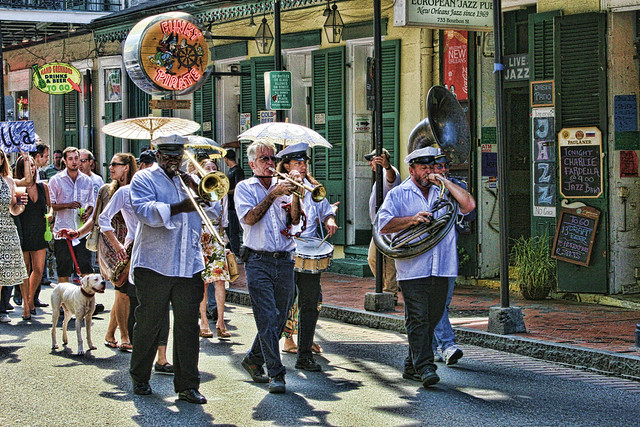 |
2013 will be my 10th Annual Assembly in a row. I started in 2004 in Phoenix, AZ and have enjoyed each year more and more. I'm sure some of you may be asking how my colleagues let me go so often. Well some years I only went for one day or less like in Tampa, when I flew in for the Pallimed party on Friday night and left Saturday afternoon. These past few years I have been on the board which is pretty much mandatory attendance. Other years, I submitted and had talks selected which helped insure a trip to the Annual Assembly. No matter, I just wanted to try and get there and see my HPM family again.
I love the learning that goes on there. Fantastic lectures, new ideas, meeting incredibly smart and talented people who love this field with an intense passion. Sometimes I have tried to explain these feelings to family or friends, and I get some quizzical looks about why a medical conference has me so filled with anticipation. So that is how this blog post came to life.
I will be posting on Twitter (#hpm13), the Pallimed Facebook Page, and guest blogging on the AAHPM blog all this week, so if you are not able to go please follow along and share the learning. I will also be taking my camera everywhere I go, because I have realized I have not taken nearly enough pictures at the Annual Assembly in relation to how important the people there are to my life. So if I see you I will likely ask to take a picture with you, because there are a lot of memories that are fading already after 10 short years.
Please share below what gets you excited about the Annual Assembly
Photo Credit: "secondline" by Flick User Swampier
Monday, March 11, 2013
Are you excited about the AAHPM/HPNA/SWHPN 2013 Annual Assembly this week? I hope you or at least your colleagues are able to attend. We will be continuing the tradition of gathering readers and contributors to this blog and Geripal. It has grown over the years naturally and we are excited to meet other people you may only nknow by a screen name or email address.
There will be a strong Pallimed contingent this year with Drew Rosielle, Lyle Fettig, Jeanette Ross, Holly Yang, Suzana Makowski, Thomas Quinn, and Amber Wollesen in attendance, so please rech out and say hello.
We do have a date and time for the party - Thursday night starting around 9pm, so you have enough time to have dinner with colleagues and friends.
But we don't exactly have a location...or locations...or maybe we do and we are keeping it a secret...regardless we aren't saying quite yet. If you have any tips on a good location that is easy to get to, please email us, tweet us (#hpmparty), or post a suggestion on our Facebook page.
You can also RSVP on the Facebook Event page if you may be joining us so we can make sure and get you the update. We will be using #hpmparty to announce the location as well.
Here we come New Orleans!!!
 |
| 2010 Boston |
Thursday, February 14, 2013

On February 14th, 1977, a group of volunteers offered support to 10 patients who were nearing the end of life, and in doing so formed the foundation of what would grow into the largest academic hospice in the US – caring for upwards of 1000 patients each day at its peak, and training hundreds of hundreds of clinicians in the specialty of palliative care. Just a day shy of its 36th anniversary, it was announced that San Diego Hospice would be closing.
Why does it matter that San Diego Hospice is closing?
Care for the most vulnerable in San Diego has been compromised:
A difference between the regulations that hospitals face and those of hospice are the mandates around entrance: public hospitals have to follow the EMTALA rule – if anyone shows up to the doors of an emergency room, they must be cared for by that hospital. In hospices, the Medicare rules hinder entrance: if a patient wishes to stay home, avoid hospitalizations, focus on the alleviation of symptoms and not pursue aggressive interventions they can only receive hospice care if two physicians document that the patient has an illness that, if following its natural course, has a greater than 50/50 chance of leading to the patient’s death within 6 months.

You may object to this statement – after all, wasn’t Ms Palin speaking of preventing patients from receiving care that prolongs life? Well, Palliative care provided through clinics and hospices has been shown to not only alleviate pain and suffering of patients, provide comfort and practical support to their caregivers, but also that actually can increase patient’s longevity without needing even more expensive hospital-based care.
Why should hospices who appropriately enroll patients and who provide excellent palliative care be penalized for the outcome we expect for many patients… stabilization of symptoms and even a prolonged prognosis? It does not mean the patients are not dying, because they are, but like many other medical interventions, hospice can change the trajectory for the better.
The death of the largest academic hospice:
San Diego Hospice did not only serve patients in the county – through its training programs, it has built a foundation of palliative care experts who care for patients around the world.
Its US physician fellowship program was the largest and one of the most well-regarded training programs in the country. Training up to twelve fellows a year, largely through the generous support of local donors, it will be remembered as a program that helped build the next generation of palliative care physician leaders in the US. To date, San Diego Hospice has graduated 78 physician fellows and 1 psychiatry nurse practitioner fellow.
Our specialty is already concerned about workforce challenges: having enough palliative care experts to meet the need of our patients, communities, hospitals and hospices. The loss of this program will only add to this shortage.
Of immediate concern is how our palliative care community nationally will respond to the needs of current fellows and those who were anticipating going to San Diego in July? Gary Buckholz, the fellowship director has been working diligently with the leadership at Scripps Health and San Diego Hospice to assure that the current fellows will finish their training and make the number of physician fellows trained 88. I only hope that our government and Medicare supports the immediate growth of other palliative care fellowships around the country to make up for this imposed loss.
From a fellowship applicant: "I had only the vaguest of hunches that I was applying to an extraordinary institution, an epicenter of the coming and desperately needed renewal of medicine, when I submitted my application for a fellowship position. Now I know. I am therefore more eager than ever to have chance to work and learn at San Diego Hospice, to immerse myself in the waters of the quiet revolution that I surmise is taking place there in hopes of becoming part of it and helping to extend it to other quarters."
A call to arms
The conversation in Washington DC about healthcare reform has not ended, but somehow the discussion about how to care for patients nearing the end of life is less prevalent in the news of late. It’s time to change that.
Congress is taking a State Work Period next week – your congressmen and women will be home for the week of President’s day. This is a time to set up meetings with them and speak up about palliative care and hospice. (It will be a break from the many meetings sure to be held around gun control.)
Save hospice!
Current Medicare regulations requiring the 6-month prognosis hamstring hospices and create an artificial barrier to allowing the sickest of our nation’s patients from accessing the most appropriate care in the most appropriate setting. While the intention of these regulations is to avoid abuse and thus avoid cost, it actually is adding to the cost of care, by preventing patients from having the needed supports at home and often giving them little choice but to go to hospital. Hospice care should not have such rigid entry requirements. Entry should not be based on criteria that are not evidence based and that have not evolved with the science over the last 30+ years. Hospice should also be provided to patients in nursing homes – as an alternative to acute nursing home care.Fund a fellow!
The workforce shortage of palliative care is worse than that of any other specialty. Current fellowship positions will not meet the growing demand. As your congresswoman to lead the effort to help build the workforce who can help lead the efforts of true healthcare reform – by assuring compassionate, high quality care, cost-effective care for the most sickly of our country’s patients.Capture the legacy of San Diego Hospice and the Institute for Palliative Medicine
I remember walking into Charles von Gunten’s office in San Diego and seeing a photograph of him with Dame Cicely Saunders at St. Christopher’s hospice. That photo needed no words to impart the significance of legacy. I never met Dame Saunders, nor did I visit St. Christopher’s in its hay-day. But those pictures and the stories I hear carry significance.
So my last request is this. Share your stories and pictures here. Let’s create a means to secure the history of San Diego Hospice.
From Dame Cicely and from all of us across the globe to the family of San Diego Hospice:
“You matter” (and always will)
For more Pallimed posts about hospice, click here
For more Pallimed posts about fellowship, click here
For more Pallimed posts by Suzana Makowski, click here.

Thursday, February 14, 2013
Sunday, January 27, 2013

This week in the Journal of the American Geriatric Society, Pam Harris, Joan Teno, David Casarett and the CHOICE* group published Patterns of Functional Decline in Hospice Care, an important insight into the dynamic (or sometimes not quite so dynamic) change in functional status (as measured by the PPS) for patients who died on hospice.
The data all came from three hospices (KS/MO, PA, FL) using the Suncoast electronic medical record and looked at nearly 9,000 patients who died on hospice services and their PPS over the time they were admitted to hospice services. The findings note three basic trajectories that emerged: cancer and stroke, cardiac and pulmonary, and debility and dementia:
The data do help give us data to back up what many of us observe naturally in hospice, that patients with cancer have a short time on hospice marked by significant decline, and those with dementia and adult failure to thrive tend to have slower rates of decline and therefore may have longer lengths of stay.
Two interesting findings did come up which could have an impact on how medical directors interpret hospice eligibility guidelines. First, of the 23% of patients who had a PPS recorded on the last day of life, 36% (weighted distribution) had a PPS of 40 or greater (mostly 40 or 50). Those patients with a PPS of 40 or greater tended to be male, white and carry a cancer diagnosis. Second, approximately 12 % of patients actually had an increase of PPS during this retrospective period, which is important to acknowledge because they still died. This is good evidence that an improvement of PPS alone should not necessarily disqualify someone from hospice eligibility. PPS decline is not a one-way street.
Some limitations of the study are important to realize before you make a drastic change in how you use functional assessment in determining eligibility. The authors only analyzed patients who died during the 10 month follow-up period, but since you may try to apply this data prospectively instead of retrospectively as the study did, you will not know as you observe the decline of patients if they will die in the 10 month follow-up period or not. It may be best for you to replicate this own study with your own team or own organization as a QAPI study (or even better publishable research!) so you can best understand how this applies to your unique case mix of hospice patients.
I highly recommend you bring this study into your next IDG and discuss how it applies to your work in hospice and palliative care. I’m excited to see more studies come from the CHOICE group and you can see them at the AAHPM meeting in New Orleans in March at one of the paper sessions.
* CHOICE = Coalition of Hospices to Investigate Comparitive Effectiveness
 Harris P, Wong E, Farrington S, Craig TR, Harrold JK, Oldanie B, Teno JM, & Casarett DJ (2013). Patterns of Functional Decline in Hospice: What Can Individuals and Their Families Expect? Journal of the American Geriatrics Society PMID: 23347201
Photo Credit: normalityrelief via Compfight cc
Sunday, January 27, 2013
Wednesday, January 16, 2013

- Philip A. Pizzo, MD (Co-Chair), Stanford University School of Medicine
- Mr. David M. Walker, CPA (Co-Chair), Comeback America Initiative
- Patricia Bomba, MD, FACP, Blue Cross and Blue Shield Association
- Eduardo Bruera, MD The University of Texas MD Anderson Cancer Center
- Rev. Charles J. Fahey, MSW, MDiv, Fordham University
- Pamela S. Hinds, PhD, RN, FAAN, Children's National Medical Center
- Dr. Karla F.C. Holloway, PhD, MLS, MA, Duke University
- Ms. Naomi Karp, JD, Consumer Financial Protection Bureau
- Jean S. Kutner, MD, MSPH, University of Denver
- Bernard Lo, MD, University of California, San Francisco
- Salimah Meghani, PhD, MBE, RN, FAAN, University of Pennsylvania, School of Nursing
- Diane Meier, MD Mount Sinai School of Medicine
- William D. Novelli, MA Georgetown University
- Stephen G. Pauker, MD Tufts University School of Medicine
- Ms. Judith R. Peres, Altarum Institute
- Mr. Leonard D. Schaeffer University of Southern California
- W. June Simmons, Partners in Care Foundation
- Joan Teno, MD, MS, Brown University School of Medicine
- Fernando Torres-Gil, PhD, MSW, University of California, Los Angeles
- James Tulsky, MD, Duke University
Yet in looking through this list, I kept feeling something was missing. (No, it wasn't the fact my name did not make the list, although for full disclosure I did work with peers in submitting my name for the list.) So I read their bios in more detail to examine more closely what was leaving me unsettled.
The first thing which stood out to me was the lack of hospice representation from leaders in our field. Only Dr. Teno's bio lists any current affiliation with a hospice organization. To me it appears the emphasis is weighted heavily towards academic palliative care.
Don't get me wrong, I love academic palliative care. Heck it is one of the main reasons this blog even exists. But if this committee is going to tackle the complex task of "Transforming End of Life Care," I think they would
- 6 from California
- 4 from Washington DC
- 3 from New York
- 2 from North Carolina
- 1 each from Colorado, Connecticut, Massachusetts, Pennsylvania, Rhode Island, Texas
So these are just a few things that I think are missing from the IOM Committee on Transforming End of Life Care. But did I just write all of this to complain? No.
"Complain about the way other people make software by making better software." - Andre Torrez
In conclusion, I'm really glad the IOM is revisiting this issue after almost two decades. I have great confidence in the expertise of the committee so far, and expect great outcomes from the process. But if you think there needs to be a little bit more diversity now is your chance to give input.
Reference: Summary table of different characteristics of the panel via Google Docs
*Edit* 1/17/2012 - Fixed errant link to IOM Feedback page.
Wednesday, January 16, 2013
Ed. - Please welcome the first Pallimed post by Dr. Jeannette Ross (@RossJeanette), a geriatrics and palliative medicine specialist from San Antonio, TX.
I recently read a webpost called 20 Twitter Stats From 2012 noting some interesting statistic about the amounts of tweets thru the 2012 year, the most retweeted tweet (Obama’s victory tweet), the most followed twitter account (@ladygaga with 32 million+), and others.
I was curious about what are the twitter statistics for our field as measured by the HPM hashtag. I went to the Symplur Healthcare Hasthtag Project and ran the #HPM 2012 analytics and did a little “research” of my own.
 So here are the top 10 twitter stats of the #HPM hashtag in 2012:
- There were 48,273 tweets sent using #HPM
- 67,869,558 Impressions* resulted from the #hpm community tweets
- 4,157 “Tweeople” participated in the HPM conversation
- During 2012 #HPM generated an average of 5 Avg Tweets/Hour
- The average #HPM participant posted 12 #hpm tweets
- @jfclearywisc (Jim Cleary, MD) was the top HPM tweeter with 2206 tweets.
- @ctsinclair (Christian Sinclair, MD) has 5,484 followers, which is the most followed #HPM account on Twitter. Ok that at least is HPM celebrity status!
- With his over 20K lifetime tweets he beats @ladygaga on tweets With that many followers it’s no surprise that @ctsinclair 1894 HPM tweets led to the most impressions with 10,371,544
- The HPM tweets reached a 6594 tweet peak in March during the week of the @AAHPM meeting with March 9, 2012 generating 1156 HPM tweets on a single day
RIP Avalanna. i love you
— Justin Bieber (@justinbieber) September 26, 2012

If you want to understand more of how the statistics are generated and what they mean click here. You can always join #hpm Tweetchat on Wednesday nights at 6p PT/9P ET to find a group of online advocates. You don't even need a Twitter account to follow along.

Ok here is a 2013 New year resolution I can achieve. To Tweet more, and get others to tweet #HPM! You can always find me at @rossjeanette
*impressions: number of tweets per participant and multiplied with the number of followers
