

Monday, February 8, 2010
Archives of Internal Medicine recently had a study about the influence of nursing home culture on rates of tube feeding of patients with advanced dementia. This is a qualitative/ethnographic study of two NH in South Carolina, both within the same region, and both selected because one had very high rates of TF of patients with dementia (41%) and one had a low rate (11%) (they note the high one was actually the 4th highest in the region - the other 3 wouldn't participate in the study).
The researchers observed care in the NH (how mealtimes are structured, who does what, etc.) and interviewed multiple providers at each site (nurses, CNAs, speech pathologists, administrators, dieticians, etc.). There were important differences between the two nursing homes: the 'high use' NH had a larger proportion of African Americans (52% vs 9%), Medicaid patients (80% vs. 28%), no dementia unit, and poorer quality indicators (using CMS data). Both NH were part of for-profit chains.
As this is a qualitative study the findings are difficult to summarize, but generally come down to: the low-use facility was nicer, feeding was better staffed with better trained CNAs, and multi-disciplinary shared decision making was common. The article is a thrilling/appalling read as you hear the differences between the two NH:
Most of the paper is along these lines. As I started reading this, and saw the differences in demographics between the NH my initial response to this was that given the well-described increased use of FT in African Americans with dementia that their findings would be impossible to interpret beyond that (ie how do you say the differences they see cause the differences in FT rates as AA patients prefer and receive FT more often than white Americans). Instead I came away with more of a sense that the differences they describe could in part be the cause of the significant disparity in FT rates in different cultural groups in the US - particularly that poverty, and reliance on marginally financed safety net institutions with fewer staff with less training and an institutional culture of disengagement about these issues (as opposed to patient-centered engagement with, for instance, family meetings) drives the disparities. It's this abandonment of discussion and patient-centered decision-making that is what is most disheartening about the study, at least to me. Assessing values, discussing all options - getting 'true' informed consent - etc. just seemed to be absent from the high-use home.Both NHs had interdisciplinary teams to identify and respond to residents' weight loss but differed on team composition and family role. The low-use NH team included the dietary technician, SLP, director of nursing, administrator, nurses, activity director, social worker, and on-staff physician. The physician evaluated residents who lost weight and discussed his findings with family. His attitude reflected a preference for hand feeding over tube feeding. He said, "I am subtly negative, or not so subtly. I tell [the family] that [a feeding tube] has no effect on mortality. It just changes the complications." The social worker also facilitated family meetings to determine how the options of hand feeding vs tube feeding aligned with the goals of care.
The high-use NH team was composed of the dietary technician, SLP, and nurses. Nurses were responsible for notifying PCPs of weight loss, obtaining orders for nutritional supplements, and notifying families about feeding problems. The social worker denied having a role in feeding decisions. An NP reported that by the time she was consulted, "department heads" had already approached families to suggest tube feeding. The NP found it nearly impossible to "undo" family beliefs that feeding tubes were in residents' best interests. The NP reported that dehydrated residents were often admitted to the hospital and returned with feeding tubes.
Monday, February 8, 2010
I am in the process of preparing my house for sale, and for the next few weeks/month will be spending all my free time cleaning, recycling, painting, and worrying, and don't plan on posting again during that time. I have another couple posts written, which I've scheduled for a couple weeks from now, but that's it.
I will be at AAHPM in Boston, and hope to see many of you there. Come to the happy hour and say Hi, or just grab me if you run into me. --Drew.
Tuesday, February 2, 2010
Most Viewed Posts from January 2010
1. Palliative Care Grand Rounds Vol. 2.1
2. Catholic Directives on Artificial Hydration and Nutrition
3. Paradoxes in Advanced Care Planning
4. Judy Chamberlin, Hospice Patient & Blogger Died January 16th
5. Overdose in Patients Prescribed Chronic Opioid Therapy
Most Commented on Posts from January 2010
1. What is the Role of Palliative Care in Haiti After the Earthquake? - 11 comments
2. Paradoxes in Advanced Care Planning - 9 comments
3. Palliative Care Grand Rounds Vol. 2.1 - 8 comments
4. Outpatient Rotations to Methadone - 6 comments
Multiple other posts with 2-3 comments
Best Comments from January 2010
Dr. Pam on What is the Role of Palliative Care in Haiti After the Earthquake?
Many developing countries have a severe lack of supplies and meds even BEFORE disaster strikes--destruction of the infrastructure for delivery of services and for basic food/shelter then further compounds the issue. Pain meds are often rare outside developed countries.
So, if palliative care specialists hit the ground early, I believe we would largely be "empty-handed" in the work. There would still be the possibility of helping triage and of providing some basic human comforts, but symptom management as we know it here in the States is a luxury most of the rest of the world cannot afford. (The places I have been in Africa did not even typically have Tylenol of NSAIDS!)
Suzana Makowski on What is the Role of Palliative Care in Haiti After the Earthquake?
When I think of suffering - the physical suffering of pain, dyspnea, are certainly paramount and a role to be filled by palliative care docs and often anesthesiologists (the former, a heck of a lot cheaper!). The practical suffering - food, shelter, sanitation - public health officers, etc. will take on the lead. Social and emotional suffering - their churches have always been a core place of refuge - who supports the clergy? How does an international effort tap into these non-national entities to support a people? Bereavement and survivorship issues - who will address these?
Dr. Bryan Byrd on What is the Role of Palliative Care in Haiti After the Earthquake?
I spent 9 days in Haiti as part of a first-response medical relief team. We were busy treating closed and open fractures, burns, wounds and broken hearts.
Hospice/palliation came up several times. A good example was a wonderful 97-year old woman who suffered a femur fracture. Although she was otherwise in pretty good shape, her age and the limited access to surgery led us to talk about palliation-only treatment.
The Haitians, so wonderful and buoyant in spirit, embraced our recommendation. We counseled them on infection and bed sore prevention, and talked about traction for pain control.
Dale Lupu on Paradoxes of Advanced Care Planning
This paradox makes sense to me. The paradoxical nature of the finding "I don't want to talk to my oncologist about AD but I prefer my oncologist if it really has to be someone" seems to me to come from the very real paradox that we hold inside ourselves, expressed through "hope for the best, plan for the worst." So in hoping for the best, patients don't really want to talk to anyone about AD - especially the oncologist who they HOPE is going to cure their cancer. But if really pressed to PLAN for the worst case, then they figure their oncologist is the better of the bad choices.
Anonymous on Paradoxes of Advanced Care Planning
I'm glad to hear your skepticism of AD's and about the lack of data they do anything. I find that working in a hospital setting, sometimes too much emphasis is placed on these documents as if they are the gospel truth, as if we must stick to the letter of what these documents say, when they can't possibly predict every possible scenario or health outcome, or precisely define the beliefs and attitude of the person they are supposed to represent under the various multitude of circumstances. The flip side is their absence, I find, often shackles caregivers and clinicians into believing we cant possibly know what the patient wants, when most rational people would not want to be bedbound, with trach & PEG for the rest of their lives, for example.
Some states have recently adopted rules that state healthcare providers cannot act against a person's AD, that this would be considered a felony. I'm not sure this is the best route to go, as I've decribed above, there are nuances to every situation that AD's cannot adequately addressed, usually because they are often generic, vague, and poorly written (certainly not written by health care professionals!)
Tuesday, February 2, 2010
One of the best things about the AAHPM/HPNA Annual Assembly is the chance to see old friends and meet new ones. No better time for this then after a full day of conferences. But many times there may be conflicting events on a particular night. So before you hear about any other events and RSVP to them, you need to know about the Annual Pallimed Party.
This will be the 4th year we have had a gathering and this year it will be even better because Eric Widera and Alex Smith from GeriPal have decided to join us for the first ever Pallimed/GeriPal Gathering.
Sadly Drew will not be with us this year as he is staying home to work, but we would love the chance to meet you in person.***
If you have any other social events planned during the Assembly please post them in the comments or email them to me and I will update this post for everyone's reference. I have listed some I know that happen usually.
Dates unknown
Palliative Drugs gathering
Harvard PCEP Alumni Party
PIT-SIG (Fellows) Party/Outing (The went to the Rodeo in Austin! Bluebird Cafe in Nashville!)
CAPC Alumni Party
San Diego Hospice Alumni Party
Wednesday
Thursday
Boston Bruins are playing the Maple Leafs (I am planning on going at getting good tickets so email me if you are want to see a hockey game!)
Friday
Pallimed/GeriPal Gathering
Time: 7pm
Location: TBD - Please feel free to make suggestions, I have a few ideas so far.
Saturday
***Editor's Note. Update 2/3/10: I am actually coming - relatively last minute change in plans. I couldn't stand the thought of Christian and Eric getting together to talk about me behind my back. --Drew.
**Fixed Survey Link**
A new session has been added to the AAHPM/HPNA Annual Assembly in Boston, MA on Friday March 5th from 7-8:15am. Bloggers from Pallimed and GeriPal have been invited to give a interactive workshop on social media in hospice and palliative care. The panel and abstract is listed below. It is not in any of the current material and has been developed in just the past few weeks. We are planning on presenting for the first 30 minutes and then opening it up to the group for questions.
If you are interested in going, no need to RSVP, but if you want to help direct the content please feel free to fill out this survey (short, I swear!). Also posting comments here is a good idea too. The talk will be posted after the conference so learning and networking can happen before, during and after.
Title: Social Media in Palliative Care Communities: Developing and Maintaining your Online Presence.
Panel:
Amy Clarkson, MD, Kansas City Hospice & Palliative Care, Kansas City, MO (Pallimed)Abstract:
Christian Sinclair, MD, FAAHPM, Kansas City Hospice & Palliative Care, Kansas City, MO (Pallimed)
Alexander Smith, MD, UC San Francisco (GeriPal)
Eric Widera, MD, UC San Francisco (GeriPal)
Amber Wollesen, MD, Saint Luke's Hospital, Kansas City, MO (Pallimed)
In this session, the panel will present the various social media platforms where palliative care information is being created, commented on, and shared. Understanding the importance of social media to hospice and palliative care as a field is helpful in spreading information consistent with our professional values, dispelling myths, and educating professionals in addition to patients and families. We will present successful examples of palliative care in social media from the perspective on the individual as well as the larger community. Despite the opportunities, there are concerns about privacy, time commitment, and legal risks which will also be addressed. The session will not go into detail on the 'how-to' aspects of specific social media platforms. The initial presentation will be approximately 30-40 minutes with plenty of time for discussion with the audience and panel.
Thursday, January 28, 2010

This study is a retrospective chart review of a single center's (MD Anderson) experience with this. The paper includes data about patients initiated on methadone (as the first strong opioid), but I'll focus on the rotation data here. The patients (N=89, mean age 58, median baseline oral morphine equivalent daily dose [MEDD] of 100 mg) were rotated to methadone as outpatients, and had median first follow up at 13 days, and second at 37 days. The rotation protocol is not specified in great detail (and they imply there is not a set protocol for this group - instead more of general parameters that are adjusted based on the physician's discretion). It seems generally a start/stop strategy (discontinue prior opioids, initiate methadone the same day) was used. Morphine to methadone ratios that were used were 5:1 for MEDD less than 90 mg/day; 8:1 for 91 to 300 mg/day; and 12:1 for MEDDs over 301 mg/day. What is done with the breakthrough medication is not specified. It's important to note that the range of baseline MEDD was 60-185 mg: these patients were being rotated to methadone at moderate morphine doses, not once patients were taking many hundreds (or thousands) of mg a day.
This was a retrospective chart review, of one group's real-life practice, and the criteria for evaluating the reason for rotation to methadone, as well as its success, were based on the research team's best efforts at abstracting from chart data. They tried to identify why patients were rotated (inadequate analgesia, non-methadone opioid side effects, or both) and then if the rotation was successful upon follow-up (pain improvement greater than 30% or 2/10 on a 11-point rating scale, reduction in the side effects which prompted the rotation, etc.). If these targets were clearly met the rotation was labeled as success; if the methadone was discontinued, the patient was admitted to the hospital for pain or methadone related side effects, or if the patient was lost to follow-up, the rotation was labeled a failure. Everything else was labeled a 'partial success' (indicating, at least, the patient tolerated the rotation adequately to continue methadone and not be admitted with side effects).
The major data on success were positive: 47% had a 'complete success', 38% a partial success, and 15% a 'failure.'*** The best rates of success were for patients rotated only for side effects, although this was only 5 patients. Median methadone doses were 15 mg/day at the first follow up and 18 mg/day at the 2nd. They did plot baseline MEDD with stable methadone dose, and confirmed the previous findings that baseline MEDD is associated with MEDD:methadone ratio (e.g. the higher the baseline MEDD, the higher the ratio, and the lower relative amount of methadone patients need). And in fact the median MEDD:methadone ratio they identified after patients were stable were 5:1 and 8:1 for MEDDs less than 90, and greater than 90 mg daily, respectively (which is of course their conversion ratio, suggesting that these are in fact reasonable ratios for patients with MEDDs less than 200 mg).
Most interesting is that they calculated MEDD:methadone ratios for patients who were rotated for pain vs. those rotated for side effects (with or without pain). In the 'side effect' patients the MEDD:methadone ratio was 9:1, and 6:1 for the 'pain' patients (ie the 'side effect' patients needed less methadone, relative to their baseline opioid dose, than the 'pain' patients).
In discussing the failures, they indicate these were due to non-efficacy, and don't discuss any toxicities.
All of this is good, and represents some of the first data (with a decent N for a study of this type) supporting the safety of outpatient methadone rotations for pain. I doubt a prospective study (even just a natural history one, with modest outcomes of safety at one month) is coming anytime soon. It's confirmatory of the broad trend in previously published chart reviews that methadone rotations are usually (for over 3/4 patients) helpful, although rigorously controlling for the reason for methadone rotation has never occurred and all the data we have is essentially descriptive and based on real-life clinician practice (which has both benefits and drawbacks in interpreting this).
The major caveat here is that this is for patients on moderate MEDDs - less than 200 mg a day. One cannot conclude from this that the practice is safe/advisable for patients on significantly higher doses (ie in the 500 mg and up range). Which raises the question of whether we should routinely be rotating patients to methadone once they're on, say, MEDDs of 100 mg or more, and who have uncontrolled pain or side effects. This research suggests only, of course, that the rotation to methadone in this setting can be successful, not that the patient was better off for it (as opposed to continuing up-titration of the prior opioid assuming the rotation wasn't for side effects, or rotating to a different opioid such as fentanyl). Trying to answer this in a trial would be difficult, but not impossible, and you do kind of wish there was a methadone lobby to support such research. My guess is that there's a wide variation of practice out there, and I'd be curious as to what others do - when, why you switch to methadone - a simple mg cut off (ie propose it to a patient once they're at a certain MEDD regardless of how they're doing) or later? I tend to do it later, but am not convinced that is best: we have no data either way.
(***Addendum Jan 29, 2010: I had originally put in incorrect numbers for the % of complete or partial successes for the rotation; a commenter pointed this out and I've changed the numbers here for posterity. See the comments.)
Thursday, January 28, 2010

1)
First, the Clinician's Corner piece. The case begins succinctly: Mrs H is an 86-year-old retired health care professional and grandmother with severe cardiac cachexia. She is considering the best way to have her life end. The case goes on to describe a patient with advanced heart failure, slowly progressive functional decline, and multiple comorbidities, who considers her current quality of life marginal (ok now, but very worried it will be intolerable if things get any worse), and is making statements about wanting her life to end (although is not overtly suicidal). With the brief case discussion, which includes quotes from the patient herself, you really get to know and feel for this patient:
Her physician recommends a hospice referral. The following wide-ranging discussion is about US end of life demographics and hospice utilization, prognostication in CHF, causes and epidemiology of requests for hastened death, and how palliative care consultation and hospice care could potentially help this patient. Voluntary cessation of eating and drinking is also discussed. Overall it's a balanced, realistic look at the issues, including a description of how hospice and palliative care services can help patients like this, and the article would make a good one for the teaching file, particularly for med students and residents.I’m still doing things and I still enjoy life, but I’m taking so many medicines, and each year I’m a little worse. I’m very afraid that I’m going to be incapable of doing anything—I had a grandfather who used to say, "Why doesn't God take me?" Well, my feeling is "Why doesn't my heart stop beating because it's in such bad shape?" I used to think when I got depressed that I could go and throw myself off the top of the building. Now I couldn't even get there.I talked with my doctor about the fact that I was interested in the end of life and that I was thinking about discontinuing all my food and liquids and all my medicines, including my insulin. She told me that if I stopped taking insulin I might have a very high blood glucose. My experience with high blood glucose was that I got very, very thirsty. And when I thought about it, I thought, "Well, that means I would die of thirst." I realized that didn't appeal to me.
2)
The first 'Aging Patient' piece is a look at care in the last years of life, and presents an approach to care for aging patients with potentially years to live - health maintenance, prevention, care coordination, etc. The 2nd 'Aging Patient' review is about falls, a problem very relevant for our field. Good reviews both: for those of us who didn't do geriatrics training, a nice refresher.
4)
And finally, a recent issue had an editorial about advance care planning, 'death panels,' and why ACP just is not finding widespread acceptance by the public. Good editorial, but what really made my night was its citation of a 1999 editorial about a SUPPORT study analysis which discusses in terms which are equally valid now as then as to why this is so difficult. I'm showing my age (youth) here by never having read this before, but it's worth reading, and probably should go into the must-read file for fellows. Most of the editorial unpacks the ideas in this paragraph:
For most patients, 2 fundamental facts ensure that the transition to death will remain difficult. First is the widespread and deeply held desire not to be dead. This is not only existential angst, or the dread of ultimate insignificance, it is also the struggle to avoid annihilation. Second is medicine's inability to predict the future, and to give patients a precise, reliable prognosis about when death will come. When death is the alternative, many patients who have only a small amount of hope will pay a high price to continue the struggle. Several other factors, such as certain societal values or family dynamics, also may make it difficult for a patient to make the transition to dying.
 Image via Wikipedia
Others have covered this story including GeriPal, NHPCO (Member-protected link - Why?), and CAPC. Obviously the hospice and palliative care online communities are welcoming this news given liquid concentrated morphine is an essential tool in good symptom control, especially for patients in the last few weeks of life when swallowing becomes more difficult.
Interestingly, the FDA Press Release says at the end:
"For this formulation of morphine, the manufacturer had to develop a safety program prior to approval to address the known risks of morphine misuse, abuse and overdose."
But there is no link on the FDA site or Roxane to give more information about the safety program. Given the past concerns about REMS, it would be interesting to see the details of these plans and how they might impact daily hospice care.
And for how the FDA actually reversed course from nearly taking concentrated liquid morphine off the market, you Pallimed readers along with other social media platforms were part of the grass roots support that helped give support to the larger organizations.

![Reblog this post [with Zemanta]](https://lh3.googleusercontent.com/blogger_img_proxy/AEn0k_suDo3QEtqtVf-Ia_gcKRWwYbtM7Po7jc6dv0_EGMpglqdR_ndDOd2_hHAC70MOegmYURaaD_jdDgd3ChRPRjy24BKlLfgFnE5dtVG_q0CwJT6rQwGO6qYTLW6PTtO1EnFihCb-Z6Tvmbwyg_FLHpSl=s0-d)
Tuesday, January 26, 2010
Now that Pallimed is embarking on the 5th calendar year of existence, we thought it would provide a good opportunity to look back at some of the older blog posts. This will be a monthly column and for the first month we will look at January of 2006. Back when it was at pallimed.blogspot.com. Back when the colors were blue and sea foam green. Back when Twitter did not exist (March 2006 for you trivia hounds). Back when the only people reading were Drew and me. Well to be honest I was doing most of the reading and Drew was doing most of the writing since he out-posted me 19 to 3.
So here are some highlights from Pallimed circa January 2006:
- The eternal question of the true understanding of a patient's wishes from the point of view of the surrogate was probably the best post of January 2006. Drew points out a few weaknesses but overall a good article for discussion among colleagues, and learners.
- Drew posted about diurnal variations in neuropathic pain which is more than just anecdote. So maybe there should be a reason to increase the nighttime dosing of pain meds?
- The annual BMJ 'humor' issue had a great study on coma prognosis in soap operas. Maybe one to stick to the ICU break room next time you are making rounds
- I come clean with my role in giving a pharma sponsored talk one time in Las Vegas. In fact it must have been weighing on my conscience since I posted on pharma influence twice in January 2006. So how much should pharma and drug reps incluence palliative care and hospice? Are we relatively insulated from it or should I enjoy my free steak dinner?
- Finding the simple way to an answer is great. Especially when the evidence supports the use. "Are you at peace?" Here is the proof.
- And my favorite title from January 2006 courtesy of Drew: "Breaking bad news; Multidisciplinary approach doesn't necessarily make cancer suck any less"
And for those who would like to know what was going on in the rest of the world, Wikipedia oddly has an entry for January 2006.
Tuesday, January 26, 2010
In hearing about all the tragedy and occasional stories of hope and amazement with the recent earthquake in Haiti, I have been wondering about the role for a hospice/palliative care philosophy in the treatment of those injured and killed during and after the earthquake. Locally, I have not heard of any hospice or palliative care staff taking leave of work to embark to Haiti. (And if anyone does know of someone with a palliative background who has recently gone to Haiti I would love to interview him/her for Pallimed.)
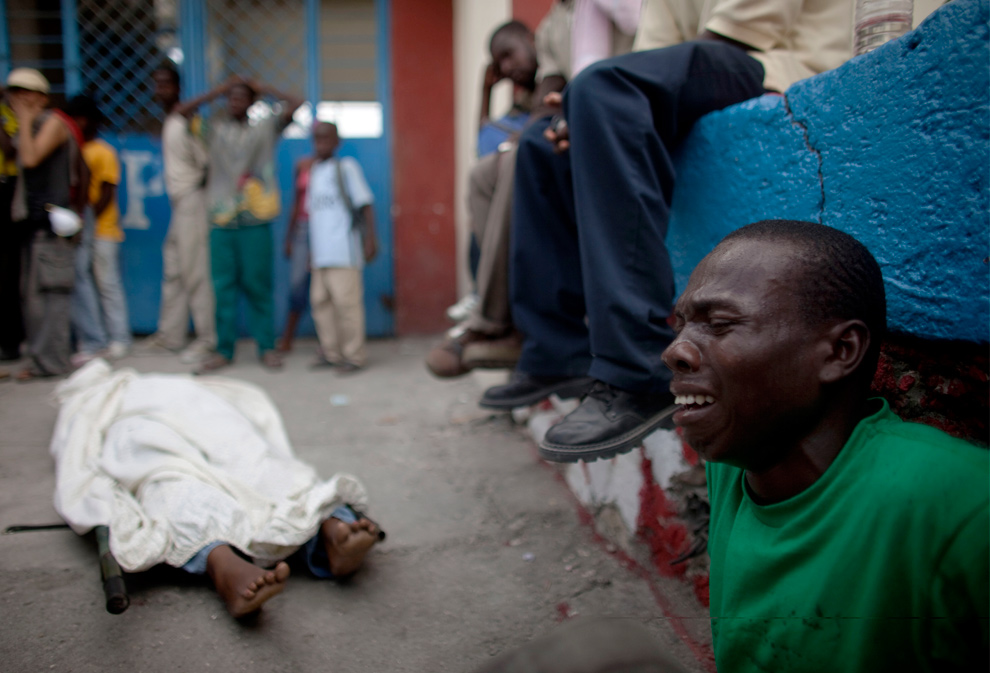
I have also considered how my skill set might be best applied if I myself had decided to go to Haiti with the relief efforts. Would I fall back to my Internal Medicine training or would the specialized palliative care training be helpful? NPR's health blog 'Shots' recently covered some of the triage dilemmas being dealt with by health care staff on the ground. An excerpt:
A pediatric surgeon raised a tough question about when people should be taken off equipment to help them breathe. "Today the issue was ventilators. We ran out," he said. "What do you do then? We need a reality check. Some people might have to get off the ventilator before you would take them off elsewhere. That ventilator could save the life of someone who is much more salvageable."
But other doctors appeared incensed at the idea of stopping short of using every tool available on even the chance to save a life.
Palliative care staff help families and other medical staff sort through these tough decisions all the time in hospitals across the country, so maybe we as a field should make a concerted effort to be included in the 'essential' staff that might be needed in the next major disaster. Imagine an administrator making a list of the 'expertise' she would like to have in the field. As I think/write more, it does not appear to be such a stretch to consider having medical staff with a hospice or palliative care background on the ground in a major trauma/disaster zone.
- Pain and symptom control
- Skillful communication to traumatized/grieving families and patients
- Whole patient/family approach to care, support to other staff
- Prognostication awareness/skill
- Grief and bereavement counseling (like Alive Hospice and Hope Hospice (Florida) are already doing)
- Ability to engage with one's spiritual support
- Willingness to think outside the box and work in conditions that are not considered ideal medically (i.e. like hospice staff do daily in patient's homes).
Sounds like a good skill set in a disaster zone to me.

In the NPR story, they even mentioned palliative care but it was quickly shot down. (Guess which specialty shot it down?)
Referring to the patients likely to die, one medical planner offered a solution, "What about having palliative care facilities at the intake sites on shore?" A surgeon responded, "And have five hundred tents of dying people in a field right next to a medevac site? We can't do that."But surely something is better than nothing. "Even if we just give them some painkillers and a comfortable bed, it'll be better than them dying in the street under the sun like a dog," a nurse offered.But a surgeon argued that easing the death of a doomed person would take a bed that could be used for someone with a real chance of being saved.
Shouldn't we make a more concerted effort to be included in the list of specialists available to help in a disaster? Would we be welcomed or instead shunned given our comfort in discussing issues around death and dying when everyone else is in rescue mode? And what about the patients who were already on hospice. They still need specialized care as well.
(Pictures via Boston.com Big Picture)
![Reblog this post [with Zemanta]](https://lh3.googleusercontent.com/blogger_img_proxy/AEn0k_sQHSxzWlb57Ns54Y9Zyw9Rjv9ccBs4ns19Qrak74tMKjLyOxokypYzDi_XnThnX-cDBwt5RzdzUv78H4SqiGmBuJ8BMJuQ_aUUB3Gsf3LXVnioJ9d-sDvuA04QLJFHyU6WCF3YUSLJyN1W5gDXYEzq=s0-d)
