

Wednesday, April 24, 2013

(Ed. - Today's post is the first from Renee Berry @rfberry at Pallimed who is a digital media specialist with a strong passion and extensive knowledge about hospice and pallaitive medicine. Renee and I co-host the weekly hospice and palliative medicine tweetchat on Wednesday nights (along with Alicia Bloom). We are excited to have her input on the recent TEDMED conference where End of Life issues were featured. - Sinclair)
I noticed an interesting conversation starting on Twitter last week about an illustration drawn as a part of TEDMED's great challenges. TEDMED is an annual conference dedicated to breakthrough thinking in health and medicine. While it is independent of the original TED conference which brings people together from the technology, education and design fields, TEDMED's Great Challenges Program is a series of discussions around twenty complex issues in medicine designed to engage interdisciplinary thinking and conversations.
Palliative care physician, Earl Quijada attended the TEDMED conference last week and shared a photo (which can be seen below) of a sketch about some of the concepts and ideas being shared at the Great Challenges section dedicated to end-of-life care issues. This sparked an interesting conversation about what the illustration portrayed.
EOL #greatchallenges at #tedmed. Death is holding an "invitation" umm @ctsinclair @dianeemeier need help. #hpm. twitter.com/equijada/statu…
— Earl Quijada (@equijada) April 18, 2013
My initial thoughts can summed up in this quick list of 8 tweets...
@equijada 1. Quality of life is can be all about mortal life, it does not need to be a euphemism of an angel + energy + eternal life.
— renée berry(@rfberry) April 19, 2013
#TEDMED @equijada 2. Palliative medicine is about quality of life. It can be for people with serious illness that is not "advanced."
— renée berry(@rfberry) April 19, 2013
#TEDMED @equijada 3 Palliative medicine is NOT abt creating a good death. Research shows this language is not effective for public enagement
— renée berry(@rfberry) April 19, 2013
@equijada 4 While I agree we are a death denying culture, does that mean we push "talk about death" on people as a solution?
— renée berry(@rfberry) April 19, 2013
@equijada 5 Do we illustrate a "normal part of life" with a scary dark skeleton looming over a family's table while they eat?
— renée berry(@rfberry) April 19, 2013
@equijada 6. Can "more voices in the discussion" include groups who built the groundwork for solutions- @capcpallative, @aahpm, @hpnainfo?
— renée berry(@rfberry) April 19, 2013
@equijada 7 Take advantage of resources @getpalliative @caringinfo @nhdd @pallimed @geripalblog @chpcc @hospiceaction
— renée berry(@rfberry) April 19, 2013
@equijada 8 Palliative care is for anyone with a serious illness, from the point of diagnosis. It is much broader than end of life. #TEDMED
— renée berry(@rfberry) April 19, 2013
As more people become engaged and passionate about:
- Advancing opportunities for early access to palliative medicine to relieve suffering and enhance quality of life for serious illness.
- Providing hospice and quality end of life care.
- Engaging the public around these related but not synonymous issues.
Other Notes:
- It's awesome (and appreciated!) that TEDMED is featuring a great challenge on end of life!
- An artist of course has free range to express their interpretation of messaging and in all honesty, while I have concerns about elements of this particular drawing, I really appreciate it because it points out an opportunity for a great discussion.
What do you think?
I'm interested in seeing the palliative care community continue to add commentary below. What do you think of this drawing? What does it say about where we are with messaging about death? Where are we about public communications about palliative care? How can we serve as a resource to people that want to be a part of the solution and ensure advocates can access quality information?Wednesday, April 24, 2013
Monday, April 15, 2013
What do the following patients have in common?
- A 45 year old man who has a 60 pack-year history develops lung cancer and is diagnosed at an advanced stage.*
- A 33 year old woman with post-traumatic stress disorder who has been drinking since the age of ten and develops fulminant hepatic failure.
- An 82 year old man ends up in the surgical intensive care unit after a self-inflicted gunshot wound three months after his wife of 60 years dies.
- The mother of a 55 year old woman with morbid obesity, obstructive sleep apnea, and pulmonary hypertension laments that the park nearby isn't safe for people to use.
 All four patients are candidates for palliative care. All of them also have potentially preventable illnesses. When I see patients like this, I sometimes ponder their plight from a six-sigma perspective. From a societal, public health, and healthcare system standpoint, what were the six missed opportunities which could have helped ensure that the patient before me stood a chance to avoid their illness?** The healthcare system brings it's resources to bear too late. Is the patient with lung cancer a candidate for a tyrosine-kinase inhibitor? What are the benefits of pentoxifylline for the second patient? Should the third patient receive mannitol? Is the last patient a candidate for sildenafil? While not unimportant questions, at times it feels like rearranging the deck chairs on the Titanic. From day one of medical school, I had some sense of the importance of preventative medicine, but nothing has emboldened my advocacy for prevention more than my chosen career in palliative medicine.
Palliation and prevention aren't mutually exclusive, either. The patient with advanced lung disease who still smokes may have the goal of living long enough to make it to his son's wedding or to stay out of the hospital as much as possible. Thoughtful discussion of prognosis and disease trajectory may motivate him to finally move from the contemplation or preparation phase to the action phase of smoking cessation. The palliative provider can play a vital role in this type of tertiary prevention, even if it's just answering the question, "Why should I even bother at this point?" In some circumstances, prevention of disease may be impossible for the patient. The woman who lies comatose in the ICU after an intracerebral bleed may no longer benefit from blood pressure management. When the patient's son asks the question (with his own children present), "should we be concerned about our risk for something similar happening?" it should be recognized as a teachable moment.
April 16 is National Healthcare Decisions Day (NHDD). Advance care planning represents one important intersection between prevention and palliation. In serious illness, conversations between patients and physicians about the end-of-life correlate with several positive outcomes for patients and bereaved loved ones. While the conversations in this study occurred only months before death, this fits the mold of prevention: Taking action now to provide benefit later.
You may not have a serious illness. Your death probably isn't imminent. But catastrophic trauma or illness is still possible. You may not be able to speak fully to your wishes for or against specific interventions. You can still consider what you would value most if faced with a serious illness. More importantly, it's not too early to talk about it with your loved ones, especially the ones who would speak for you if you cannot speak for yourself. The NHDD site provides several helpful resources to facilitate this type of conversation as well as meaningful documentation.
To quote Ira Byock:
"I have an advance directive, not because I have a serious illness, but because I have a family."When I meet with the family of a patient who cannot speak, I see it as my job to help families sort through the maze of options and align treatments with the patient's values. While this can be accomplished without any previous advance care planning, it's easier on all sides of the table if there has been open consideration of related topics by the patient before the illness. In a society that values autonomy and the right to self-determination, there's a palpable loss when the person under discussion doesn't have a voice. Advance care planning helps to mitigate this loss and brings your voice back to the table when you cannot speak. Like the patients at the beginning of this essay, I start to think of missed opportunities when advance care planning hasn't occurred.
by: Lyle Fettig, MD (@lfettig)
*Any resemblance to actual patients is purely coincidental, although I'm sure there will be resemblances. These scenarios are common, unfortunately.
**Not addressed here are issues of hereditary predisposition, personal responsibility, bad luck, or other causes which may be outside of our control.
Monday, April 15, 2013
Wednesday, April 10, 2013

This is an important article because it describes how this center went about actually implementing the Death with Dignity program including the following challenges: were their enough doctors to actually prescribe the barbiturates? How would patients know about this programs availability given that is what a legally accessible medical option? Do you put fliers in the waiting room? What if the attending refuses to participate?
To really understand how they approached this I strongly recommend you read the article regardless of your feelings for or against physician-assisted death. With this issue coming up repeatedly on state ballots over the past decade, it could very be legal in your state sometime in the next several years and you may find yourself and your fellow staff grappling with these same difficult questions. It is limited in that they only served patietns with cancer, and it would be interesting to see how patients with non-cancer terminal diagnosis were handled at this institution.
As has been seen in other reports on why people choose physician-assisted death, the main reasons were loss of autonomy, loss of enjoyable activities, and the loss of dignity. The center reports that feedback was all generally postiive.
One important piece of data that many people will wonder about is how many deaths are tied to physician-assisted death and is that number changing from year to year. You can always check the Oregon and Washington Department of Health websites as they are mandated to report this data on a yearly basis. In 2012, Oregon had 115 prescriptions with 77 deaths related to Death with Dignity. In 2011 (the last year reported), Washington state had 103 participants and 70 deaths.
The NEJM has also developed a case around physician-assisted death, but curiously they refer to it as physician-assisted suicide (PAS) differently than the authors of the article. At the end of the case you have the opportunity to give your opinion about whether PAS should be permitted. As of the publishing of this post there are 275 responses with 54% against PAS and 45% in favor of allowing PAS.
I would encourage you to take the poll and post your opinion on NEJM, but also to share your responses here with our poll as well. (Feel free to copy your opinion from the NEJM poll and post it here) Our Pallimed poll asks for no identifying information. Results will be shared here in aggregate with some commentary.
Make sure to check the supplemental materials for the NEJM article if you do have a subscription or library access as they actually include the policy from the hospital.
 Loggers, E., Starks, H., Shannon-Dudley, M., Back, A., Appelbaum, F., & Stewart, F. (2013). Implementing a Death with Dignity Program at a Comprehensive Cancer Center New England Journal of Medicine, 368 (15), 1417-1424 DOI: 10.1056/NEJMsa1213398
Wednesday, April 10, 2013
Tuesday, April 9, 2013
by Suzana Makowski
By now, many of you may have heard or read Charles Ornstein,(@charlesornstein) a Pulitzer Prize-winning senior reporter, on NPR or in ProPublica on "How Mom’s Death Changed My Thinking About End-of-Life Care." He tells of his mother's final days in the hospital, after having aspirated during the placement of a naso-gastric tube that resulted in cardio-pulmonary arrest and subsequent days in the ICU. He speaks to the sense of being alone and the lack of guidance in the process of end-of-life decision-making. My heart dropped when hearing this story - for his (and his family's) loss, the difficulty of the process so clearly expressed, and for the haunting silence and void of palliative care throughout the care and in his stories.
During the interview with Jorge Valencia from The Story, Mr. Ornstein outlined his wish to have had "someone that was not involved in this case at all to come in and offer a perspective." He did not want his decision to be rushed. He expresses how his experience changed his view of end-of-life care - heightening his awareness of how the media and politicians have "allowed societal slogans to prevent us from having sophisticated conversations about end-of-life care" and as a result have left families without any sense of support.
Mr. Ornstein reached out to an author of the Dartmouth Atlas (a family physician and researcher), to other experts in neurology, and to literature on the web for guidance and reasurrance, but the story didn't mention working with a palliative medicine clinician. Perhaps he did not meet with a palliative medicine clinician because of lack of access, or perhaps because of the mis-perception of our field. Perhaps he, like many others, did not realize in addition to being experts on alleviating pain and suffering, on caring for patients who are living with long-term life-threatening illnesses like cancer and dementia, we also are experts in helping navigate difficult questions about prognosis, medical decision-making - and especially in situations like these - not merely the questions of "whether to get another round of chemo, or to keep someone alive by putting a feeding tube int heir stomach or a tracheostomy as they're progressing to their death." It is in the grey areas that the specialist is called in, when the decisions are not clear, when the discussion is harder.
There is a lot of discussion amongst the leaders and board members of AAHPM, HPNA, and NHPCO about the need to work with the media to make better known what our role can be, to change our public image. Indeed, we have our work cut out for us. We are taking steps to increase understanding of our specialty - we have a patient website, www.palliativedoctors.org, we created a youtube video speaking to situation Mr. Ornstein writes, we tweet ferociously, and even our board's President, Amy Abernathy is planning to speak at this year's TEDMED, but we have a lot more to do. If the President of the Board of the Association of Health Care Journalists, who has written extensively on the US healthcare system and end-of-life care, is unfamiliar with palliative care as a specialty in medicine, nursing, and social work that could have intervened and offered the unbiased guidance in medical decision-making, as well as helping support patient and family to address the trauma and grief of their experience, then surely others without his professional interest who face similar healthcare situations would not know to turn to us.
I agree with Mr. Ornstein: we need help from our politicians and from CMS leadership to recognize the both the work and value of having the conversation, as well as the expertise it takes when done well to assure families the guidance, support, and non-abandonment they deserve when facing the toughest of decisions - how to care for patients at the end of life, especially when it is unclear how near that end truly is.
I encourage us to take Mr. Ornstein up on his request to expand the dialogue with healthcare reporters about end-of-life care and to answer Mr. Valencia's question on how to "make this conversation more public and less lonely."
Lastly, I can't help but think how different his story might have been had palliative care been part of his mother's and family's care during those days in the ICU. We may not have changed the outcome or the weight of grief, but I am certain palliative care could have offered another perspective, to listen, to lend strength, and to assure the family would not have felt so alone.
Tuesday, April 9, 2013
Thursday, April 4, 2013
It's the first week of April, and we're on the verge of the penultimate games of the NCAA Basketball Tournaments. Since only four teams remain, chances are good that your favorite team is out of the tournament. As someone who has experienced that feeling 25 times over the years (but who's really counting?), I offer my condolences. To the few who still have a team in the tourney, condolences are pending for 75% of you.
In honor of March Madness, I offer a challenge. Watch the video below and follow the narrator's instructions to count the number of times the team with the white shirts passes the ball.
In medicine, the team with the white shirts passing the ball back and forth represents many of the activities of medicine. Look at all the energy which goes into deciding on the best chemotherapy regimen, the optimal time to extubate, whether to proceed with a coronary artery bypass graft or manage medically, or to get a PET scan to rule out metastases before operating. Also, it represents titrating analgesics to reach the patient's goal for pain control, discussing code status, talking about the last game to establish rapport, and educating about the benefits of hospice.
The team with the black shirts represents many things as well. Your pager going off three times in five minutes while trying to talk to a patient, the patient in the window bed launching unhelpful editorial comments, that pesky ache adjacent to your right shoulder blade, your kid waking you up three times the night before, the patient you had last year with the same diagnosis who responded unexpectedly poorly to the usual treatment, and that presentation you're scheduled to make in two days which you haven't started. It's also the TV being on in your patient's room with the channel tuned to the game featuring your favorite school. (Should it take a palliative care rotation to help one learn the value of turning off the TV?)
Medical school taught us well how to watch the team wearing the white shirts. There's so much happening in the video of medicine, it's easy to miss the suffering of the patient and their loved ones. In his classic treatise, "The Nature of Suffering and the Goals of Medicine," Eric Cassell defined suffering as a threat to the integrity of personhood. One should not equate this with a horrible symptom: The pain of natural childbirth is typically excruciating yet transient and soon eclipsed by the joy of the newborn child. Cancer pain which is now controlled by morphine may still "cause" suffering if the person fears the inability to fulfill one of their central roles in life. What if the pain comes back and I'm unable to make it through my son's graduation? What if the response to cisplatin/etoposide isn't durable? How long will it be before the other shoe drops? Unique to the individual and potentially isolating, one person may struggle with these questions given a particular illness or symptom while another person may struggle with an entirely different set of questions. We maintain hope that by keeping our eyes on the ball, maybe the questions will stop appearing. When faced with a serious, incurable illness, if a question fades you can count on another to appear, all the way through the loved ones' grieving process and beyond. We have shockingly little control over this fact.
I take pride in my expertise at watching the guys in the white shirts pass the ball around. This pride led to slight embarrassment when I watched the video at an AAHPM pre-conference conducted by Epstein and Back entitled, "Witnessing Suffering: An Introduction to Mindful Practice and Mindful Communication." I say embarrassment, because admittedly I found myself just as surprised at the end of the video as when I saw the video the first time about a year ago.
What to do with suffering we may not be able to "fix"? First, learn to recognize it. You don't stand a chance to fix something that you haven't diagnosed. Second, pay attention so you don't miss it. Here's where things get more complicated. You are still responsible for keeping your eyes on the ball. One might argue that suffering should be "the ball." You won't find any argument here, but the rest of it is still there. Mindfulness, or the practice of bringing one’s complete attention to the present experience on a moment-to-moment basis, may help you with all the layers present, some which may opacify the lens through which suffering may be found.
If this isn't something you've considered before, you can start by thinking of the this as an exercise in efficiency. Where there is suffering, you will likely find what is most important to your patient at that moment and from there, decide how much focus to place on everything else. Which of your many potential actions will maximally reduced the suffering? You will find yourself closer to the heart of patient-centered goals of care.
Sometimes, there are no balls, no players- nothing which can be "fixed" and only a patient, a physician, and suffering. In this moment, you cannot fulfill the task of fixing problems which society assigns to physicians and we to ourselves. In our own isolation, we can be mindful of it in the present moment, be aware of the feeling of inadequacy, increase our focus on the person sitting in front of us and thus offer hope of reducing that person's isolation.
Need research regarding the benefits of mindfulness to the clinician? Here's just one study. It demonstrated that primary care physician participation in a mindful communication program was associated with short-term and sustained improvements in well-being and attitudes associated with patient-centered care.
Have I piqued your curiosity with this brief introduction? Ample information about mindfulness exists on the internet. Epstein and Back pointed to an intriguing four day workshop as an opportunity for clinicians who face serious illness and mortality in their practice to learn more about the topic.
by: Lyle Fettig (@lfettig)
Thursday, April 4, 2013
Monday, April 1, 2013

by Abe R Feaulx, Special Reporter
When death is near, and no cure is available, more and more patients are turning to hospice to meet their end-of-life needs. To meet those needs, more and more hospice agencies are building hospice homes. These state-of-the-art facilities provide a place for patients to spend their final days, away from the commotion of the hospital or the dreariness of the nursing home. A hospice home is a free-standing facility designed to provide a private and comfortable setting where patients can die peacefully, often surrounded by friends and family. Yet many hospice homes are finding that privacy can be difficult to maintain, especially in the final hours.
“We were sitting next to dad at the hospice home as he took his final breaths, and someone barged in to ask what he wanted for dinner,” said Tim Jordan, whose father was dying of cancer. “She meant well, but I wish there had been some way for her to realize what was going on, without me having to say ‘he’s dying here.’ “ Nancy Underhill had a similar experience: her mother was approaching death just as a member of the maintenance staff walked in to repair the broken television remote. “We mentioned the remote when she first arrived, but when they came in to fix it two days later, she was near the end and we were saying our goodbyes. The timing couldn’t have been worse.”

One hospice agency plans to put a stop to inadvertent intrusions in the final moments of life. Happy Endings Hospice, one of Fisherville's leading hospice providers, recently opened their hospice home in nearby Grim. The agency incorporated an innovative feature: Death Panels™™. “We originally wanted to make signs to hang on the door, but that seemed too gauche,” said Cecil E. Saunders, chief engineer for the project. “Then someone on our design team had the bright idea to add floor-to-ceiling sliding blinds in each room.” The large panels, tucked away in the wall, easily slide on tracks built into the ceiling, and create instant privacy. As the patient’s final moments approach, the panels encircle the bed, allowing family and friends to say goodbye in an intimate and secluded space. The Death Panels™ also send a clear message.
“When I see Death Panels™ extended, I know to stay out unless I’m called,” says Jane Parrish, hospice nurse. “I think it is a wonderful way to protect patients from unwanted disruption.” The panels each have a unique theme that matches the décor of the surrounding unit. One room, which features design elements reminiscent of ancient Greece, utilizes panels depicting Thanatos, the Greek god of death. Another room, with a more modern feel, exhibits panels covered in a simple, charcoal grey. Will Levine, the facility’s chief designer, explains the fashion choice: “I heard that grey is the new black.”
While Death Panels™ have been well received by most, they are not without controversy. Former Alaska Governor Sarah Palin created a national stir when she complained that the new Affordable Care Act would mandate the establishment of death panels. “I’ve read through the entire law, and I just can’t find it in there,” says Angela Harp, director for policy at Happy Endings. “I don’t understand the big deal. I mean, they’re just big slabs of wood that slide around. Quite frankly, I wish Death Panels™ were covered, because those things were expensive.” Cost aside, Angela is hoping that other hospices turn to Death Panels™ as a means to ensure that patients’ end-of-life wishes are honored. “If you or a loved one is comparing hospice agencies,” says Angela, “ask them if they use Death Panels™.” You may be surprised by the answer.
Find more great articles by Abe R Feaulx on Pallimed here:
Specialty now known as Hospice, Palliative Care and Puppies
Monday, April 1, 2013
Sunday, March 17, 2013
The State of the Science plenary is one of my favorite traditions at the AAHPM Annual Assembly. This year, Jay Horton and Kim Johnson took the lead in presenting analyses of some of the previous year's most important hospice and palliative medicine research. For those attendees interested in seeing their slides again, you can find them here.
Some of the research below further confirms our previous understanding of the state of the science (for instance, the studies on the low utility of feeding tubes in many circumstances). Other studies provide quality randomized controlled trial data on questions which have nagged our field but where previous RCT data are minimal or completely lacking (e.g. parenteral fluids near end of life and ketamine for cancer pain).
We'd love to hear what you think about each study. Feel free to comment on the blog. If you like a study, you can further disseminate it by Retweeting it directly from this post!
Associations between end-of-life discussion characteristics and care received near death: a prospective #hpm13 ncbi.nlm.nih.gov/m/pubmed/23150…
— Lyle Fettig, MD (@lfettig) March 16, 2013
A randomized, placebo-controlled trial of acupuncture in patients with COPD #hpm13 state of science ncbi.nlm.nih.gov/m/pubmed/22905…
— Lyle Fettig, MD (@lfettig) March 16, 2013
Barriers to conducting advance care discussions for children w/ life-threatening conditions. #hpm13 state of science ncbi.nlm.nih.gov/m/pubmed/22392…
— Lyle Fettig, MD (@lfettig) March 16, 2013
Surrogate decision makers' interpretation of prognostic information: a mixed-methods study. #hpm13 State of Science ncbi.nlm.nih.gov/m/pubmed/22393…
— Lyle Fettig, MD (@lfettig) March 16, 2013
RCT to assess the efficacy/ toxicity of subcutaneous ketamine in management of cancer pain. #hpm13 State of Science ncbi.nlm.nih.gov/m/pubmed/22965…
— Lyle Fettig, MD (@lfettig) March 16, 2013
Feeding tubes and the prevention or healing of pressure ulcers.#hpm13 State of science ncbi.nlm.nih.gov/m/pubmed/22782…
— Lyle Fettig, MD (@lfettig) March 16, 2013
Does feeding tube insertion and its timing improve survival?#hpm13 state of science ncbi.nlm.nih.gov/m/pubmed/23002…
— Lyle Fettig, MD (@lfettig) March 16, 2013
Parenteral hydration in patients with advanced cancer: a multicenter, double-blind, RCT #hpm13 state of science ncbi.nlm.nih.gov/m/pubmed/23169…
— Lyle Fettig, MD (@lfettig) March 16, 2013
meaning of IV/sq hydration 2 family caregivers & pts with advanced ca receiving hospice care.#hpm13 state of science ncbi.nlm.nih.gov/m/pubmed/22459…
— Lyle Fettig, MD (@lfettig) March 16, 2013
Influence of hospice on NH residents with advanced dementia who received Medicare-SNF near the end of life. #hpm13 ncbi.nlm.nih.gov/m/pubmed/23110…
— Lyle Fettig, MD (@lfettig) March 16, 2013
Sunday, March 17, 2013
Friday, March 15, 2013
One could write pages about David and Debbie Oliver's remarkable plenary presentation Friday at the American Academy of Hospice and Palliative Medicine Annual Assembly in New Orleans. David has stage IV nasopharyngeal carcinoma and has taken his cancer journey to the public. Before I go any further, I'll refer you to David's book, "Exit Strategy: Depriving Death of Its Strangeness," Paul Tatum's Interview with David at Geripal from August 2012, and below, see a clip from David's Cancer Videoblog in which he talks about cancer and palliative care.
Of the many themes which arose from their presentation, I was especially struck by David's statements about the disclosure of his diagnosis to others and his frequent need to comfort the person receiving the news. Our culture struggles with the language to respond when surprised by the news that someone we know or meet has a serious illness. David talked about his 94 year old mentor telling him, "don't panic, don't struggle, relax, and accept it" in the face of the illness, and he's really taken the advice to heart. Yet I'm sure that many people he meets project their own fears about developing a serious illness, and thus assume that every day is a monumentally and persistently dour struggle. (I've had medical students and others remark to me before about a terminally ill patient, "how can they be in such a good mood?" as if this were forbidden once the illusion of immortality has been cast aside.)
I think David has the right formula for responding to people. He deprives death of it's strangeness by providing comfort to them.
I ask most patients what they have told their loved ones and how their loved ones are coping with the patient's illness. I don't routinely ask patients how others respond to the news of the illness. What happened when you told your hairdresser? The doorman? Your colleagues? Was their response comforting, unsettling, or downright bothersome? Do you feel comfortable talking to others about it? Perhaps those conversations go well. But when they don't go well, it results in social and psychological suffering. As David said today, "Don't move too quickly through the (anticipatory) grief!" (i.e. I'm still alive and treat me like I am!)
I briefly surveyed twitter and a few people in person, and there was general agreement that this type of question usually isn't asked (at least by many physicians) although some responded saying that they did usually or always ask about how others respond to their illness disclosure. I hope this is an opportunity to reflect on the value of this line of questioning and how we might help patients communicate more effectively with those around them in the interest of their social well-being.
Here's a study which further clarifies the emotional work of disclosing a breast cancer diagnosis.
Friday, March 15, 2013
Monday, March 11, 2013
 |
2013 will be my 10th Annual Assembly in a row. I started in 2004 in Phoenix, AZ and have enjoyed each year more and more. I'm sure some of you may be asking how my colleagues let me go so often. Well some years I only went for one day or less like in Tampa, when I flew in for the Pallimed party on Friday night and left Saturday afternoon. These past few years I have been on the board which is pretty much mandatory attendance. Other years, I submitted and had talks selected which helped insure a trip to the Annual Assembly. No matter, I just wanted to try and get there and see my HPM family again.
I love the learning that goes on there. Fantastic lectures, new ideas, meeting incredibly smart and talented people who love this field with an intense passion. Sometimes I have tried to explain these feelings to family or friends, and I get some quizzical looks about why a medical conference has me so filled with anticipation. So that is how this blog post came to life.
I will be posting on Twitter (#hpm13), the Pallimed Facebook Page, and guest blogging on the AAHPM blog all this week, so if you are not able to go please follow along and share the learning. I will also be taking my camera everywhere I go, because I have realized I have not taken nearly enough pictures at the Annual Assembly in relation to how important the people there are to my life. So if I see you I will likely ask to take a picture with you, because there are a lot of memories that are fading already after 10 short years.
Please share below what gets you excited about the Annual Assembly
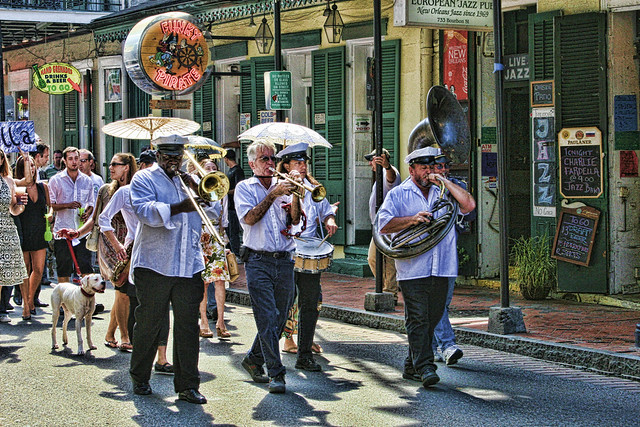
Photo Credit: "secondline" by Flick User Swampier
Monday, March 11, 2013
Are you excited about the AAHPM/HPNA/SWHPN 2013 Annual Assembly this week? I hope you or at least your colleagues are able to attend. We will be continuing the tradition of gathering readers and contributors to this blog and Geripal. It has grown over the years naturally and we are excited to meet other people you may only nknow by a screen name or email address.
There will be a strong Pallimed contingent this year with Drew Rosielle, Lyle Fettig, Jeanette Ross, Holly Yang, Suzana Makowski, Thomas Quinn, and Amber Wollesen in attendance, so please rech out and say hello.
We do have a date and time for the party - Thursday night starting around 9pm, so you have enough time to have dinner with colleagues and friends.
But we don't exactly have a location...or locations...or maybe we do and we are keeping it a secret...regardless we aren't saying quite yet. If you have any tips on a good location that is easy to get to, please email us, tweet us (#hpmparty), or post a suggestion on our Facebook page.
You can also RSVP on the Facebook Event page if you may be joining us so we can make sure and get you the update. We will be using #hpmparty to announce the location as well.
Here we come New Orleans!!!
 |
| 2010 Boston |
